

Your digging level
Description
Kolo music is the energetic and virtuosic instrumental accompaniment to the traditional circle dance of the same name, originating from the Balkans. Characterized by a fast-paced 2/4 time signature, the genre is defined by its driving rhythm and intricate melodic ornamentation.
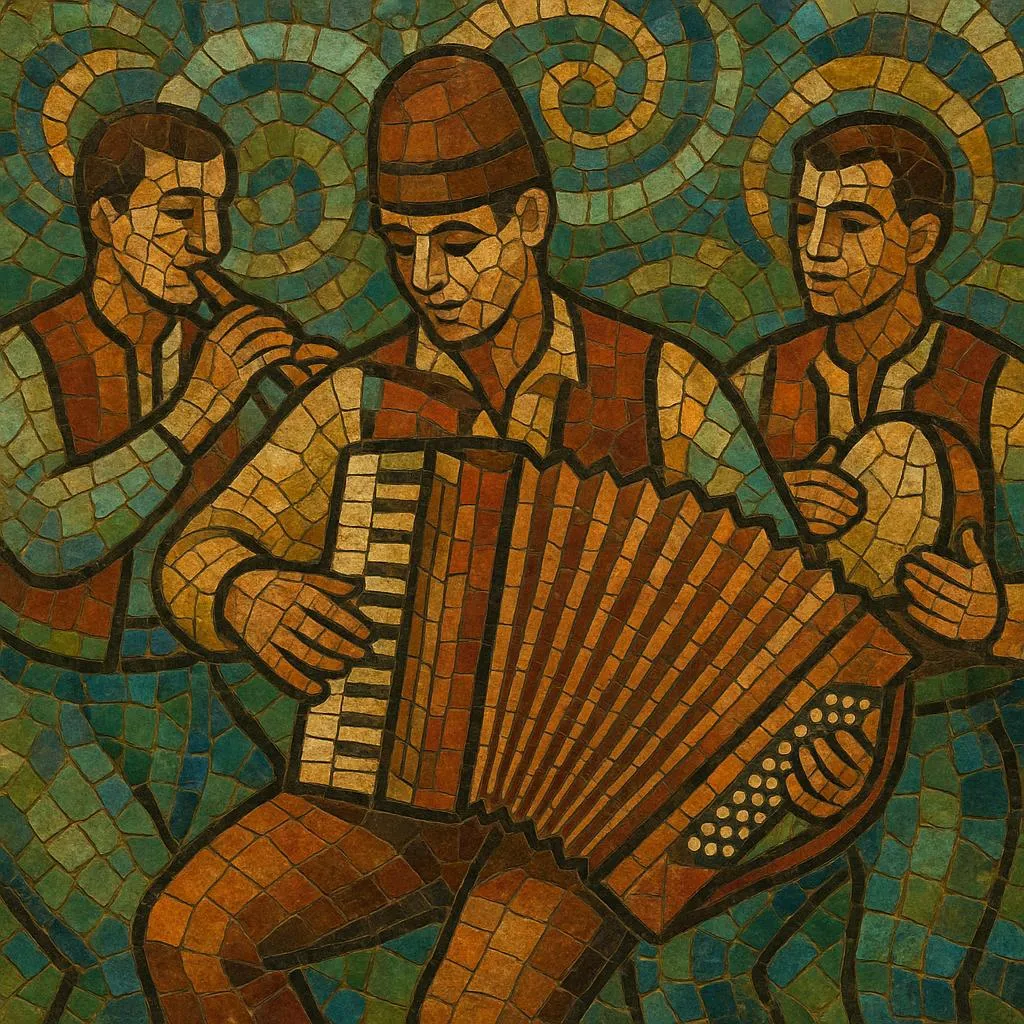
While historically played on the frula (flute) or gajde (bagpipes), the modern sound is dominated by the accordion, which serves as the lead instrument, often accompanied by tamburica ensembles or brass bands. The music is communal and celebratory, serving as a symbol of cultural identity and unity in the region.
History
The roots of Kolo music trace back to ancient Slavic pagan rituals in the Balkans, where circle dances were performed for fertility and community bonding. Medieval tombstones (stećci) from the 12th to 16th centuries depict these early dances, indicating a long-standing tradition.
During the Ottoman occupation, the music evolved as a form of cultural preservation and resistance, absorbing some oriental scales and rhythms while maintaining its Slavic core. In the 19th century, the music was typically performed by soloists on the frula or gajde in rural settings.
The early 20th century marked a significant shift with the introduction of the accordion, which quickly became the genre's primary instrument due to its harmonic capabilities and volume. This period saw the formalization of specific compositions like 'Moravac' and 'Užičko kolo'.
Post-World War II, the genre was further professionalized by state ensembles and virtuoso soloists, cementing its place in national culture. In 2017, the traditional folk dance Kolo was inscribed on the UNESCO Representative List of the Intangible Cultural Heritage of Humanity for Serbia.
To compose Kolo music, utilize a 2/4 time signature with a fast, driving tempo (often 120 BPM or higher). The rhythm should emphasize the downbeat, often using a 'trojanac' or 'moravac' step pattern structure.
The melody is typically led by an accordion or trumpet and should be highly virtuosic, featuring rapid sixteenth-note runs, trills, and grace notes. Harmonic structures often rely on natural minor, harmonic minor, or Hijaz-like scales common in Balkan music.
Structure the piece in repeating sections (e.g., AABBCC), allowing for improvisational flourishes in the repetitions. Accompaniment should provide a steady, percussive 'oom-pah' or syncopated chordal backing to maintain the dance's energy.

