

Your digging level

For this genre
0/8
🏆
Sign in, then listen to this genre to level up

Description

Bećarac is a humorous, improvisatory folk-song form from the Slavonia region of eastern Croatia that later spread across nearby Baranja, Srijem, southern Hungary and Vojvodina (Serbia).

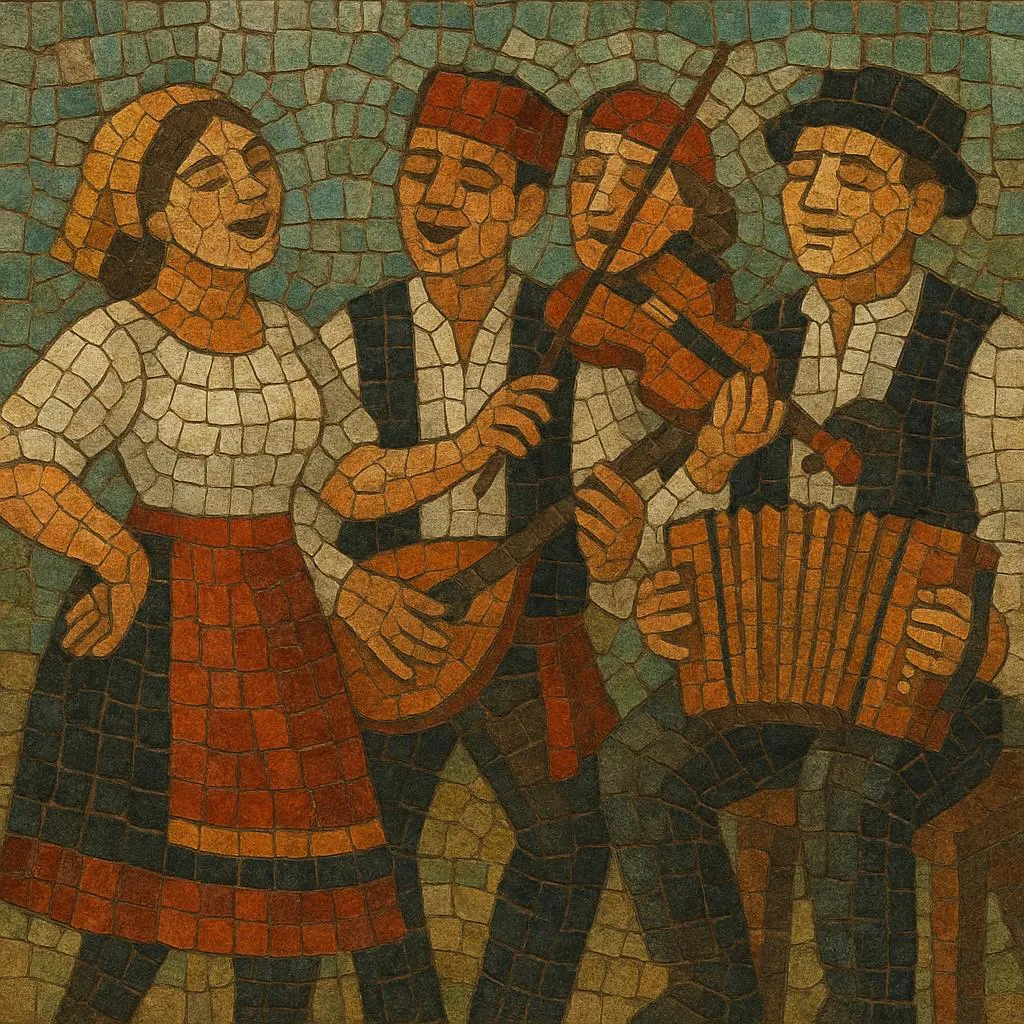
Performed by a lead singer and a small group or larger company, it unfolds as playful, teasing two-line (decasyllabic) couplets delivered in call-and-response over a repeating melody, typically accompanied by tamburica (tambura) ensembles and sometimes fiddle or accordion. Themes are flirtatious, boastful, satirical and often mildly lascivious, providing a socially accepted outlet for wit and innuendo at weddings, fairs and village gatherings. Although the name derives from bećar (bachelor/reveller), women have long sung bećarac as equals—frequently while dancing kolo—today participating as much as men.


Sources: Spotify, Wikipedia, Discogs, RYM, MB, user feedback and other online sources

History

Origins (19th century)

Scholars situate bećarac’s crystallization in rural Slavonia during the 1800s, when a lively bachelor/reveller culture (bećar) and village festivities fostered competitive, witty verse-making over stock melodies. The form’s hallmark became its decasyllabic, two-line couplets delivered antiphonally by a leader and a responding group.

Performance practice and spread

Bećarac thrived at weddings, fairs and community feasts, where singers competed to outdo one another with clever, teasing or amorous lines. Although stereotypically a male pastime, women sing and lead bećarci as well, especially in the context of the circle dance kolo. From Slavonia it spread across Baranja and Srijem and into neighbouring southern Hungary and Vojvodina. Instrumental support typically comes from tamburica bands, with local variants and sub-types shaped by charismatic lead singers.

Documentation and modern practice

Collectors and ethnographers assembled large corpora of verses in the 19th–20th centuries, and the practice continued as living tradition—both informally and on staged folk platforms. Contemporary ensembles keep the style active, while singers maintain vast mental repertoires and improvise new couplets suited to the moment.

Recognition

In 2011, “Bećarac singing and playing from Eastern Croatia” was inscribed on UNESCO’s Representative List of the Intangible Cultural Heritage of Humanity, acknowledging its role in community identity, intergenerational transmission and creative dialogue.

How to make a track in this genre

Core structure
•   Write verses as paired, decasyllabic lines. The first line poses a playful thesis (boast, tease, flirtation); the second delivers a humorous twist or antithesis. •   Keep a single, memorable melodic formula in a bright major mode; each new couplet repeats the tune. Aim for lively, danceable duple meter suitable for kolo settings.
Delivery and form
•   Use call-and-response: a lead singer (or pair of leads) intones the first line; the group answers, often harmonizing the second line in two- or three-part texture. •   Let performances flow as a chain of couplets—how long you continue depends on the wit, breath and energy of the singers.
Text and rhetoric
•   Draw on village life, love, courtship, rivalry and situational comedy. Teasing and innuendo are expected, but keep it good‑natured and audience‑aware. •   Prepare a large mental “verse bank,” then improvise new lines to local people or events; quick thinking is prized.
Accompaniment and timbre
•   Use a small tamburica (tambura) ensemble for rhythmic drive and chordal support; optionally add fiddle and/or accordion. Keep textures light so the text remains intelligible. •   Tempo: brisk but breathable; articulation: clear, syllabic; dynamics: buoyant, with responsive swells to punctuate punchlines.
Ensemble craft
•   Alternate leaders to spur friendly competition; encourage spontaneous interjections from the chorus. •   Close each couplet cleanly before launching the next, giving dancers time to react—laughter is part of the cadence.

Top tracks

Locked
Share your favorite track to unlock other users’ top tracks

Upcoming concerts

in this genre
Influenced by
Has influenced
No genres found

Download our mobile app

Get the Melodigging app and start digging for new genres on the go
© 2026 Melodigging
Melodding was created as a tribute to Every Noise at Once, which inspired us to help curious minds keep digging into music's ever-evolving genres.
Buy me a coffee for Melodigging
