Your digging level

For this genre
0/8
🏆
Sign in, then listen to this genre to level up

Description

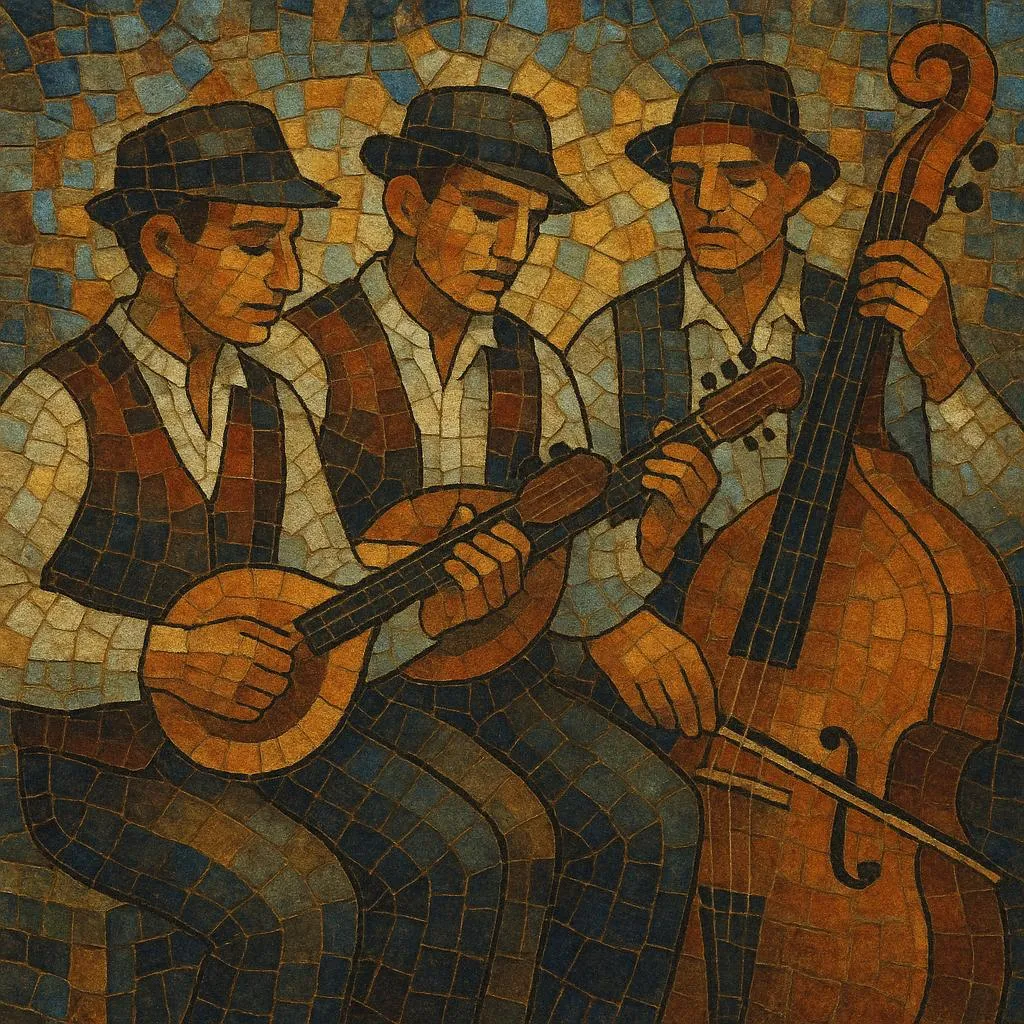
Tamburica (tamburitza) is a South‑Slavic plucked‑string ensemble tradition centered on families of long‑necked lutes called tambure (prim/bisernica, brač, bugarija/kontra, čelo, and berda/kontra‑bas). The music blends village dance repertories and lyrical songs with salon, military‑band, and Central European ballroom influences.

Typical ensembles feature bright, plectrum‑driven melodic lines over off‑beat chordal strumming and a warm, percussive bass. Repertoires include kolos, polkas, waltzes, marches, and narrative songs, often performed in highly coordinated unison‑octave passages and agile tremolo ornaments. The style is closely tied to regional identities in Slavonia and Srem/Backa, and it has also flourished in diaspora communities.


Sources: Spotify, Wikipedia, Discogs, RYM, MB, user feedback and other online sources

History

Origins

Tamburica’s instruments descend from long‑necked lutes spread through the Balkans under Ottoman influence (the tanbur family). By the early 19th century these lutes had been localized and adapted in South‑Slavic regions, particularly in today’s eastern Croatia and northern Serbia.

19th‑century codification

In 1847, Osijek musician Pajo Kolarić organized one of the first documented tamburica ensembles, helping to standardize parts (melody, tenor, rhythm guitar, cello‑range lute, and bass) and to elevate the music from informal village settings into civic concerts and salons. In the late 19th century, instrument makers and bandleaders further refined sizes, tunings, and playing techniques, aligning ensemble roles to function like a plucked string orchestra.

20th‑century expansion and media

Interwar radio, gramophone records, and urban dance halls spread tamburica widely across Slavonia and Vojvodina. After World War II, professional and semi‑professional orchestras, folk festivals, and state radio ensembles preserved and popularized the style. Tamburica also took root in immigrant communities—especially in North America—where “tamburitza” clubs and orchestras maintained repertories of kolos, waltzes, and lyrical songs.

Contemporary scene

Today tamburica thrives in folk ensembles, conservatory‑level orchestras, and crossover projects. Repertoires range from traditional dances and bećarac‑style humorous verse to arranged suites and virtuosic concert works. Modern groups occasionally fuse tamburica timbres with pop, jazz harmony, or amplified rhythm sections while preserving the characteristic plectrum articulation and off‑beat strum.

How to make a track in this genre

Instrumentation and roles
•   Prim/Bisernica: lead melody; bright, nimble plectrum lines with tremolo and mordent ornaments. •   Brač: inner melodies, counter‑motifs, and doublings in 3rds/6ths; occasional short solos. •   Bugarija/Kontra: chordal rhythm on off‑beats (typical up‑stroke emphasis), creating lift for dances. •   Čelo (tenor lute): fills, bass approach tones, and harmonic glue between rhythm and bass. •   Berda/Kontra‑bas: fundamental bass line; simple stepwise motion and two‑feel patterns. Optional violin or clarinet can shadow the prim for color.
Harmony and melody
•   Primarily diatonic major/minor with frequent I–IV–V; ii and vi used for color. Modal inflections (mixolydian/Dorian) appear in older tunes. •   Melodies are singable and conjunct with occasional leaps to cadential high notes; ornament with short tremolo bursts and quick grace notes. •   Common keys: G, D, A, C (favorable to open‑string resonance).
Rhythm and form
•   Dance meters: 2/4 (kolo, polka), 3/4 (waltz), occasional 4/4 marches; medium to brisk tempi (kolo/polka ≈ 120–160 BPM; waltz ≈ 60–90 BPM). •   Forms: strophic song with refrain, instrumental dance medleys, and theme‑and‑variations for showpieces. Use short intro vamp, multiple sung or played verses, instrumental break, and a tagged ending.
Arrangement and texture
•   Unison‑octave melodies between prim and higher brač, then split into parallel 3rds for the refrain. •   Keep bugarija on steady off‑beats; punctuate phrases with tutti hits (often V–I cadential punches). •   Orchestrate dynamics: lighter textures in verses, fuller tremolo‑driven climaxes in refrains; end with ritard and fermata on tonic.
Lyric themes and performance practice
•   Themes: love and parting, village life, rivers/fields, conviviality (wine, friendship), and humorous bećarac‑style couplets. •   Vocal delivery is direct, narrative, and slightly nasal; support with soft tremolo pad from prim and sustained inner voices.
Production tips (modern settings)
•   Mic close to the soundboard for articulation, add a room pair for ensemble blend. •   Use subtle plate reverb; gentle multi‑band compression to tame pick transients while preserving the lively off‑beat strum.

Top tracks

Locked
Share your favorite track to unlock other users’ top tracks

Upcoming concerts

in this genre
Influenced by
Has influenced

Download our mobile app

Get the Melodigging app and start digging for new genres on the go
© 2026 Melodigging
Melodding was created as a tribute to Every Noise at Once, which inspired us to help curious minds keep digging into music's ever-evolving genres.
Buy me a coffee for Melodigging