Your digging level

For this genre
0/8
🏆
Sign in, then listen to this genre to level up

Description

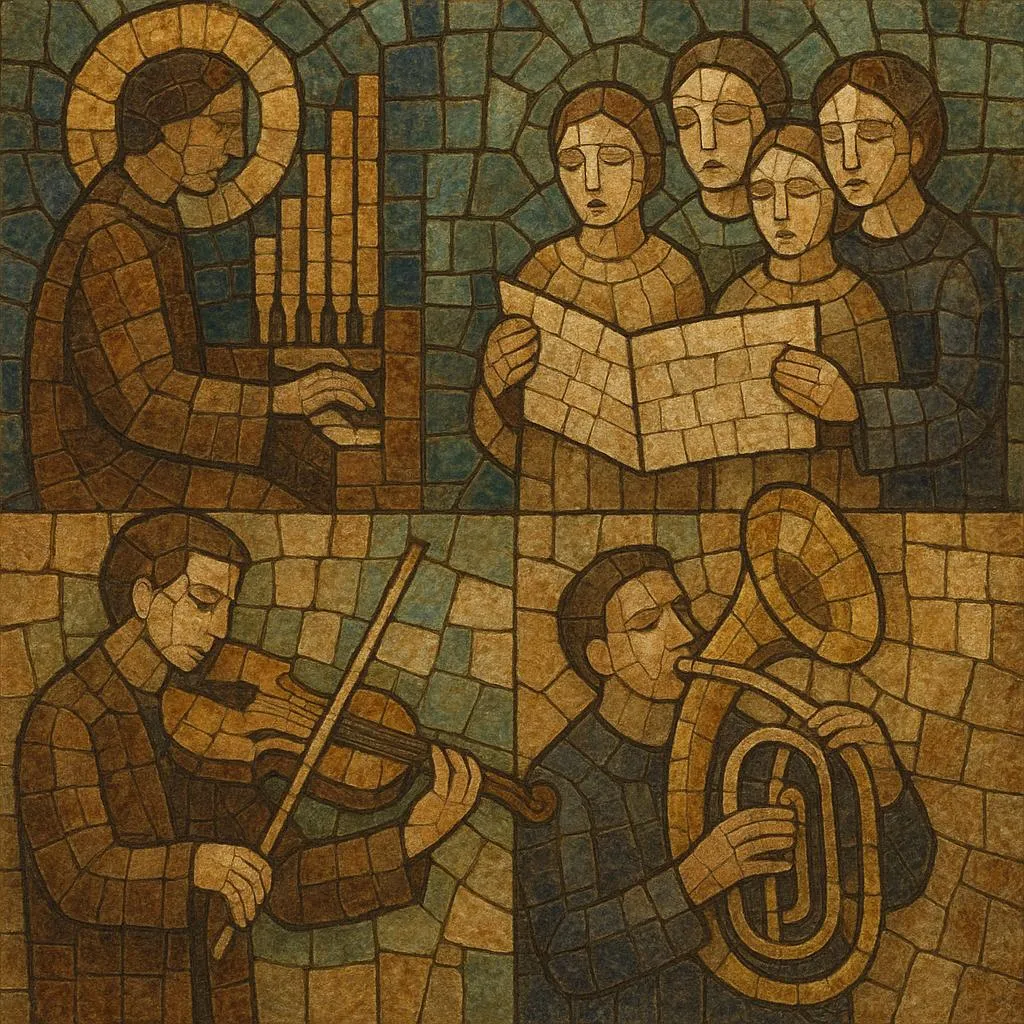
Hinos CCB refers to the congregational hymns of the Congregação Cristã no Brasil (Christian Congregation in Brazil), a Pentecostal church founded in 1910. The repertoire is drawn from the denomination’s official hymnals (Hinários) and is sung in Portuguese by the congregation, typically accompanied by a church orchestra or organ.

Musically, Hinos CCB blends European Protestant hymnody and late‑Romantic classical harmony with a reverent, restrained performance practice. The melodies are diatonic and singable, harmonized in traditional SATB textures, and orchestrated for strings, woodwinds, and brass—without drums or modern rhythmic accompaniment. The result is a solemn, devotional sound that emphasizes congregational participation, textual clarity, and spiritual contemplation.


Sources: Spotify, Wikipedia, Discogs, RYM, MB, user feedback and other online sources

History

Origins (1910s)

The genre arose with the founding of the Congregação Cristã no Brasil (CCB) in 1910. The church’s founders brought a tradition of Protestant hymn singing and European classical sensibilities, shaping a distinctly orchestral, reverent approach to congregational music in Portuguese.

Hymnals and Standardization (1930s–1970s)

Through successive official hymnals (Hinários), the CCB established a stable corpus of hymns—translations, adaptations, and original texts—presented with standardized harmonizations and notated orchestral parts. The church encouraged literacy in music reading and ensemble discipline, codifying an orchestral practice for worship.

Expansion and Diaspora (late 20th century)

As the denomination expanded beyond Brazil to the Americas, Europe, and parts of Asia, Hinos CCB traveled with it. Regional choirs and church orchestras proliferated, yet the core musical language—four‑part hymnody, tonal harmony, and acoustic orchestral accompaniment—remained consistent.

Contemporary Practice (21st century)

Today, Hinos CCB continues to be performed in services and recorded by local choirs and orchestras. Even with digital dissemination, the performance ethos remains: no percussion or pop stylings, emphasis on congregational participation, careful diction, and orchestral balance in a sacred acoustic aesthetic.

How to make a track in this genre

Core Materials
•   Write singable, diatonic melodies in comfortable congregational ranges (typically D–G major; avoid extremes). •   Use classical, four‑part SATB harmony with clear voice‑leading and functional tonality (authentic cadences, occasional secondary dominants, limited chromaticism). •   Favor balanced hymn meters (common/proper hymn meters) and moderate tempos that support unison congregational singing.
Orchestration and Texture
•   Score for church orchestra (strings, woodwinds, brass) or pipe organ; avoid drums and modern rhythm sections. •   Double and support the vocal lines: violins/clarinets often carry melody; inner parts (violas, trombones, sax/clarinet) reinforce alto/tenor lines; cellos/trombones/tuba support bass. •   Keep textures transparent; prioritize text intelligibility and balanced dynamics over virtuosic display.
Rhythm and Style
•   Maintain steady, unhurried pulse without syncopated or dance‑like patterns. Use tasteful rubato guided by conductor. •   Employ dynamic contours (crescendo/decrescendo) to shape phrases, especially at cadences and key textual moments.
Text and Theology
•   Set Portuguese texts with reverent, scripturally grounded themes (praise, grace, salvation, comfort, perseverance). •   Use clear syllabic setting so the congregation can articulate words together; align musical phrasing with textual sense.
Form and Modulation
•   Standard strophic forms (multiple verses on one tune) are common; brief interludes for orchestra/organ can separate stanzas. •   If modulating, prefer simple, uplifting shifts (e.g., a whole‑step rise) between stanzas to lift congregational energy.
Rehearsal and Performance Practice
•   Provide clean, readable parts; rehearse entrances, cutoffs, and breathing points to unify large ensembles. •   Encourage restrained vibrato and a blended choral/orchestral tone appropriate to sacred acoustics.

Top tracks

Locked
Share your favorite track to unlock other users’ top tracks

Upcoming concerts

in this genre
Influenced by
Has influenced
No genres found

Download our mobile app

Get the Melodigging app and start digging for new genres on the go
© 2026 Melodigging
Melodding was created as a tribute to Every Noise at Once, which inspired us to help curious minds keep digging into music's ever-evolving genres.
Buy me a coffee for Melodigging