Your digging level
Description
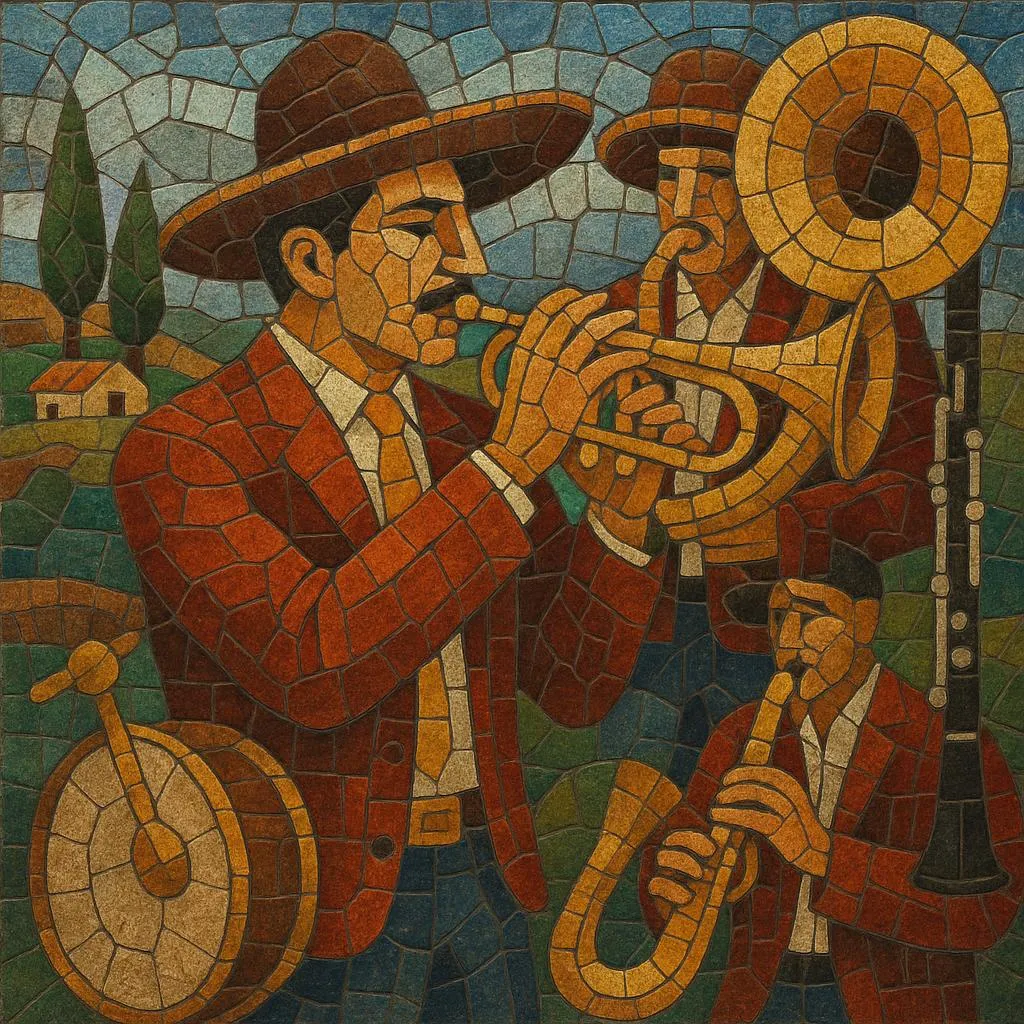
Banda jalisciense is a brass‑band style of regional Mexican music rooted in the state of Jalisco. It shares instrumentation with other banda traditions—trumpets, clarinets, trombones, tuba (or sousaphone), and a battery of percussion (tambora, tarolas/snare, cymbals)—but carries a distinctly jalisciense identity in repertoire, phrasing, and cultural references.
Stylistically it blends European march, polka, and waltz forms absorbed through 19th–early 20th‑century military and civic bands with the melodic sensibility of ranchera and the local mariachi songbook. Danceable two‑steps and polkas, 3/4 waltzes, and cumbia‑inflected grooves sit alongside lyrical ballads, all delivered with bright brass voicings and unison or third‑based horn melodies.
Lyrically, banda jalisciense often celebrates Jalisco’s charro imagery, hometown pride, romance, and everyday stories, carried by a commanding lead vocal and frequent call‑and‑response interjections from the band.
History
Jalisco, like many Mexican states, developed strong municipal and military band traditions in the late 19th and early 20th centuries. Brass instrumentation, European march and dance forms (polka, waltz), and public ceremonial functions provided the structural DNA for what would become regional banda styles. In Jalisco, proximity to mariachi culture shaped the local repertoire and melodic approach.
As brass bands moved from strictly civic contexts to popular entertainment, ensembles in Jalisco adopted ranchera and corrido repertoires, arranging them for winds and percussion. The jalisciense flavor emerged in phrasing (often more lyrical, reflecting mariachi influence), setlists (local songs and waltzes), and performance circuits tied to fiestas patronales and charro events.
The broader banda boom saw Jalisco groups professionalize, record, and tour. Dance‑forward arrangements—polkas, cumbias, and ranchera waltzes—tightened forms and foregrounded punchy horn riffs, crisp tarola patterns, and tuba walking lines. Jalisco’s contribution helped popularize a modern, highly danceable banda aesthetic that coexisted with (and at times intersected) the state’s mariachi prestige.
Jalisciense bands continue to balance tradition and modernity: classic 2/4 and 3/4 dance forms, romantic ballads, and locally rooted lyrics, with contemporary production and crossover collaborations. The style remains a pillar within regional mexicano, influencing technobanda movements and norteño‑banda fusions while sustaining community functions at dances, rodeos, and festivals.