Your digging level
Description
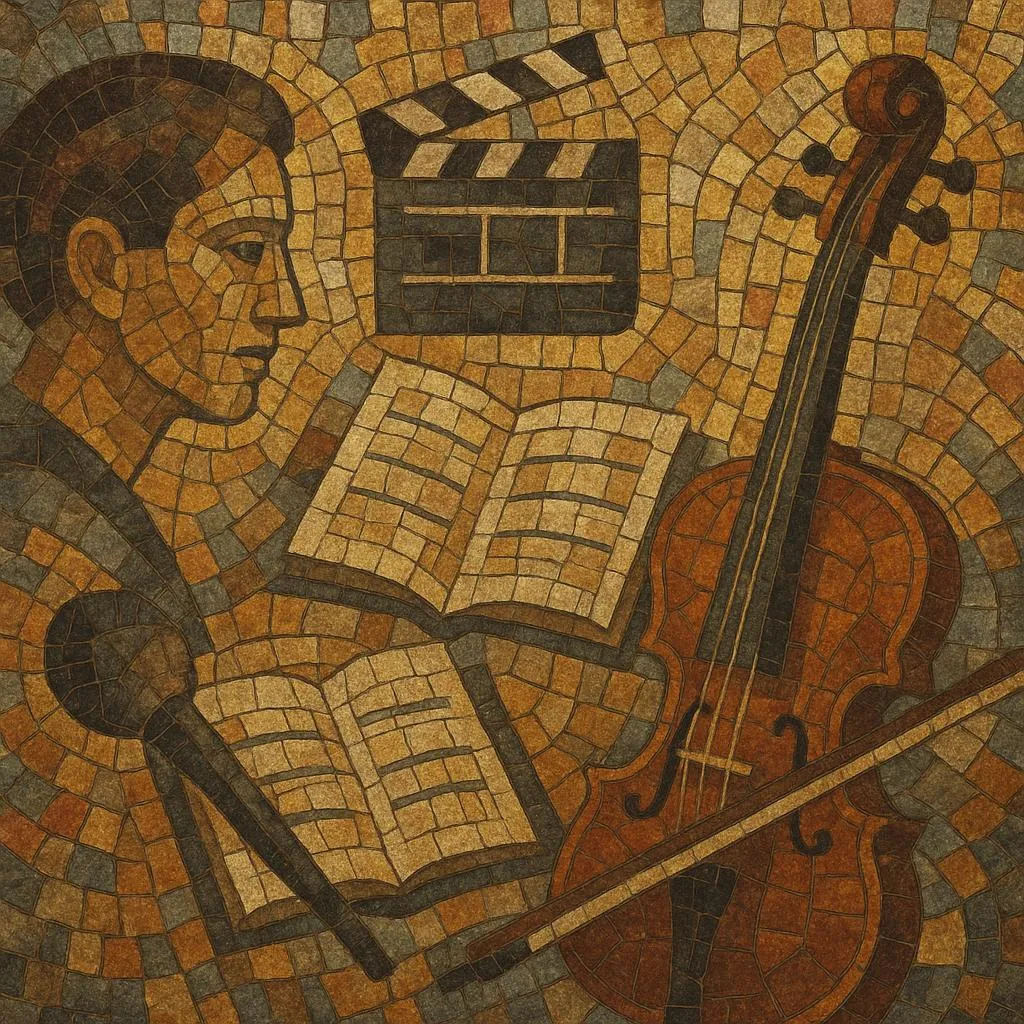
Score refers to original music composed to synchronize with and shape the narrative of visual media—primarily film, television, and, later, video games.
Unlike a “soundtrack,” which often compiles pre-existing songs, a score is written to picture, uses timing cues to support storytelling beat by beat, and develops recurring themes (leitmotifs) for characters, settings, or ideas. The palette ranges from late‑Romantic orchestration and modernist harmony to jazz idioms, electronic sound design, and global instrumentation. Hallmarks include thematic development, hit points, motif variation, orchestration color, and a close relationship with sound effects and dialogue in the final mix.
History
Silent cinema was accompanied by live musicians who stitched together classical excerpts, popular tunes, and cue sheets. As film language matured, studios began commissioning original music, laying the groundwork for the modern score.
Emigre composers trained in late‑Romantic and operatic traditions (Max Steiner, Erich Korngold) codified lush symphonic scoring, leitmotifs, and tightly synchronized cues. Orchestral recording practices, click tracks, and music departments professionalized the craft.
Bernard Herrmann popularized economical orchestration, ostinati, and modernist harmony, while jazz infiltrated crime and noir scores. Experimental and serial techniques appeared alongside choral and chamber sonorities.
Ennio Morricone expanded timbral vocabulary (unusual instruments, voice, electric guitar) and thematic clarity. John Williams led a neo‑symphonic revival, while Jerry Goldsmith and others integrated analog synths and electronics, defining the hybrid palette.
Sample libraries and digital workstations changed workflow. Hans Zimmer’s rhythm‑driven, hybrid textures and sound‑design emphasis became globally influential, while games adopted cinematic scoring with interactive systems.
Scores mix orchestra, granular electronics, and boutique ensembles. Temp tracks and remote collaboration shape aesthetics; television achieves film‑level production; and game scoring advances adaptive music, while diverse voices broaden stylistic and cultural references.
Choose a narrative‑appropriate palette: full orchestra for scope, chamber ensembles for intimacy, and hybrid layers (synths, pulses, textures) for modern tension. Build a template in your DAW with key articulations (shorts/longs, pads, percussion) and tempo‑sync tools.
Design memorable motifs for characters, places, or ideas. Vary them through mode, harmony, rhythm, orchestration, and contour to reflect the story arc (major→minor, sparse→dense, acoustic→electronic).
Use functional harmony for clarity and emotional pull; modal and quartal harmony for color; clusters and pedal points for suspense. Textural writing (ostinati, drones, aleatoric effects) sustains mood under dialogue without overcrowding.
Map hit points, beats, and scene turns. Employ click tracks, tempo maps, and meter changes to land accents naturally. Percussive motifs, pulses, and rhythmic swells guide pacing without competing with on‑screen action.
Exploit orchestral families for narrative roles: strings for lyricism and warmth, brass for heroism or menace, woodwinds for intimacy and color, percussion for impact and propulsion. Blend electronics for sub‑bass weight, texture, and modern sheen.
Spot the project with the director to define themes and placements. Mock up cues convincingly, then orchestrate with register, balance, and playability in mind. Leave space for dialogue and effects; mix with stems for rebalancing at dub stage.