Your digging level

For this genre
0/8
🏆
Sign in, then listen to this genre to level up

Description

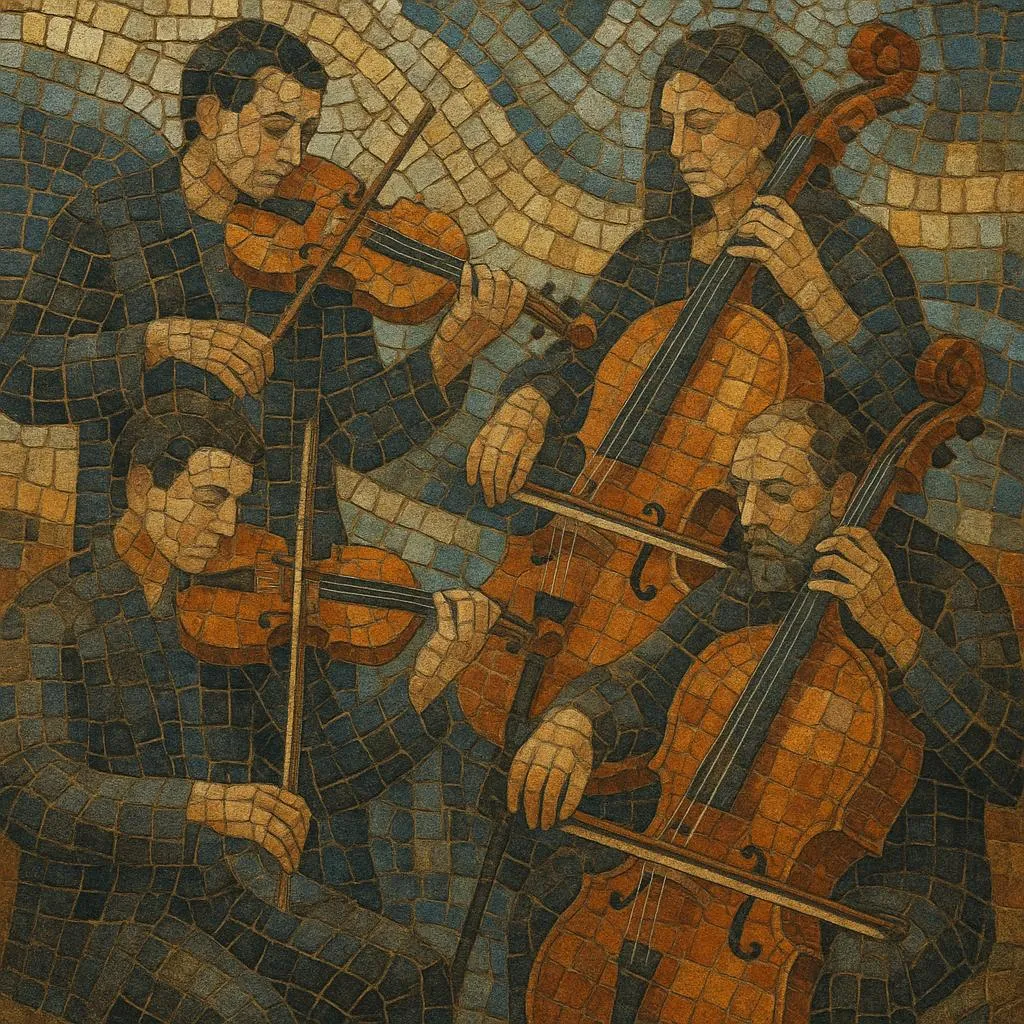
A string orchestra is an orchestral ensemble made exclusively (or almost exclusively) of bowed string instruments—first and second violins, violas, cellos, and double basses—forming a homogeneous “string choir.”

Unlike full symphony orchestras, which mix winds, brass, and percussion, the string orchestra’s color palette is built from a single instrumental family. This gives it exceptional flexibility in blend, balance, and nuance: from transparent, madrigal‑like counterpoint to rich, organ‑like sonorities, and from whispering sul tasto textures to incisive martelé and spiccato rhythms.

Historically rooted in the Baroque concerto grosso and early sinfonia, the string orchestra later became a favored medium for serenades, suites, and modern mini‑symphonies. Today it is equally at home in concert halls, education and youth programs, and cross‑over projects, and it remains a go‑to sound for film and media when warmth, clarity, and expressivity are desired.

Sources: Spotify, Wikipedia, Discogs, Rate Your Music, MusicBrainz, and other online sources

History

Origins (17th century)
•   The string orchestra coalesced in Italy in the early Baroque era as court and church ensembles of violins, violas, and basses. •   Composers and leaders such as Corelli helped standardize the multi‑part string texture and sectional leadership that would underpin the concerto grosso and early sinfonia. •   Basso continuo (often harpsichord/organ with cello/bass) supplied harmonic foundation, while upper strings articulated contrasting groups (concertino/ripieno).
Classical and Romantic Consolidation (18th–19th centuries)
•   Although the Classical symphony expanded to include winds and brass, a parallel current of string‑only writing flourished in serenades, divertimenti, and nocturnes. •   In the later 19th century, composers rediscovered the string orchestra’s unique warmth and cohesion in lyrical forms such as serenades and suites, refining idiomatic voicing, divisi, and antiphonal textures.
20th Century Expansion
•   The ensemble became a modern laboratory for color and form: English composers developed a hallmark string‑choir sound; Eastern and Northern Europeans explored modal, neoclassical, and stark modernist textures; and American composers showcased elegiac and cinematic expressivity. •   Arrangements of string quartets for larger string forces (often termed “chamber symphonies”) further enriched the repertoire and technique.
Contemporary Practice
•   Professional and youth string orchestras worldwide commission new works that blend post‑minimalist pulse, extended techniques (sul ponticello, harmonics, col legno), and global modal vocabularies. •   The idiom’s clarity and intimacy keep it central to educational pipelines and make it a frequent choice for film/TV scoring, cross‑genre collaborations, and concert programming focused on coloristic nuance and ensemble precision.

How to make a track in this genre

Core Instrumentation and Seating
•   Standard sections: Violin I, Violin II, Viola, Cello, Double Bass. Typical proportional seating might approximate 8–6–5–4–3, scaled to venue and repertoire. •   Historical Baroque practice may include basso continuo (harpsichord/organ with cello/bass). •   Remember: Double basses sound an octave below written pitch.
Texture and Voicing
•   Think in choirs: five independent lines can yield organ‑like depth; frequent divisi (especially in violas/cellos) multiplies harmonic color. •   Use antiphony (e.g., split Violin I vs. Violin II, or front vs. back desks) to create spatial dialogue. •   Mix unison/octave pillars with inner suspensions to balance clarity and richness; avoid over‑doubling in mid‑range that muddies texture.
Idiomatic Techniques and Color
•   Bowings: Contrast legato cantabile with articulated détaché, spiccato, or martelé for rhythmic bite. •   Coloration: Sul tasto (hazy), sul ponticello (glassy, tense), harmonics (ethereal), tremolo (sustained energy), pizzicato (percussive), con sordino (muted warmth). •   Double‑stops: Effective in solo/soli lines; sparingly in tutti to avoid intonation strain. •   Register: Let violins sing melodies in upper positions; support with viola/cello counter‑melodies; anchor harmony and rhythm with cellos/basses in staggered, voice‑led lines.
Harmony, Rhythm, and Form
•   Harmony: Triadic with added 6ths/9ths for warmth; modal inflections and open‑string drones for resonance; careful voice‑leading to showcase suspensions and expressive appoggiaturas. •   Rhythm: Ostinati in inner strings can drive motion while outer voices phrase freely; syncopations speak clearly with articulated bowings. •   Forms that suit: Serenade/Suite (multi‑movement contrasts), sinfonia/mini‑symphony, passacaglia/ground bass, chaconne, or single‑span adagio/aria‑like movements.
Style and Practice Tips
•   Baroque style: Terraced dynamics, light articulation, minimal continuous vibrato, continuo‑aware bass lines. •   Romantic/Modern: Wider dynamic swells, expressive portamento (tasteful), richer divisi and chromatic harmony. •   Rehearsal craft: Mark unified bowings, phrase peaks, and balance cues; write clear divisi indications and desk‑sharing strategies; leave space for sectional solos and soli (e.g., principal viola/cello).

Top tracks

Locked
Share your favorite track to unlock other users’ top tracks
Influenced by
Has influenced
Challenges
Digger Battle
Let's see who can find the best track in this genre

Download our mobile app

Get the Melodigging app and start digging for new genres on the go
© 2026 Melodigging
Melodding was created as a tribute to Every Noise at Once, which inspired us to help curious minds keep digging into music's ever-evolving genres.
Buy me a coffee for Melodigging