Your digging level
Description
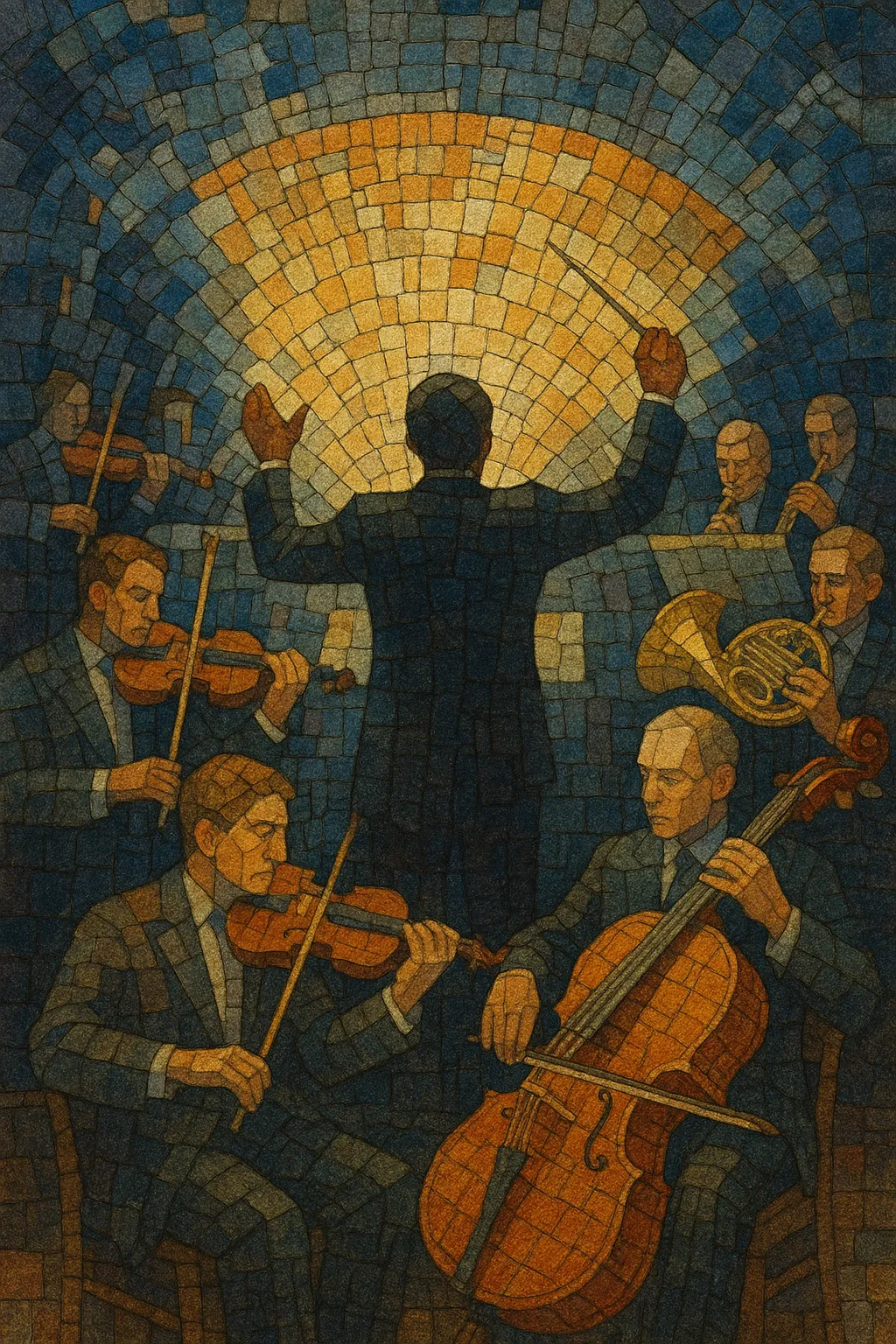
Orchestral soundtrack refers to film (and later television and game) scores written primarily for symphony orchestra, drawing on the language of Romantic and post-Romantic concert music while serving narrative and dramatic functions.
The style emphasizes leitmotifs, rich orchestration, and a wide dynamic range to underscore character, mood, and on‑screen action. It balances thematic memorability with precise synchronization to picture, and often blends late‑Romantic harmony with Impressionist color, occasional modernist techniques, and, in contemporary practice, subtle electronic augmentation.
History
With the advent of synchronized sound, Hollywood rapidly adopted an orchestral language modeled on late‑Romantic European concert music and opera. Pioneers like Max Steiner and Erich Wolfgang Korngold brought leitmotivic writing, lush string scoring, and dramatic harmonic rhetoric to Hollywood, establishing the template for narrative film music.
Studios institutionalized music departments, while composers such as Miklós Rózsa and Bernard Herrmann expanded timbral palettes and harmonic daring. Improvements in recording, stereo, and theater sound enabled more precise orchestration and larger forces, reinforcing the orchestral score’s role in drama, noir, historical epics, and suspense.
While pop, jazz, and experimental approaches entered film, the orchestral idiom persisted and evolved. Ennio Morricone fused avant‑garde color with memorable themes. In the late 1970s and 1980s, John Williams’ neo‑Romantic symphonic scores (often with the London Symphony Orchestra) catalyzed a revival of grand thematic writing in blockbusters, joined by Jerry Goldsmith, James Horner, and Alan Silvestri.
Sample libraries, click tracks, and DAWs transformed workflow, but the core orchestral language remained central—especially in fantasy, adventure, and drama. Composers such as Howard Shore and Alexandre Desplat sustained sophisticated orchestration, while others (e.g., Hans Zimmer and collaborators) popularized hybrid scores that layer orchestra with electronics and sound design. The idiom now spans film, prestige TV, and games, with global orchestras and remote production making orchestral soundtrack a ubiquitous narrative music language.