

Your digging level
Description
Anime score is the original instrumental music written to underscore Japanese animation (anime), distinct from theme songs (anison) and pop tie‑ins. It includes background cues, character leitmotifs, action set‑pieces, and end‑title suites designed to track emotion and narrative beat‑by‑beat.
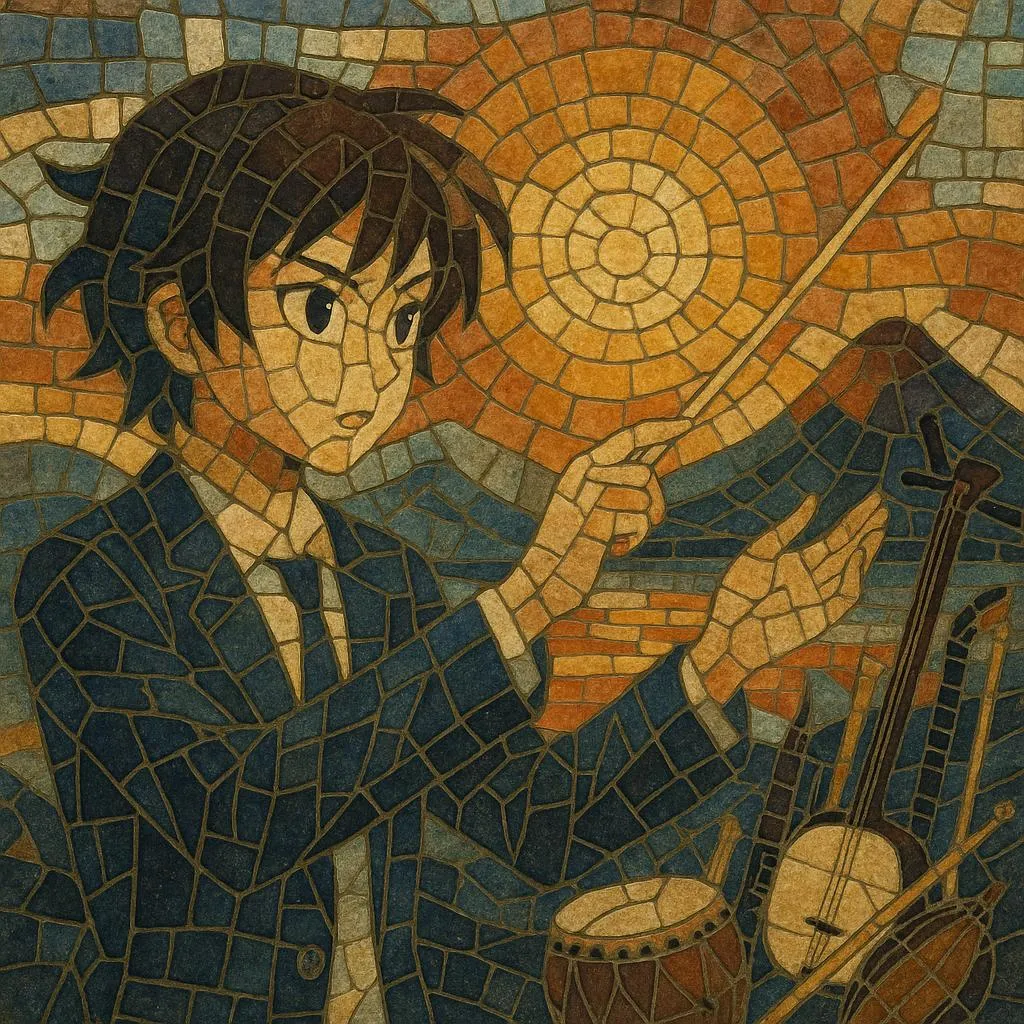
Stylistically it blends European symphonic language with Japanese melodic sensibilities and a wide palette of hybrids: jazz rhythm sections, rock/prog instrumentation, analog and digital synthesis, percussion from East Asia (e.g., taiko) alongside Western orchestral percussion, and occasional use of traditional Japanese timbres (shakuhachi, koto, shamisen). Themes are often memorable and cyclic, supporting character arcs and world‑building.
Production practices range from small studio ensembles and synth mockups to large orchestra sessions (in Japan and sometimes overseas), with modern mixes favoring cinematic low end, clear leitmotif presentation, and hybrid textures that can pivot quickly between intimacy and grand spectacle.
History
Early TV anime (e.g., the first wave of televised series in the 1960s) established the underscore as a narrative tool: short, modular cues built from strong, singable motifs and economical orchestration to fit tight broadcast schedules. Film‑oriented studios drew on European classical craft, while TV production leaned on jazz/rock rhythm sections, brass, and early synthesizers to deliver energy under budget constraints.
With the rise of high‑profile theatrical features and prestige series, anime scoring embraced larger orchestras, bolder leitmotif systems, and more sophisticated harmony. The sound coalesced into a recognizable identity: lyrical themes, coloristic orchestration, and dramatic set‑pieces influenced by Western film music yet voiced with Japanese melodic shapes and modal inflections.
Composers increasingly fused orchestral writing with electronics (PCM samplers, analog synths), rock/prog guitars, and jazz harmony. Soundtracks were released widely, fostering devoted listening outside the screen context and helping codify the “anime score” as an album experience—overtures, suites, and rearranged concert versions became common.
International fandom and digital platforms amplified the style’s reach. Scores now range from chamber intimacy to blockbuster hybrid orchestral, often recorded with top orchestras in Japan and abroad. Anime’s leitmotivic, melody‑forward approach has influenced lo‑fi, hip hop sampling cultures, and online “anime‑adjacent” genres, while game and anime composers frequently cross over, reinforcing a shared vocabulary of thematic clarity and hybrid texture.



