Your digging level

For this genre
0/8
🏆
Sign in, then listen to this genre to level up

Description

Anime lo-fi is a microstyle of lo-fi hip hop that pairs mellow, dusty boom‑bap beats with melodies and textures associated with Japanese animation. Producers often sample or emulate anime soundtracks, dialogue snippets, and sentimental J‑pop/VGM harmonies, then filter them through tape hiss, vinyl crackle, detuned keys, and softly sidechained drums.

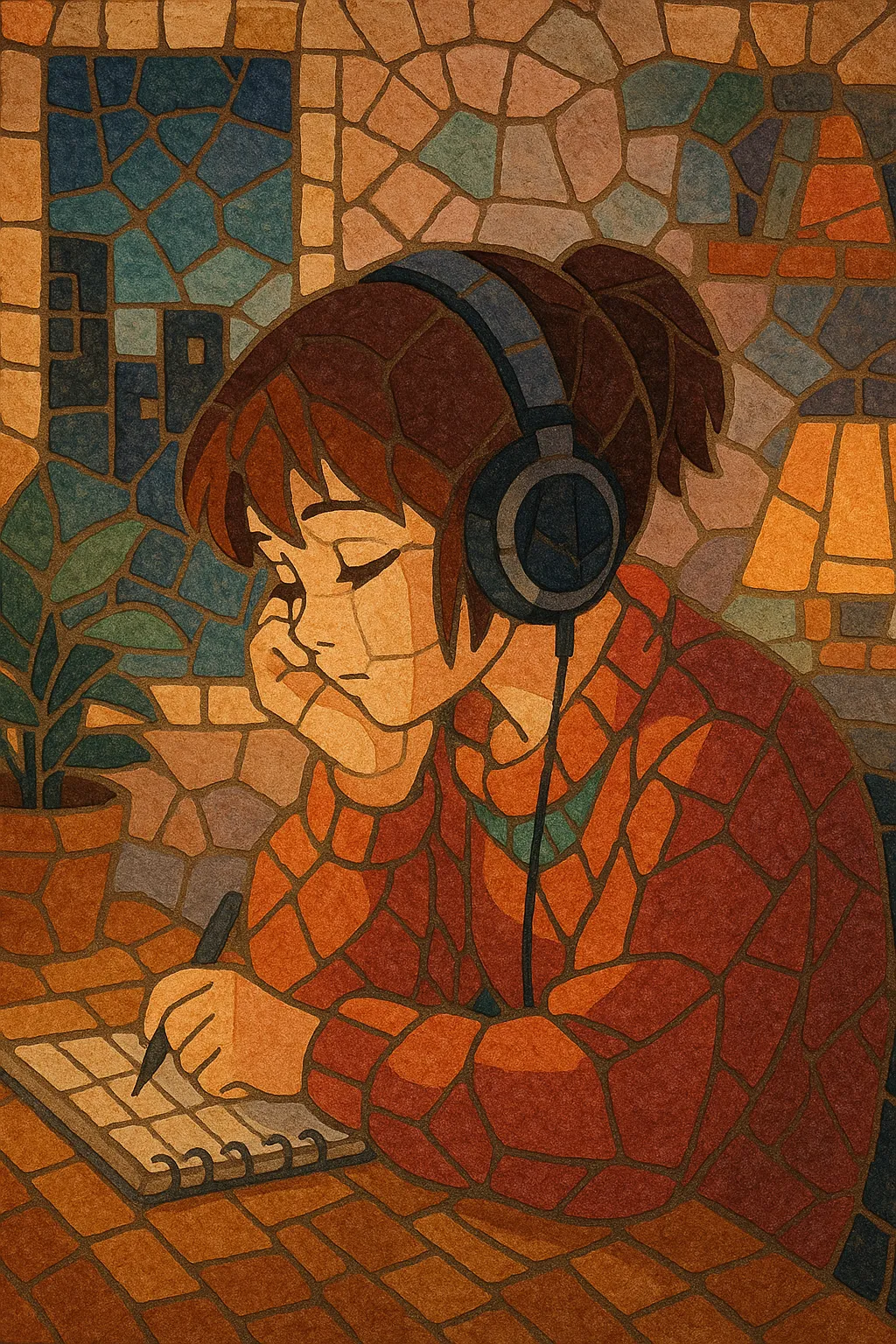
Beyond sound, the genre is inseparable from a visual culture of looping anime scenes (e.g., the iconic "study girl"), cozy late‑night ambience, and pastel palettes. The result is intimate, unobtrusive "study beats" designed for focus, calm, and gentle nostalgia—an internet-native mood music that sits between chillhop and vaporwave aesthetics.


Sources: Spotify, Wikipedia, Discogs, Rate Your Music, MusicBrainz, and other online sources

History

Precursors (2000s)

Anime lo-fi’s roots trace back to the blend of jazz-rap and instrumental hip hop popularized by artists like Nujabes, whose Samurai Champloo (2004) soundtrack connected anime imagery with mellow, crate-digger beats. In parallel, early 2010s vaporwave and chillhop communities normalized looped visuals, retro media nostalgia, and relaxed, sample-based instrumentals on blogs, SoundCloud, and Bandcamp.

Emergence on Streams (mid‑2010s)

The style crystallized in the mid‑2010s as 24/7 YouTube streams—most famously ChilledCow (later Lofi Girl)—began broadcasting “beats to relax/study to,” frequently accompanied by anime-inspired loops. This format amplified a global cohort of bedroom producers sharing short, loop-driven instrumentals that leaned into anime dialogue snippets, OST fragments, and soft-focus, vinyl‑warmed textures.

Consolidation and Global Reach (late 2010s–2020s)

Labels, curators, and playlist ecosystems (YouTube, Spotify, Bandcamp) formalized the scene, encouraging royalty‑light approaches (original playing, VSTs, royalty‑free packs) as platforms tightened content ID and copyright enforcement. The sound diversified—some tracks more jazzy and harmonically rich, others ambient and texture‑forward—while retaining a gentle, nostalgic core.

Aesthetics, Community, and Practice

Anime lo-fi is as much an online community as a genre: producers trade presets and lofi drum kits, visual artists craft looping anime‑style imagery, and listeners congregate in study streams and Discords. Over time, its aesthetics influenced adjacent tags like “ambient lo‑fi,” “sad lo‑fi,” and sleep‑oriented study beats, while remaining anchored to a relaxed, late‑night mood.


How to make a track in this genre

Core Tempo, Feel, and Rhythm
•   Aim for 70–90 BPM with a relaxed pocket; light swing or subtle off‑grid timing humanizes loops. •   Use soft kicks, rimshot/snap snares, and lightly shuffled closed hi‑hats. Layer tasteful foley (page turns, rain, tape start/stop) for intimacy.
Harmony and Melody
•   Favor warm, jazzy harmony: minor keys, 7ths/9ths/11ths, ii–V–I turns, and modal colors (Dorian/Aeolian). Keep chord voices close with smooth voice‑leading. •   Lead with simple, memorable motifs (Rhodes, MKS‑20‑style pianos, nylon guitar, vibraphone, dusty synths). Resist overplaying—space is musical.
Sound Design and Texture
•   Create a worn character with vinyl crackle, gentle noise beds, tape saturation, wow/flutter, and low‑pass/tilt EQ (soft high‑end roll‑off around 10–12 kHz). •   Sidechain pads/keys subtly to the kick for a breathing feel. Slight detune and micro‑timing add warmth without sounding sloppy.
Sampling and Anime Touches
•   If sampling anime OST/dialogue, use very short cuts and heavy transformation (time‑stretch, pitch, reversal, filtering) to avoid recognizability. •   Prefer legally safe sources: original playing, royalty‑free packs, self‑recorded instruments, or public‑domain material.
Arrangement and Length
•   Short forms work best: 90–150 seconds with a 4–8‑bar loop, gentle A/B variations, drops, and ear‑candy fills every 8–16 bars. •   Keep intros/outros functional for playlist mixing; avoid abrupt endings.
Mixing and Delivery
•   Keep low end mono and controlled (HPF non‑bass at 80–120 Hz). Aim for a warm, mid‑forward balance. •   Moderate loudness (≈ −14 to −12 LUFS) preserves dynamics; gentle bus saturation/glue compression is enough.
Visual and Presentation
•   Pair with looping anime‑style visuals or stills in soft palettes and cozy indoor/night scenes. •   Tag thoughtfully (anime lo‑fi, study beats, chillhop) and provide credits for art/samples.

Main artists

Top tracks

Locked
Share your favorite track to unlock other users’ top tracks
Influenced by
Has influenced
Challenges
Digger Battle
Let's see who can find the best track in this genre
© 2026 Melodigging
Melodding was created as a tribute to Every Noise at Once, which inspired us to help curious minds keep digging into music's ever-evolving genres.
Buy me a coffee for Melodigging