Your digging level
Description
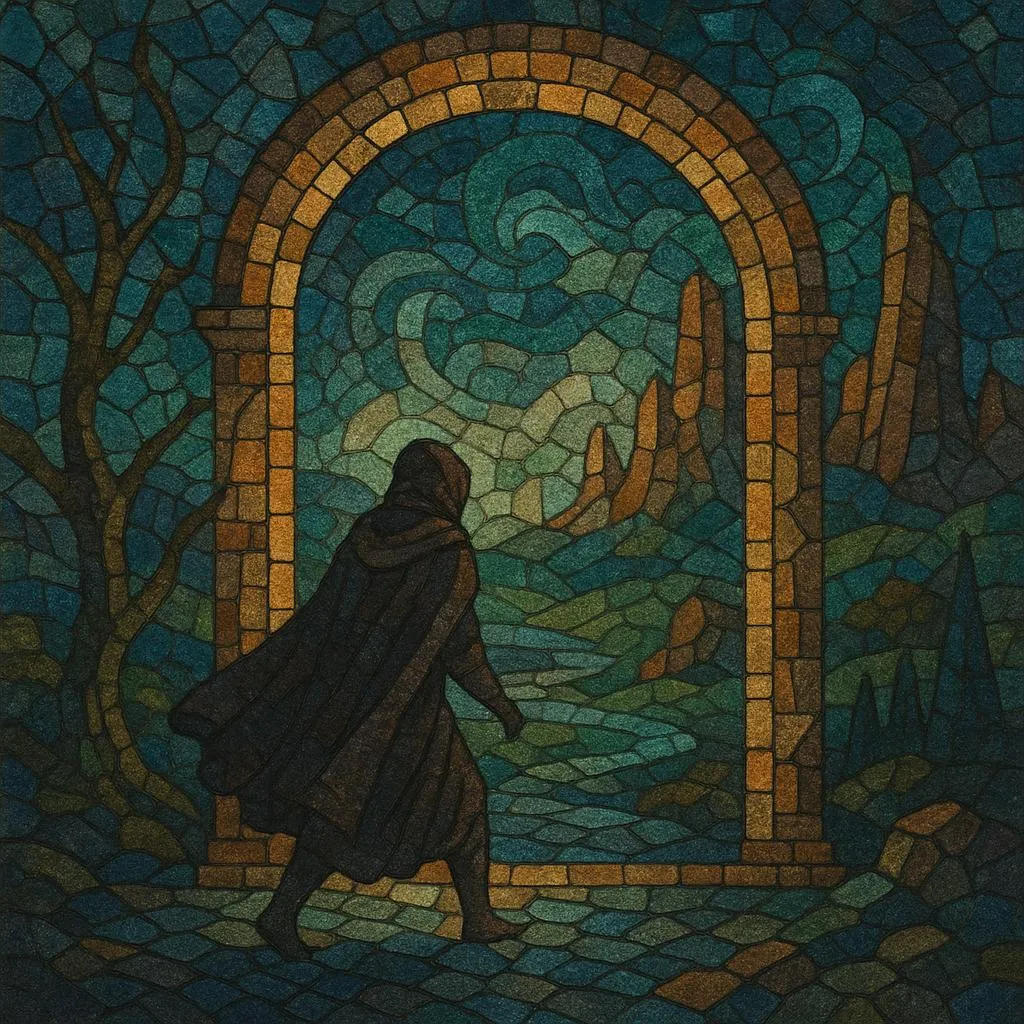
Portal fantasy (in music) is a narrative- and world‑building–driven style that evokes the crossing between our world and parallel realms. It focuses on sonic depictions of gateways, thresholds, and dimensional travel, aligning with the literary “portal fantasy” tradition.
Musically, it blends symphonic, progressive, and cinematic palettes—rich orchestration, choir, harp/celesta, wide‑screen synthesizers, and guitar—while using leitmotifs and key/tempo shifts to suggest movement between worlds. Lyrics and track concepts frequently reference doors, mirrors, binding spells, or liminal places, while purely instrumental works use timbral contrasts and spatial effects to imply passage from one plane to another.
Across rock, metal, soundtrack, and game music, portal fantasy provides the narrative glue that lets albums and scores feel like guided journeys through contiguous yet contrasting dimensions.
History
The musical language of portal fantasy coalesced in the wake of late‑1960s/1970s progressive and psychedelic rock concept albums, where extended forms, scene‑like movements, and literary references (Lewis Carroll, C. S. Lewis, Tolkien) encouraged listeners to imagine crossings into other realms. Orchestral colors, Mellotron/organ pads, and modal harmony created a sense of wonder and displacement akin to stepping through a gate.
The rise of fantasy film/television scoring and the ascent of richly orchestrated synthesizers broadened the palette. In parallel, JRPG and adventure game scores (often centered on time/space travel and alternate worlds) adopted leitmotifs and harmonic portals (abrupt modulations, mode swaps) to sonify transitions between regions or timelines.
European symphonic and power metal embraced portal imagery as plot engines for rock operas and multi‑album sagas. Choirs, strings, heroic guitar themes, and folkoric touches met rapid modulations and narrative lyrics, rendering the sensation of crossing from the mundane into the marvelous.
Streaming, game franchises, and transmedia storytelling further normalized portal fantasy aesthetics. Concept albums, VGM, and cinematic post‑rock/metal use expansive reverbs, layered orchestration, and motif morphing to depict thresholds and parallel planes. Today, “portal fantasy” functions as a thematic current across styles, rather than a single narrow genre label—united by the idea of worlds lying next to our own and occasionally connecting.