Your digging level

For this genre
0/8
🏆
Sign in, then listen to this genre to level up

Description

Neo-classical (often called post-classical in the streaming era) is a contemporary branch of classical-adjacent music that blends salon- and chamber-style writing with minimalist repetition, ambient textures, and cinematic production.

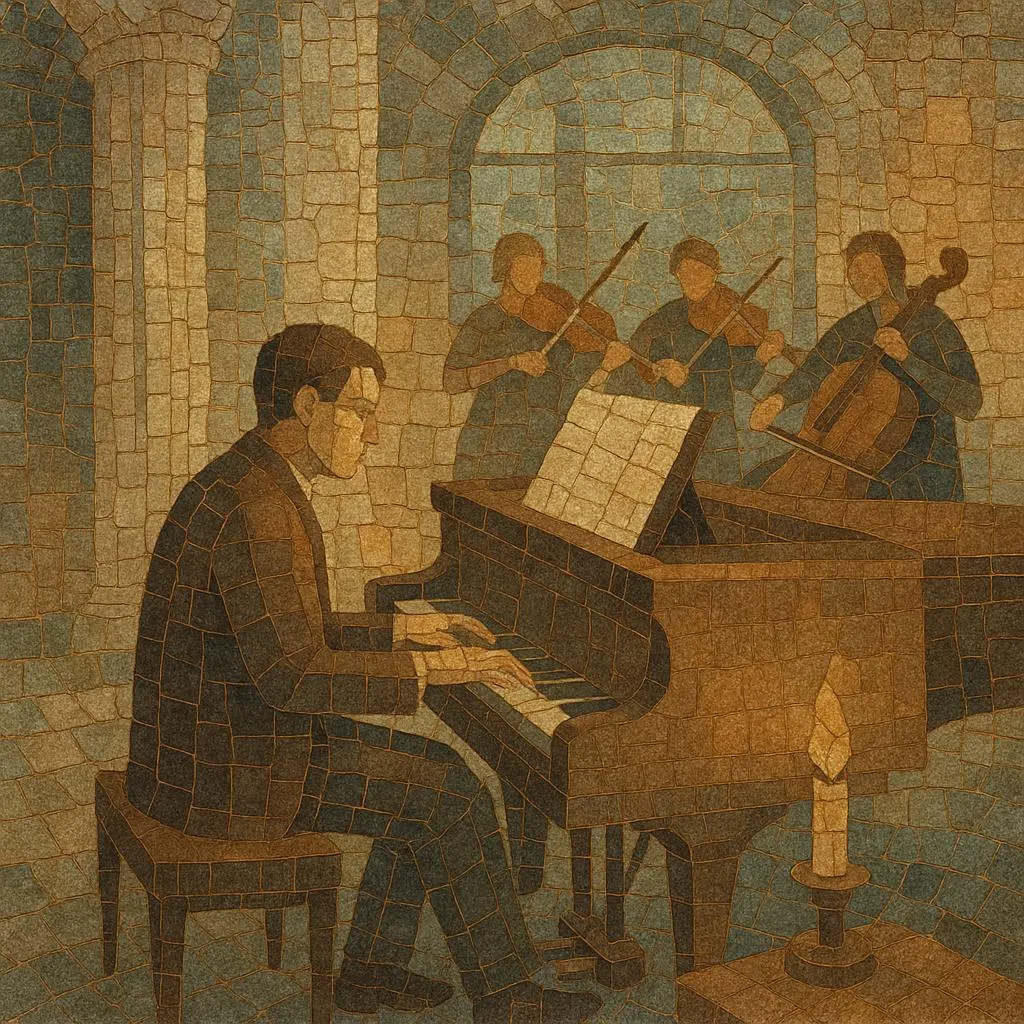
It typically centres on intimate, close-miked piano and small string ensembles, augmented by subtle electronics (synth pads, tape hiss, granular textures) and restrained percussion. Pieces tend to favour consonant harmony, slow harmonic rhythm, and memorable ostinati over extended development, and are commonly crafted as short vignettes suitable for both active listening and background use.

A key aesthetic is warmth and proximity: felted pianos, bow noise, room tone, and soft tape saturation underline a human, handcrafted atmosphere. While rooted in classical craft, the genre is oriented toward 21st‑century listening contexts (film/TV sync, playlists, and focused work).


Sources: Spotify, Wikipedia, Discogs, Rate Your Music, MusicBrainz, and other online sources

History

Early 2000s: Quiet revolutions

Neo-classical coalesced in the late 2000s as composers and producer-performers reintroduced tonal lyricism, minimalist processes, and intimate recording aesthetics into short-form works. The rise of boutique labels and collectives, Berlin and London scenes, and accessible digital production tools fostered a wave of piano- and string-led miniatures shaped for contemporary listening.

2010s: Playlist era and screen music

Streaming platforms, focus-playlists, and the growth of film/TV/game scoring amplified the sound. Short, emotionally direct pieces found wide audiences through "peaceful piano" and "focus" playlists, while the same composers scored arthouse cinema, prestige TV, and indie games, reinforcing the genre’s cinematic identity. The studio became a key instrument: close miking, felted uprights, analog noise, and subtle electronics defined a recognisable palette.

Aesthetic consolidation

Common traits crystallised: slow-to-moderate tempos; diatonic or modal harmony; repeating ostinati; voice-leading that privileges stepwise motion; restrained dynamics with bloom-like crescendos; and ambient-adjacent production. Works often inhabit 2–5 minute forms, balancing motif clarity with textural evolution.

2020s: Cross-pollination and ubiquity

Neo-classical now overlaps with ambient, modern minimalism, new age revival, and lo-fi study scenes. It remains highly sync-friendly and widely used for reading, meditation, and mindfulness, while concert adaptations (strings + electronics) bring the sound to recital halls and festivals.

Ongoing dialogue with tradition

Although contemporary in production, the genre’s craft converses with earlier minimalism and chamber traditions, translating classical intimacy into a modern, listener-centric format.

How to make a track in this genre

Instrumentation and sound
•   Start with a felted or softly voiced piano (upright or mellow grand) recorded very close; allow pedal noise and room tone for intimacy. •   Add a small string ensemble (2–6 players) favouring soft articulations (con sordino, sul tasto, flautando) and light spiccato for motion. •   Layer gentle electronics: warm pads, tape loops, granular beds, or subtle field recordings. Use saturation, reverb, and light compression for warmth and cohesion.
Harmony and melody
•   Prefer diatonic or modal harmony (Dorian, Aeolian, Mixolydian). Keep harmonic rhythm slow; pivot chords and pedal points work well. •   Craft singable, stepwise melodies with narrow intervals; decorate with appoggiaturas and suspensions. Voice-leading should resolve smoothly.
Rhythm and texture
•   Build with ostinati and arpeggiated patterns at 60–90 BPM. Use additive/subtractive processes (introduce notes, remove notes) for evolution without heavy contrast. •   Employ crescendos, swells, and textural blooms rather than large dynamic jumps. Silence and decay are part of the rhythm.
Form and pacing
•   Aim for 2–5 minute pieces: state a motif, vary texture/voicing, and conclude with a gentle cadence or fade. •   Consider A–A′–B–A structures where B is a textural lift (e.g., strings joining, harmony opening) rather than a dramatic modulation.
Production and notation
•   Close-mic the piano; capture mechanical detail. Blend a room mic for air. Use reverb as a spatial glue, not a wash. •   If performing live, arrange for piano + string quartet or trio with a laptop for pads/loops. Notation can be hybrid: traditional staff for core parts, DAW automation for evolutions.
Common devices
•   Pedal drones; parallel sixths/thirds; quartal voicings for neutrality; ostinati over pedal bass; delayed entrance of strings for the “bloom” effect; subtle tape flutter or noise beds for nostalgia.

Top tracks

Locked
Share your favorite track to unlock other users’ top tracks
Influenced by
Has influenced
Challenges
Digger Battle
Let's see who can find the best track in this genre

Download our mobile app

Get the Melodigging app and start digging for new genres on the go
© 2026 Melodigging
Melodding was created as a tribute to Every Noise at Once, which inspired us to help curious minds keep digging into music's ever-evolving genres.
Buy me a coffee for Melodigging