

Your digging level
Description
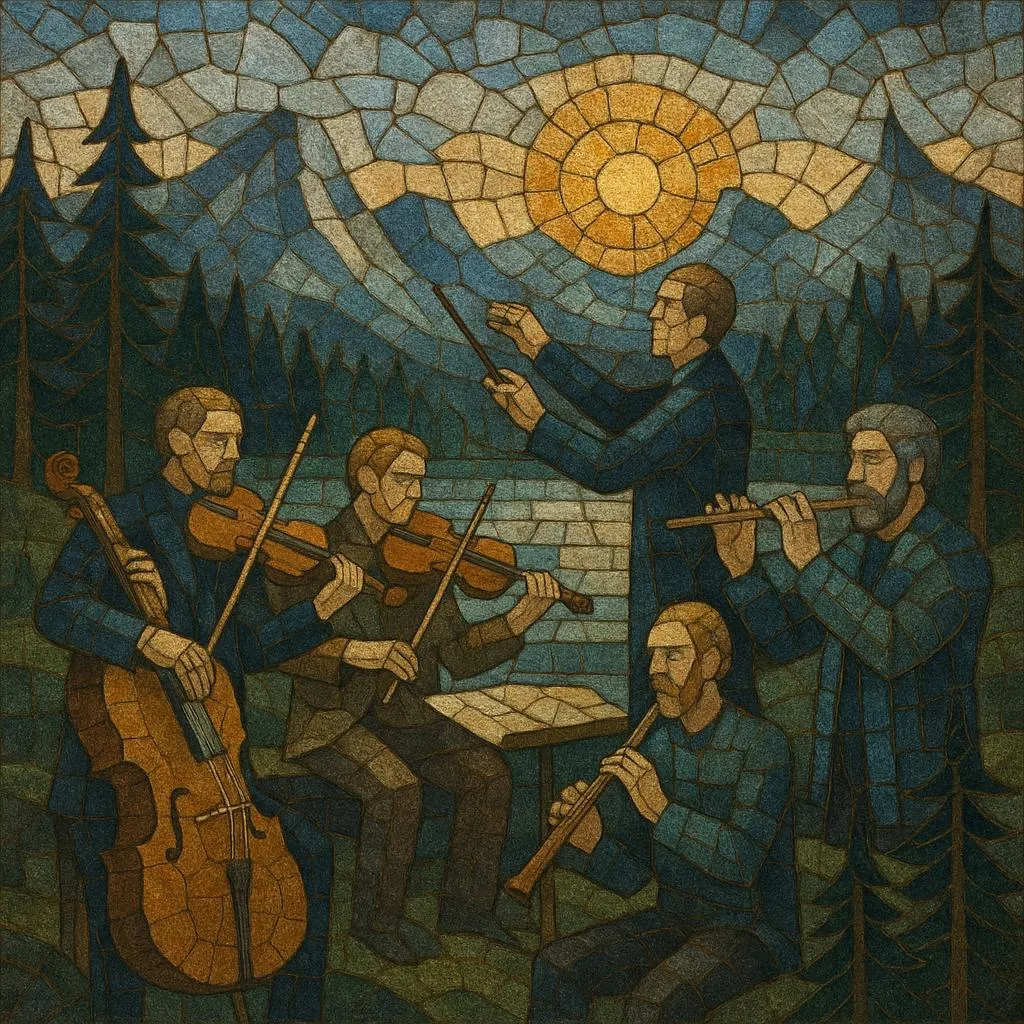
Nordic orchestra refers to the symphonic and orchestral tradition emerging from the Nordic countries (Denmark, Finland, Iceland, Norway, and Sweden), characterized by a distinct 'Nordic tone'.
This style is renowned for its evocative soundscapes that often reflect the region's dramatic natural landscapes—vast forests, rugged mountains, and light-filled summer nights.
Musically, it combines the structural depth of Central European classical traditions with the modal melodies, drone basses, and rhythmic vitality of local folk music.
The genre encompasses the National Romanticism of the 19th century, which sought to define national identities, as well as the stark, organic modernism of the 20th century.
History
The roots of Nordic orchestral music lie in the 18th century with early Swedish symphonists like Johan Helmich Roman, often called the 'Father of Swedish Music', who brought continental influences to the North.
However, the genre truly found its unique voice during the mid-19th century with the rise of National Romanticism. Composers like Niels Gade in Denmark and Franz Berwald in Sweden began to infuse standard classical forms with local color.
The late 19th and early 20th centuries marked the 'Golden Age', dominated by giants like Edvard Grieg in Norway and Jean Sibelius in Finland. Grieg integrated Norwegian folk tunes and peasant dances, while Sibelius created a powerful, organic symphonic language inspired by the Kalevala mythology and Finnish nature.
In the 20th century, Carl Nielsen (Denmark) introduced a more progressive, anti-romantic dynamism, while later composers like Allan Pettersson and Einojuhani Rautavaara explored deep existentialism and mystical soundscapes, securing the region's place in the global orchestral canon.
To compose in the Nordic orchestral style, focus on creating a sense of spaciousness and clarity in the orchestration, often keeping textures transparent rather than dense.
Use modal scales (such as Dorian or Mixolydian) and open fifths in the harmony to evoke a folk-like or archaic atmosphere.
Incorporate drone basses or pedal points to ground the music, mimicking the sound of traditional instruments like the Hardanger fiddle or hurdy-gurdy.
Emphasize woodwinds (especially flutes and oboes) to represent nature sounds like birds or wind, and use swelling brass for epic, saga-like climaxes.
Rhythmically, draw inspiration from traditional dances like the 'pols' or 'springar', using asymmetrical meters or accented weak beats to add vitality.



