Your digging level

For this genre
0/8
🏆
Sign in, then listen to this genre to level up

Description

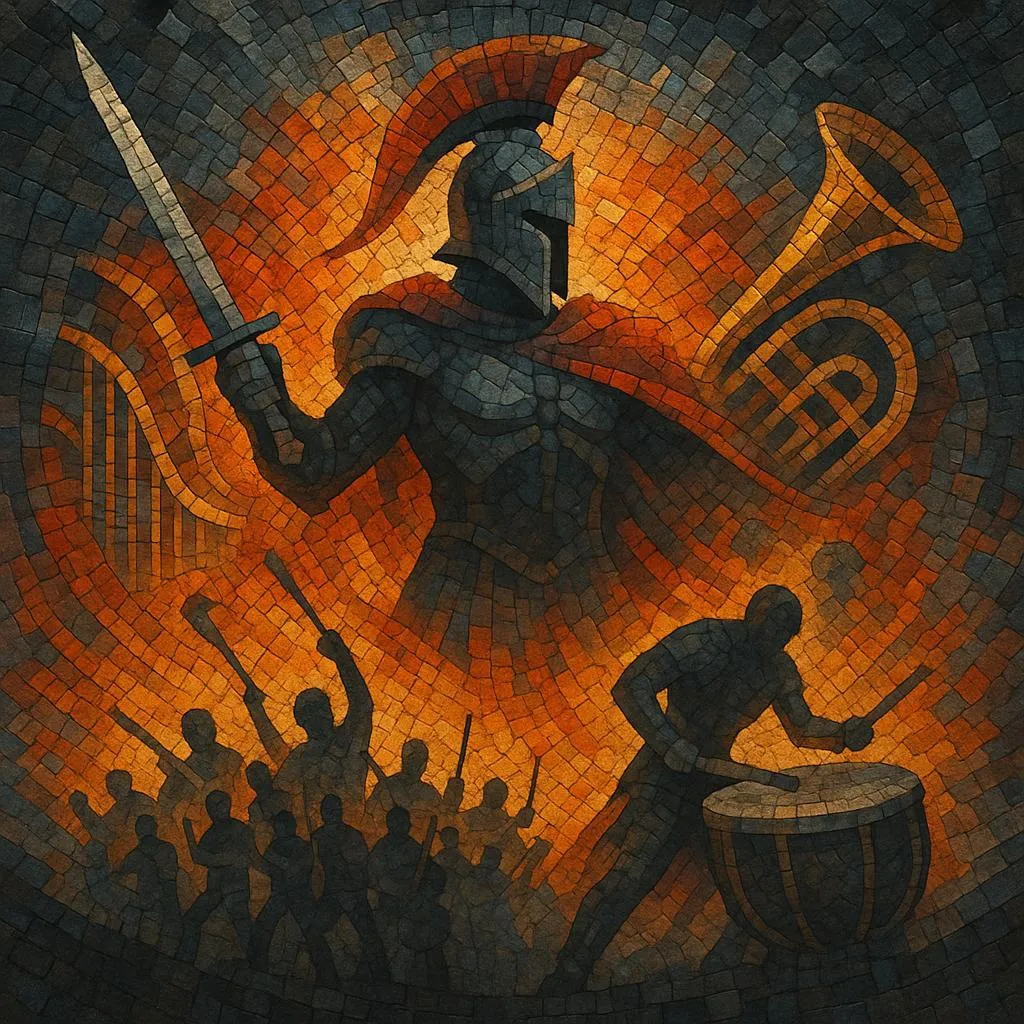
Epicore is a modern hybrid-orchestral style built to sound colossal, triumphant, and cinematic. It fuses traditional symphonic writing (strings, brass, choir) with contemporary sound design, synthesizers, and oversized percussion to create music designed for trailers, teasers, e‑sports hype, and dramatic storytelling.

Expect wide dynamic arcs, ostinato string patterns, towering brass fanfares, choral pads or Latinized syllabic chants, and aggressive drum ensembles (taikos, toms, anvils) punctuated by braams, risers, downers, and impacts. Harmonies lean on minor/modal progressions that convey heroism and inevitability, while production emphasizes punch, width, and sheer scale.


Sources: Spotify, Wikipedia, Discogs, Rate Your Music, MusicBrainz, and other online sources

History

Early Seeds (1990s–early 2000s)

The roots of Epicore lie in the rise of dedicated trailer-music houses that began supplying film campaigns with bespoke cues. Drawing on Hollywood scoring practices and industrial/electronic textures, these catalogs established the “bigger-than-cinema” aesthetic: oversized drums, staccato strings, and bold brass themes tailored to 2–3 minute promotional arcs.

Codification and Boom (mid–late 2000s)

As blockbuster trailers demanded increasingly dramatic sound, the sound vocabulary solidified: string ostinati for momentum, choir for gravitas, massive low-end braams for menace, and carefully plotted edit points. Hybridization with electronic production expanded the palette, making cues both orchestral and club‑loud. Online trailer-music communities and compilation channels helped codify the genre’s tropes.

Streaming Era and Cross‑Pollination (2010s)

With the explosion of streaming platforms, games, and e‑sports, Epicore’s usefulness widened beyond film promotion. Its techniques filtered into pop drops, metal orchestration, post‑rock climaxes, and EDM “cinematic” builds. Libraries and independent composers refined structural templates (intro–rise–break–climax–afterglow), while sound design packs standardized risers, impacts, and whooshes.

Today

Epicore remains a production-driven, composer‑forward field. It continues to evolve through better sampling, live‑over‑sample hybrid sessions, and immersive formats. Its dramaturgical clarity—clear arcs, escalating stakes, cathartic peaks—keeps it central to modern media marketing and spectacle.

How to make a track in this genre

Core Palette
•   Orchestral: strings (short ostinati and longs), brass (horns/trombones for fanfares and braams), choir (sustains and staccato syllables), auxiliary percussion (cymbals, anvils, snares). •   Hybrid/Design: layered taikos/toms, sub‑kicks, synth basses, pulses, braams, risers, downers, whooshes, tonal impacts, reverses. •   Harmony/Mode: minor and modal (Aeolian, Dorian, Phrygian) with heroic lifts via bVI–bVII–i or IV–V moves; frequent pedal points and quartal brass voicings.
Form and Dynamics
•   Typical structure: Intro (atmosphere/pulse) → First Rise (motif + light percussion) → Break/Stop‑down (choir pad or solo instrument) → Main Climax (full drums, brass lead, choir) → Button/outro. •   Write for editability: clear 4–8 bar sections, sting endings, and alternate endings; provide edit points and cutdown versions (60/30/15 sec).
Rhythm and Ostinati
•   BPM commonly 70–140; a lot of cues feel like halftime 90–110. •   Build momentum with repeating 8th/16th string ostinati; vary by orchestration (violins → violas → celli), register, and accent patterning. •   Layer drum ensembles: low taiko patterns (on 1 & 3), mid tom grooves, and high metal/aux for excitement; add fills and accents before section changes.
Melody and Hooks
•   Brass or choir often carry the main theme; keep it intervallic and memorable (perfect 4ths/5ths for nobility). •   Use call‑and‑response between sections (strings answer brass), and reinforce climaxes with octave doubling.
Production and Mix
•   Layer samples with selective live overdubs (brass, choir, percussion) for realism. •   Tight low end: side‑chain subs to impacts; carve room around 60–120 Hz for drums; control 2–4 kHz brass bite. •   Width and depth: early reflections for sections, longer halls on choir/brass in climaxes; automate reverb and saturation to scale the mix with the drama.
Sound Design Details
•   Risers (1–4 bars) into hits; downers after peaks to sell cuts. •   Braams (pitched low brass + synth) for menace; tune them to the cue’s key. •   Use signature ear‑candy (granular reverses, tonal whooshes) sparingly to avoid clutter.

Top tracks

Locked
Share your favorite track to unlock other users’ top tracks
Influenced by
Has influenced
Challenges
Digger Battle
Let's see who can find the best track in this genre

Download our mobile app

Get the Melodigging app and start digging for new genres on the go
© 2026 Melodigging
Melodding was created as a tribute to Every Noise at Once, which inspired us to help curious minds keep digging into music's ever-evolving genres.
Buy me a coffee for Melodigging