Your digging level

For this genre
0/8
🏆
Sign in, then listen to this genre to level up

Description

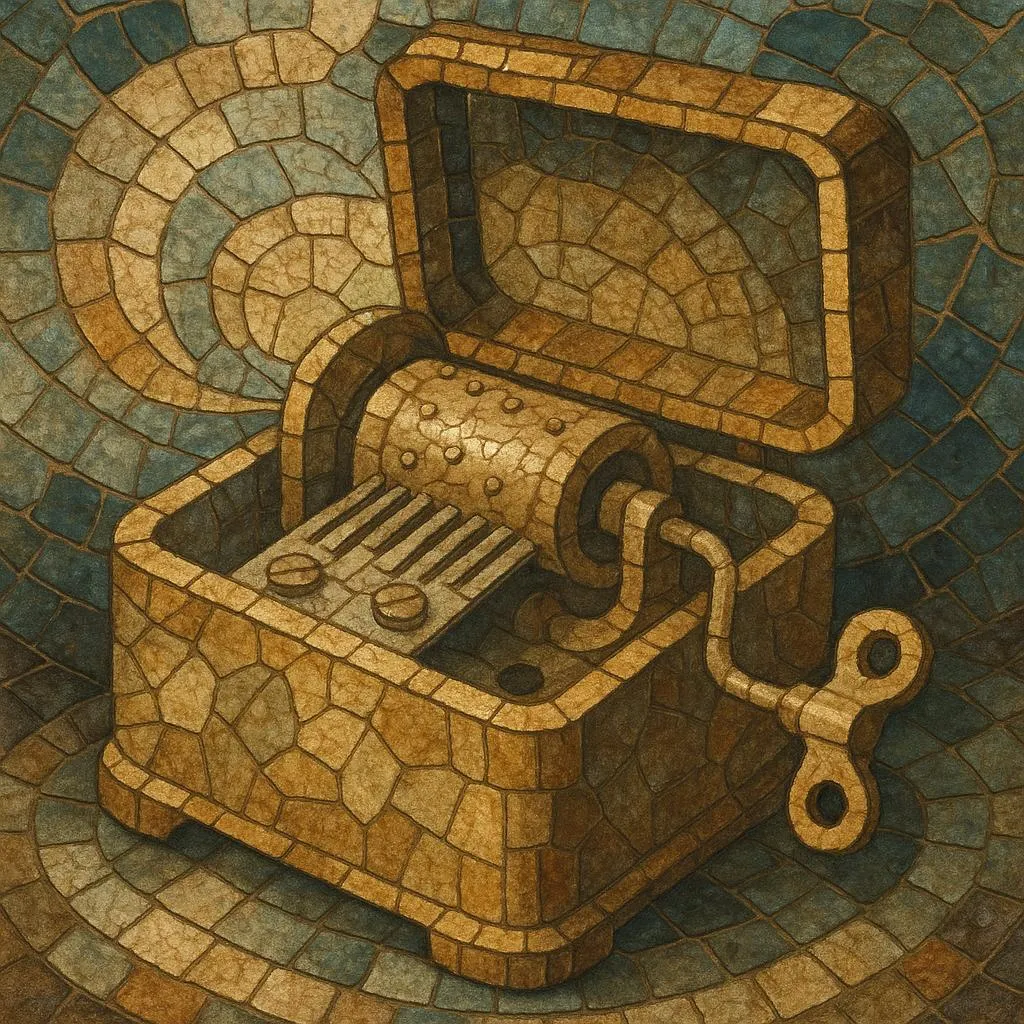
Music box (as a genre tag) denotes pieces written for, recorded from, or emulating the bell‑like plucked‑steel timbre of mechanical music boxes. The sound is produced by pins on a rotating cylinder or disc plucking tuned teeth (a steel comb), yielding a delicate, chiming decay that evokes lullabies, nursery tunes, or uncanny clockwork.

Historically the instrument emerged at the end of the 18th century and flourished through the 19th, before phonographs displaced it. In contemporary usage, “music box” refers not only to antique instruments but also to modern sample libraries and synthesizers that imitate the timbre for film, game, ambient, and lullaby contexts.


Sources: Spotify, Wikipedia, Discogs, Rate Your Music, MusicBrainz, and other online sources

History

Origins (late 18th–19th century)

The music box descends from musical clocks and snuff boxes. In 1796 the Geneva watchmaker Antoine Favre‑Salomon replaced bell stacks with a tuned steel comb driven by a pinned barrel—an innovation widely cited as the first modern “comb” music box. Throughout the 1800s, makers in Switzerland and later Germany, Britain, and the U.S. industrialized the craft; companies like Symphonion, Polyphon, and Regina popularized interchangeable‑disc models until recorded sound eclipsed them.

From parlor novelty to repertoire and nostalgia (19th–20th century)

Composers and arrangers imitated the idiom at the piano and in orchestra—famously Anatoly Lyadov’s The Musical Snuff‑Box (1893)—reinforcing the association between dainty waltz rhythms, narrow ranges, and chiming figurations. Even after the market waned, the timbre signified childhood, toys, and memory in popular culture.

Cinematic and game tropes (late 20th–21st century)

Film composers adopted the sound for tender or unsettling effect; the Candyman franchise explicitly frames its main title as a “Music Box” theme, and Danny Elfman’s Burton collaborations helped mainstream the gothic‑storybook application of toy‑instrument colors. In games, composers such as Akira Yamaoka (Silent Hill) and other ambient‑leaning scores leveraged fragile music‑box textures to signal innocence, dread, or liminality.

The recording genre today

With sample libraries and virtual instruments, “music box” functions as a production category across ambient, video‑game, and lullaby catalogs—either using restored mechanical boxes or digital emulations, often close‑miked with mechanical noise for intimacy.

How to make a track in this genre

Timbre and instrumentation
•   Start with a real mechanical music box (cylinder or disc) recorded close to the comb, or a high‑quality sampled/physical‑modeled instrument. Layer subtle mechanical noises (winding, ratchet, click) for authenticity. •   To thicken the spectrum without losing character, double lines quietly with celesta, glockenspiel, or plucked synths; keep transients soft so the comb remains primary.
Melody, harmony, and register
•   Write singable, stepwise melodies within a modest range (often one to one‑and‑a‑half octaves). Favor simple diatonic harmony (I–IV–V, occasional vi) and pedal‑tone drones; add color tones (add9, 6ths) sparingly. •   Arpeggiated broken‑chord patterns, ostinati, and ternary (ABA) miniature forms mirror historical boxes and evoke clockwork regularity.
Rhythm and form
•   Common meters are 3/4 (lilt/waltz) and 4/4 at moderate or lullaby tempi (≈56–96 BPM). Use loopable 8–16‑bar phrases with gentle variations (register shifts, ornaments, truncated endings) to maintain hypnotic motion.
Texture and production
•   Leave headroom: the comb’s transient can be sharp; tame with gentle compression and tape/saturation. Add small‑room or spring reverb; for distant nostalgia, use band‑limiting and vinyl/cylinder noise. •   For horror/suspense, detune slightly, use non‑functional or modal harmony (Phrygian, Locrian hint), meter hiccups, and unexpected rests to subvert the lullaby association.
Orchestration in media
•   Sit the box above soft strings/choir pads or below a solo voice/woodwind. Introduce thematic “music‑box” statements for character motives, then broaden orchestration for development while preserving the chiming hook.

Related labels

Top tracks

Locked
Share your favorite track to unlock other users’ top tracks
Influenced by
Challenges
Digger Battle
Let's see who can find the best track in this genre

Download our mobile app

Get the Melodigging app and start digging for new genres on the go
© 2026 Melodigging
Melodding was created as a tribute to Every Noise at Once, which inspired us to help curious minds keep digging into music's ever-evolving genres.
Buy me a coffee for Melodigging