Your digging level
Description
A coronation anthem is a ceremonial piece of choral music written to accompany the crowning of a monarch.
Rooted in the Anglican anthem and the broader European motet tradition, these works are not congregational hymns but textured, often antiphonal or polyphonic pieces for trained choir (frequently with organ and orchestra), designed to project grandeur and solemn celebration within a liturgical rite.
History
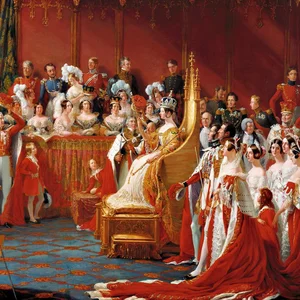
Coronation anthems arise from the English choral and liturgical tradition, where the post-Reformation “anthem” became a distinctive sacred form. Earlier coronation rites relied on plainsong and ceremonial motets, but by the late 17th century the English court favored newly composed, large-scale anthems for key moments of the service (processions, anointing, enthronement, homage).
Henry Purcell’s anthems for James II’s 1685 coronation set a precedent for ceremonial scale and splendor. The genre was decisively codified by George Frideric Handel’s four Coronation Anthems (1727) for George II—especially “Zadok the Priest,” whose grand orchestral prelude and blazing choral entries became an archetype of regal pageantry.
In the 19th and early 20th centuries, composers refreshed the genre with richly scored works tailored to Westminster Abbey’s vast acoustic: Hubert Parry’s “I was glad” (1902) became a processional staple, while Edward Elgar contributed dignified, melodically memorable service music for George V’s 1911 coronation.
Mid-century composers such as William Walton (Coronation Te Deum, 1953) and Ralph Vaughan Williams (“O taste and see,” 1953) blended modern harmonic color with clear, singable choral lines, ensuring music that was contemporary yet liturgically functional and immediately communicative.
Recent coronations have sustained the tradition of commissioning new anthems, involving leading British and Commonwealth composers. Andrew Lloyd Webber’s “Make a Joyful Noise” (2023) and newly written works by Paul Mealor, Roxanna Panufnik, Tarik O’Regan and others reflect the genre’s living continuum—honoring ceremonial expectations while embracing today’s tonal palette and inclusive musical voices.