Your digging level

For this genre
0/8
🏆
Sign in, then listen to this genre to level up

Description

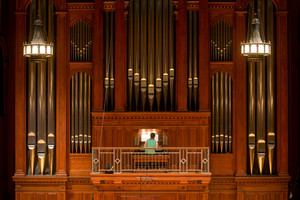
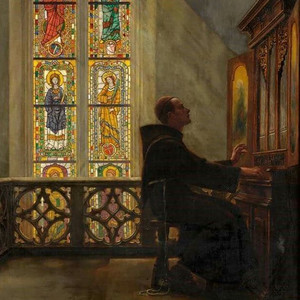
Organ music refers to repertoire written or improvised for pipe organ (and, by extension, other classical organs such as positive and portative). It spans sacred and secular contexts and includes liturgical accompaniments, free preludes and toccatas, contrapuntal forms (fugues, ricercars), chorale-based works, symphonic poems, and large cyclic forms.

A defining trait is the organ’s orchestral palette: ranks and stops allow timbral combinations from whispering flutes to blazing reeds, supported by an independent pedal division that enables full, polyphonic textures. Across history, organ music has been closely linked to church ritual and acoustics, but it also developed into a concert tradition with virtuosic, architectonic forms that exploit large instruments in resonant spaces.


Sources: Spotify, Wikipedia, Discogs, Rate Your Music, MusicBrainz, and other online sources

History

Medieval roots (1300s–1400s)

The first notated keyboard pieces suitable for organ appear in sources like the Robertsbridge Codex (c. 1360s, England) and the Faenza Codex (early 1400s, Italy). These works, often intabulations and dance-derived pieces, show the instrument’s early role in alternating with chant and embellishing liturgy.

Renaissance idioms (1500s)

By the 16th century, distinct regional schools formed. In Italy, Andrea and Giovanni Gabrieli and especially Girolamo Frescobaldi codified toccatas, canzonas, and ricercars. In the Low Countries, Jan Pieterszoon Sweelinck became the “maker of organists,” shaping a pan‑European pedagogy through students who spread north German contrapuntal styles.

Baroque culmination (1600s–mid‑1700s)

The north German school (Buxtehude, Bruhns) cultivated chorale fantasia and large free preludes with brilliant pedal technique. In central Germany, Johann Pachelbel refined chorale preludes. Johann Sebastian Bach synthesized Italian lyricism, French color, and German counterpoint in monumental preludes, fugues, trios, and chorale settings—defining the instrument’s high Baroque apex.

Classical transition and Romantic symphonic era (late 1700s–1800s)

While the Classical period favored other keyboard idioms, the 19th century revived the organ via new technologies and grand instruments (notably Cavaillé‑Coll in France). Composers such as César Franck, Charles‑Marie Widor, and Louis Vierne created the “organ symphony,” exploiting orchestral registrations and cyclic forms. In Germany, Max Reger fused late‑Romantic harmony with Bachian counterpoint.

20th century to present

Olivier Messiaen transformed organ language with modes of limited transposition, additive rhythms, birdsong, and theology-infused color. Later modernists and neo‑Baroque reformers rebalanced clarity and color; improvisation remained central in French and German traditions. Today the repertoire spans sacred service music and concert pieces, digital/pipe hybrids, spectral and minimalist works, and collaborations with electronics and multimedia—while the organ’s timbre also informs rock and progressive idioms via electric organs and symphonic textures.

How to make a track in this genre

Instruments and registration
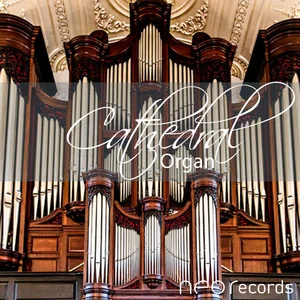
•   Write for a pipe organ with at least two manuals and pedal. Indicate registration (stop choices) by family: flutes (8′, 4′), principals (8′, 4′, 2′, mixtures), strings, and reeds (trumpet, oboe). Use couplers and crescendo to shape dynamics. •   Match color to era: Baroque favors clear principal choruses and mixtures; Romantic/symphonic writing exploits warm foundations (16′/8′), colorful reeds, and orchestral solo stops; modern works may specify precise mutations, celestes, or unconventional combinations.
Texture, counterpoint, and form
•   Exploit independent pedal lines for bass foundations and virtuoso figurations. Three- and four‑part counterpoint is idiomatic; write singable subjects for fugues and balanced answers/episodes. •   Common forms: toccata/prelude (free, figural), fugue (contrapuntal), chorale prelude (cantus firmus treatment), passacaglia/chaconne (ground bass variations), organ symphony (multi‑movement, cyclic), and suite (stylized dances).
Harmony, rhythm, and space
•   Baroque language: diatonic with functional sequences, suspensions, and mixture; Romantic: expanded chromaticism, enharmonic modulations; Modern: modes, octatonic/whole‑tone collections, added‑note chords, and non‑functional color. •   Write with acoustic decay in mind: broader note values and clear harmonic pacing for reverberant spaces; reserve dense figuration for clear registrations.
Notation and practicalities
•   Notate on three staves when needed (LH/RH/pedal). Indicate articulation (legato for Romantic; articulate touch for Baroque principals) and phrasing explicitly. •   Plan breathing points (registration changes) and feasible manual changes; avoid impossible stretches in pedals; give time for stop changes or assign assistants/pistons.
Liturgical and improvisational practice
•   For service music, base treatments on chant or chorale melodies; provide suitable lengths for entries, offertory, communion, recessional. •   Improvisation is traditional: practice modulating bridges, chorale intonations, versets, and structured toccata-endings built on ostinati or harmonic pedals.

Top tracks

Locked
Share your favorite track to unlock other users’ top tracks
Influenced by
Has influenced
Challenges
Digger Battle
Let's see who can find the best track in this genre

Download our mobile app

Get the Melodigging app and start digging for new genres on the go
© 2026 Melodigging
Melodding was created as a tribute to Every Noise at Once, which inspired us to help curious minds keep digging into music's ever-evolving genres.
Buy me a coffee for Melodigging