Your digging level

For this genre
0/8
🏆
Sign in, then listen to this genre to level up

Description

Modern big band music is contemporary large‑ensemble jazz written for the traditional big band format (roughly 17–20 players) but with 21st‑century harmony, rhythm, and orchestration. It keeps the sectional architecture of saxophones, trombones, and trumpets plus a rhythm section, while expanding the palette with woodwind doubles, flugelhorns, vibraphone, guitar effects, electronics, and occasional strings or voices.

Aesthetically it draws on post‑bop and third‑stream lineage, embracing through‑composed forms, odd and mixed meters, rich clusters and modal colors, and long‑range thematic development. Contemporary writers commonly blend ECM‑like atmospheres, minimalist ostinati, cinematic orchestration, and groove vocabularies from rock, Afro‑Latin, and global traditions. The result ranges from intimate, floating textures to explosive, “epic” tutti statements—equally at home in the concert hall and the jazz club.


Sources: Spotify, Wikipedia, Discogs, Rate Your Music, MusicBrainz, and other online sources

History

Origins and precursors

While big bands flourished in the swing era (1930s–40s), a distinct modern conception took hold later as arrangers absorbed bebop and post‑bop harmony, classical techniques, and new rhythmic ideas. Mid‑to‑late 20th‑century figures such as Thad Jones & Mel Lewis, Toshiko Akiyoshi, Bob Brookmeyer, Don Ellis, and Gil Evans helped redefine the palette with denser voicings, asymmetric meters, and concert‑length works—laying the groundwork for a 1990s renaissance.

1990s–2000s revival

From the early 1990s, ensembles like the Maria Schneider Orchestra and the Mingus Big Band catalyzed a surge of new writing in New York and beyond. Commission‑driven European radio bands (WDR, NDR, hr‑Bigband, BBC Big Band) fostered composer‑led projects, while university jazz programs trained new generations of writers and doublers. The era saw extended suites, orchestral colors, and a composer‑centric model become common.

Global expansion and stylistic breadth

In the 2000s–2010s, groups such as Darcy James Argue’s Secret Society, John Hollenbeck Large Ensemble, Dave Holland Big Band, Bob Mintzer Big Band, Gordon Goodwin’s Big Phat Band, Trondheim Jazz Orchestra, and the Metropole Orkest showcased the idiom’s range—from chamber‑like transparency and ECM lyricism to rock‑inflected, high‑octane charts. Cross‑pollination with contemporary classical music, minimalism, ambient textures, and non‑Western grooves broadened the language.

2010s–present: Technology, education, and commissioning

Modern big band music now thrives through residencies, international festivals, conservatory commissions, and GRAMMY‑recognized albums. Composers routinely employ click tracks, electronics, and spatial staging; notation software and high‑fidelity demos accelerate rehearsal efficiency. The idiom remains a fertile laboratory for orchestration, large‑scale form, and improvisation, uniting the legacy of swing with present‑day sound worlds.
How to make a track in this genre

Instrumentation and color
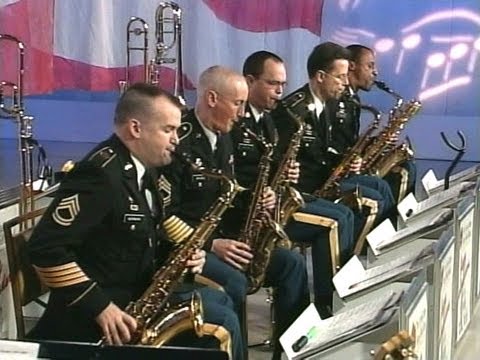
•   Core seating: 5 saxes (with doubles on flute/clarinet/bass clarinet/soprano sax), 4 trombones (incl. bass bone), 4 trumpets (flugelhorn doubles), rhythm section (piano/keys, guitar, bass, drums), often vibraphone and/or auxiliary percussion. •   Expand colors with French horn, tuba, voice, strings, and tasteful electronics. Exploit mutes (Harmon, cup, bucket), flute/clarinet choirs, bass clarinet lead, guitar ambience, and Rhodes/analog synth pads.
Harmony and voicing
•   Combine post‑bop extensions (♭9/♯11/♭13), quartal and cluster voicings, and modal pedals. Use planing, polytonality, and “ECM‑like” open harmony to create breadth. •   Voice lead across sections: sax solis in close clusters, brass in spread drop‑2/3, woodwinds for transparent chorales. Orchestrate chord tones to highlight inner‑voice motion.
Rhythm and groove
•   Employ odd meters (5/4, 7/8, 11/8), mixed‑meter phrases, metric modulation, and layered ostinati. Alternate groove episodes (Afro‑Latin, straight‑8ths rock, swing, second‑line) within a single form. •   Drums: design bespoke set‑ups (mallets/brushes/sticks), clear setup figures, and cue kicks. Bass alternates between walking, pedal drones, and riff‑based ostinati.
Form and development
•   Favor long‑form arcs: multi‑section suites, passacaglias, or theme‑and‑variations. Develop a small motif via reharmonization, orchestral re‑voicing, stretto, and rhythmic augmentation. •   Balance improvisation and composition: place soloists within pre‑scored textures (pads, counterlines, background figures) to maintain narrative continuity.
Writing for sections and solos
•   Craft sax solis with idiomatic articulation and register choreography; interleave brass “call‑and‑response” or antiphonal choirs. •   Give soloists contrasting terrains (open vamp → through‑changes → free cadenza) and provide background figures that evolve with the solo’s intensity.
Notation, rehearsal, and production
•   Provide clear roadmaps, lettered rehearsal marks, drum lead‑sheet cues, and condensed conductor score. Include doubles, mute changes, and instrument switches with ample bars to change. •   Consider click or guide tracks for complex meters; provide mockups for commissioners. Record with section mic’ing, spot mics for woodwind doubles, and room pairs for depth; avoid over‑compression to preserve dynamics.

Top tracks

Locked
Share your favorite track to unlock other users’ top tracks
Influenced by
Has influenced
Challenges
Digger Battle
Let's see who can find the best track in this genre

Download our mobile app

Get the Melodigging app and start digging for new genres on the go
© 2026 Melodigging
Melodding was created as a tribute to Every Noise at Once, which inspired us to help curious minds keep digging into music's ever-evolving genres.
Buy me a coffee for Melodigging