Your digging level
Description
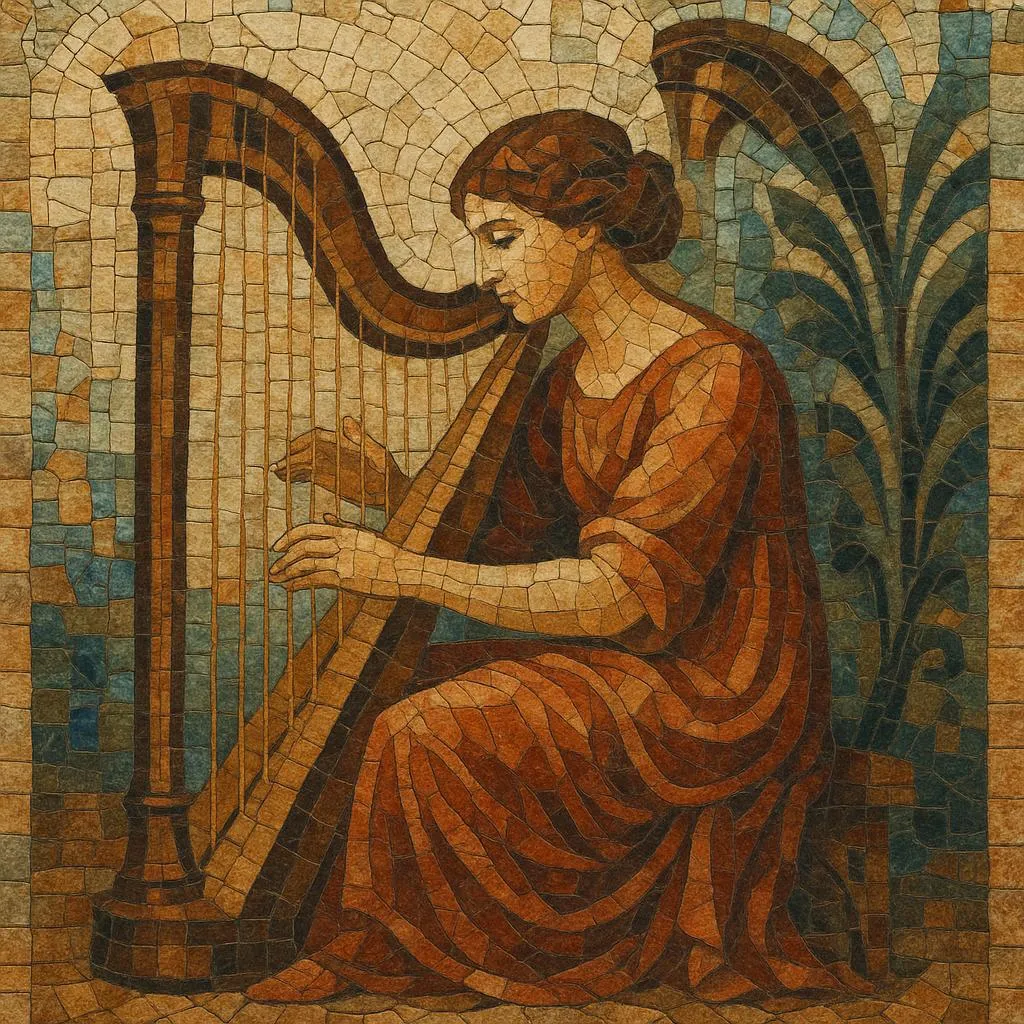
Classical harp refers to the Western art‑music repertoire and performance practice for the concert harp, especially the single‑ and double‑action pedal harp used from the late Baroque and Classical eras through Romanticism to the present.
It foregrounds idiomatic arpeggiation, glissandi, harmonics, and refined pedaling that enable chromatic harmony and orchestral color. The genre spans solo works, concertos, chamber music, and orchestral writing, and is closely associated with the Parisian harp schools of the 19th–20th centuries, whose pedagogy shaped modern technique and repertoire.
History
The European art‑music lineage of the harp begins with the triple harp and hook harps of the Baroque era. By the early 18th century, German maker Jakob Hochbrucker developed the single‑action pedal mechanism, allowing diatonic strings to be raised a semitone via seven pedals. Composers in the later Baroque and Classical periods experimented with the instrument in chamber and orchestral contexts, setting a foundation for idiomatic writing.
The instrument’s expressive range expanded dramatically with Sébastien Érard’s double‑action pedal harp (patented 1810), enabling fully chromatic modulation. This innovation catalyzed a wave of virtuoso performer‑composers—Krumpholtz, Bochsa, and later Parish Alvars—who wrote concertos, operatic paraphrases, and salon pieces. Paris became a global center for harp making and instruction; the Conservatoire’s "French school" codified technique, tone, and pedaling.
Hasselmans’s studio at the Paris Conservatoire produced a lineage (including Renié, Tournier, Grandjany, Salzedo) whose method books and concert works standardized modern technique (bisbigliando tremolo, étouffez damping, advanced glissando pedaling). Romantic expressivity met early modern and Impressionist color, placing the harp as a timbral keystone in orchestras and chamber ensembles.
Across the 20th century, concertos, sonatas, and chamber works multiplied, the harp becoming essential in symphonic, ballet, and film scores. Conservatory training spread worldwide, and leading soloists (e.g., Zabaleta, Kondonassis) broadened the canon and commissioning. Today’s classical harp embraces historical performance (single‑action and triple harps), contemporary techniques, and cross‑disciplinary collaborations while maintaining the core Paris‑rooted pedagogy.