Your digging level
Description
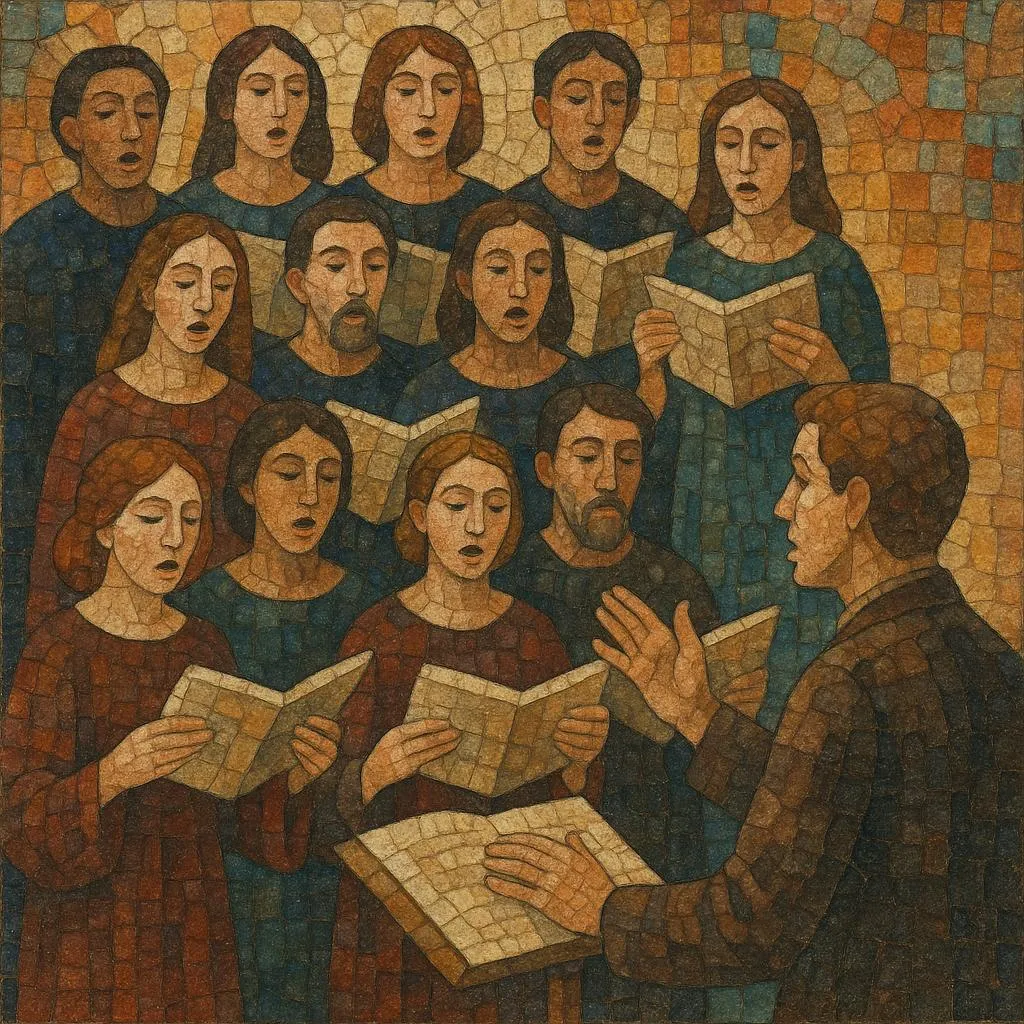
A chamber choir is a small, highly flexible choral ensemble—typically 12 to 40 voices—designed for intimate spaces and precision ensemble singing. The balance is often "one to a part" or light divisi within the SATB (soprano–alto–tenor–bass) framework, enabling remarkable clarity, blend, and contrapuntal transparency.
Repertoire spans Renaissance polyphony and Baroque motets through Romantic part-songs and contemporary choral works. Performances are frequently a cappella, though chamber choirs also collaborate with organ, piano, period ensembles, or small chamber orchestras. Hallmarks include refined intonation (often favoring pure intervals), detailed text declamation, wide dynamic control, and a strong focus on timbral blend and diction.
History
While small vocal ensembles existed in courts, chapels, and collegiate foundations since the Renaissance, the modern idea of the "chamber choir" coalesced in the early 20th century. The concept drew on chamber music principles—music for intimate rooms with one player per part—applied to choral forces. Early-music revivals and the rise of broadcast institutions (especially radio) fostered professional small choirs capable of both historical repertoire and new commissions.
In the interwar and post–World War II years, dedicated professional chamber choirs became fixtures across Europe. Broadcasters and cultural institutions founded ensembles to serve recording and live transmission needs, catalyzing high standards of sight-reading, stylistic versatility, and linguistic fluency. These groups championed Renaissance polyphony, newly edited Baroque music, and adventurous contemporary scores requiring rhythmic precision and extended vocal techniques.
From the 1970s onward, chamber choirs proliferated in conservatories, universities, and independent professional circuits. The historically informed performance movement reinforced smaller vocal forces for pre-1750 repertoire, while contemporary composers wrote idiomatically for flexible chamber choirs—exploiting antiphony, mixed meters, microtonal inflections, and spatialized textures.
Today, chamber choirs thrive worldwide, recording broad repertoires from lesser-known Renaissance masters to living composers. They collaborate with period and modern chamber ensembles, contribute distinctive color to film and game scores, and drive innovation in choral sound—combining immaculate blend with bold timbral and textual experimentation.