

Your digging level
Description
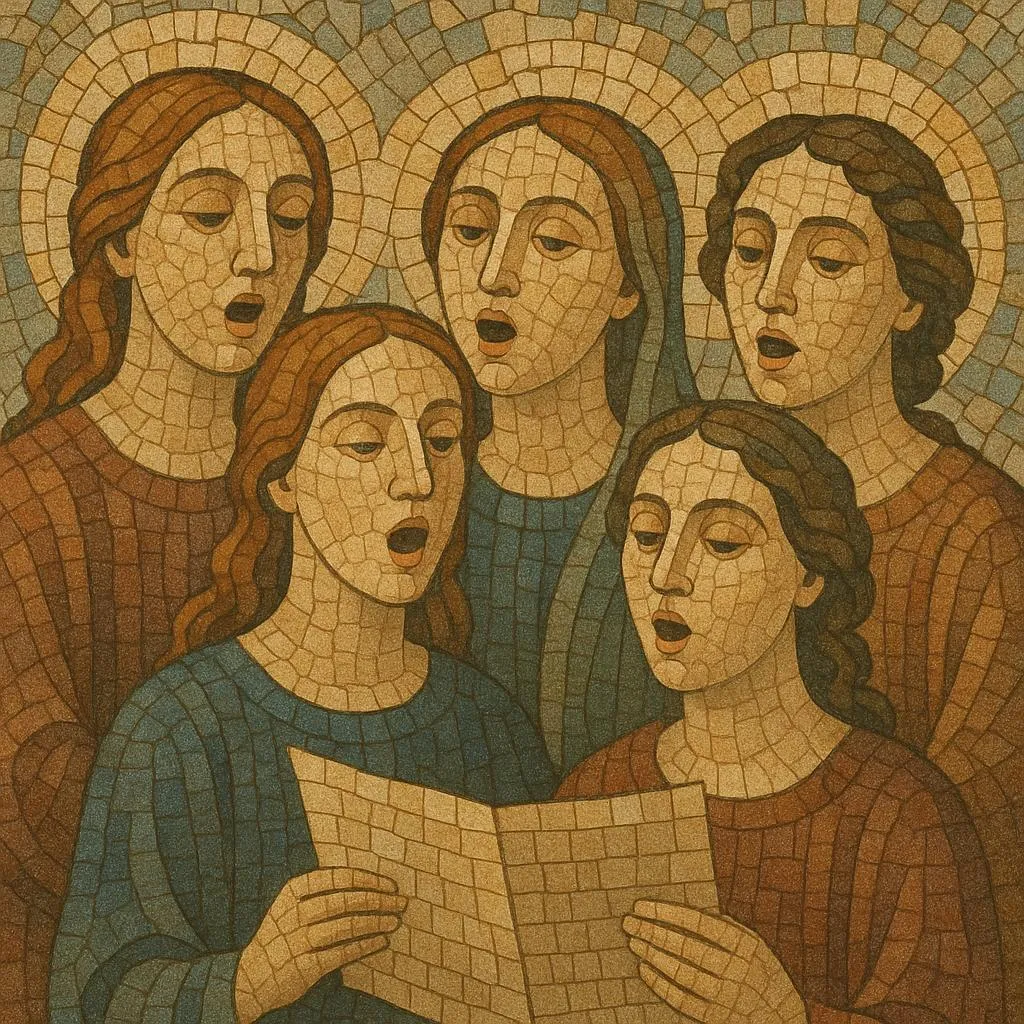
Women’s choir refers to choral ensembles made up entirely of treble voices (typically soprano and alto), performing music written or arranged for female voice groupings such as SSA, SSAA, or larger divisi.
The repertoire spans sacred and secular works from early chant traditions to Romantic part‑songs and contemporary commissions. Texts are often drawn from poetry (frequently by women poets), liturgical sources, and folk traditions. Sonically, women’s choirs range from pure, straight‑tone blends in early or folk-influenced music to a warmer, vibrato‑supported Romantic color, and they frequently foreground clear diction, transparent textures, and luminous upper-register sonorities.
History
Women’s organized singing has deep roots in monastic communities, where nuns preserved chant and polyphony within convents. Although these ensembles were not public concert choirs, they created a sustained tradition of treble choral singing that informed later practices.
The modern women’s choir coalesced in 19th‑century Europe amid the choral-society boom. In German-speaking regions, “Damenchor” groups emerged alongside Liedertafel traditions, and in the broader Romantic era, composers produced part‑songs and liturgical works expressly for treble choirs (e.g., Marian antiphons and concerted works for women’s voices with piano or organ). Educational reforms expanded music-making among women in schools and conservatories, helping to institutionalize the ensemble.
By the early to mid‑20th century, women’s choirs were well established in universities, civic organizations, and churches. National choral cultures—especially in the Nordics and the Baltics—nurtured high-level women’s ensembles. Composers wrote idiomatic works for treble voices, exploring extended divisi, vocal coloristic effects, and percussion/harp/piano accompaniments.
The late 20th century saw women’s choirs gain broader international prominence through recordings, competitions, and festivals, inspiring a large contemporary repertoire across sacred, secular, and folk-inflected idioms. Today, professional, collegiate, and community women’s choirs commission new music, champion underrepresented voices, and span styles from historically informed performance to avant‑garde soundscapes and cross‑cultural folk arrangements.
Write for SSA, SSAA, or larger divisi (up to 6–8 parts in advanced choirs). Typical comfortable ranges:
•Soprano I: C4–A5 (occasionally to C6)
•Soprano II: A3–F♯5
•Alto I: G3–D5
•Alto II: F3–C5
•Favor keys and tessituras that keep inner parts above middle C to preserve brightness and avoid heaviness.



