Your digging level

For this genre
0/8
🏆
Sign in, then listen to this genre to level up

Description

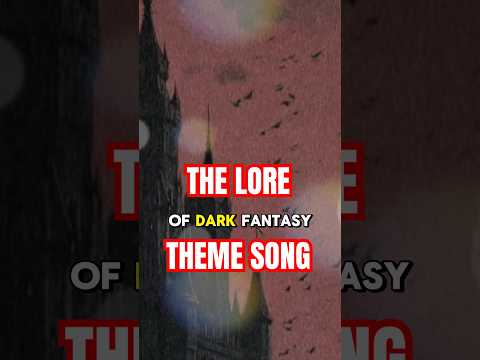
Dark fantasy (as a musical style) blends the escapist, mythic world‑building of fantasy with a sound palette and narrative tone drawn from the darker edges of gothic, horror, and occult aesthetics. It favors brooding harmonies, foreboding drones, medieval and folk timbres, and cinematic orchestration, often evoking ruined kingdoms, eldritch forests, and tragic heroes.

Across albums, film/game scores, and standalone composer releases, the style leans on minor modes (Aeolian, Dorian, Phrygian), chant‑like choral writing, slow‑burn ostinati, and rich ambience. While its atmosphere is frequently somber or ominous, it also embraces the epic and the awe‑inspiring—combining fantasy elements with dark, mature themes.

Sources: Spotify, Wikipedia, Discogs, RYM, MB, user feedback and other online sources

History

Origins (1980s)

Dark fantasy’s musical DNA coalesced in the 1980s as several strands converged: the gothic scene’s fascination with medievalism and ritual; the emergence of dark ambient and neoclassical dark wave; and a new wave of fantasy and sword‑and‑sorcery film scoring that set epic vistas against brooding harmonies. Artists on post‑punk/darkwave labels (e.g., Dead Can Dance) introduced ancient folk colors and liturgical echoes into modern production, while film composers forged grand, shadowed sound worlds.

Codification and Expansion (1990s)

In the 1990s the sound became more codified through two powerful engines: extreme metal’s symphonic/atmospheric offshoots (e.g., Tolkien‑inspired projects and symphonic black metal) and the exploding world of PC/console RPGs. Dungeon synth pioneers (e.g., Mortiis) distilled fantasy’s castle‑ruin ambience into minimal, organic synth tapestries, while game composers (e.g., Diablo’s Matt Uelmen) fused acoustic guitars, choirs, and bleak drones for grim, mystical atmospheres.

Mainstream Visibility (2000s–2010s)

High‑profile fantasy franchises in cinema and games normalized orchestral darkness blended with folkloric and ancient timbres. Composers for action‑RPG and dark medieval settings (e.g., FromSoftware titles scored by Yuka Kitamura and colleagues) pushed a hybrid language of choir, low brass, hand percussion, and unsettling tonal centers. In parallel, independent composers (e.g., Nox Arcana, Midnight Syndicate, Peter Gundry, Adrian von Ziegler) released ‘dark fantasy’ albums directly to listeners, fueling a playlist culture around the label.

Present Day

Today, dark fantasy functions as an inter‑genre aesthetic spanning soundtracks, dungeon synth revivals, neoclassical dark wave, and fantasy‑leaning metal. It is sustained by a feedback loop among games, streaming composers, and metal scenes: fantasy world‑building sets the narrative frame, while dark, mature themes shape harmony, texture, and pacing.

How to make a track in this genre

Sound Palette and Instrumentation
•   Combine orchestral colors (low strings, contrabassoon, bass trombone/tuba, choir) with ancient/folk timbres (frame drums, lute, hurdy‑gurdy, recorder, hammered dulcimer) and dark ambient layers (drones, granular pads, cavernous reverb). •   For synth‑led tracks (a dungeon‑synth approach), favor pipe/organ, bells, choir pads, and lo‑fi string ensembles; for metal‑leaning tracks, add tremolo‑picked guitars, sustained power chords, and sparse blast or half‑time drums.
Harmony, Melody, and Texture
•   Write in minor modes; Dorian and Phrygian immediately suggest archaic or ominous colors. Use pedal drones, open fifths, and parallel motion to allude to medieval practice. •   Employ slow harmonic rhythm with modal suspensions; shift bass pedals beneath static upper harmonies to build unease. •   Melodies should be chant‑like and conjunct, often centered on a narrow ambitus; ornament with appoggiaturas or micro‑melismas to suggest folk or liturgical roots.
Rhythm and Structure
•   Favor slow to moderate tempi (50–90 BPM) with ostinati (low strings, drums) and episodic forms that mimic narrative scenes: “approach,” “revelation,” “battle,” “lament.” •   Use asymmetrical phrases and occasional metric ambiguity (e.g., 5/4, 7/8) to destabilize the listener.
Orchestration and Space
•   Place choirs and bells high in the stereo field with long tails; keep low strings and drones centered and dry enough to retain weight. •   Layer organic Foley (wind, distant thunder, creaking wood) tastefully beneath the music for environmental realism.
Thematic and Lyrical Content
•   If using vocals/lyrics, draw on myth, folklore, and tragic or morally gray narratives; alternate archaic diction with intimate lament. •   Choral writing benefits from simple, modal counterpoint; Latin or invented liturgical syllables heighten ritual mood.
Production Tips
•   Use convolution reverbs of cathedrals/caves; automate reverb send to “open spaces” at key reveals. •   Sub‑bass or bowed metal hits can mark scene changes; sidechain ambient beds slightly to low percussion to maintain clarity.
Variants
•   Cinematic/score: through‑composed cues, orchestral focus, leitmotifs. •   Dungeon synth: minimalist motifs, lo‑fi synths, tape or cassette warmth. •   Metal‑hybrid: guitars double string ostinati, choirs support climaxes, blast beats used sparingly as punctuation.

Top tracks

Locked
Share your favorite track to unlock other users’ top tracks

Upcoming concerts

in this genre
Influenced by
Has influenced

Download our mobile app

Get the Melodigging app and start digging for new genres on the go
© 2026 Melodigging
Melodding was created as a tribute to Every Noise at Once, which inspired us to help curious minds keep digging into music's ever-evolving genres.
Buy me a coffee for Melodigging