Your digging level

For this genre
0/8
🏆
Sign in, then listen to this genre to level up

Description

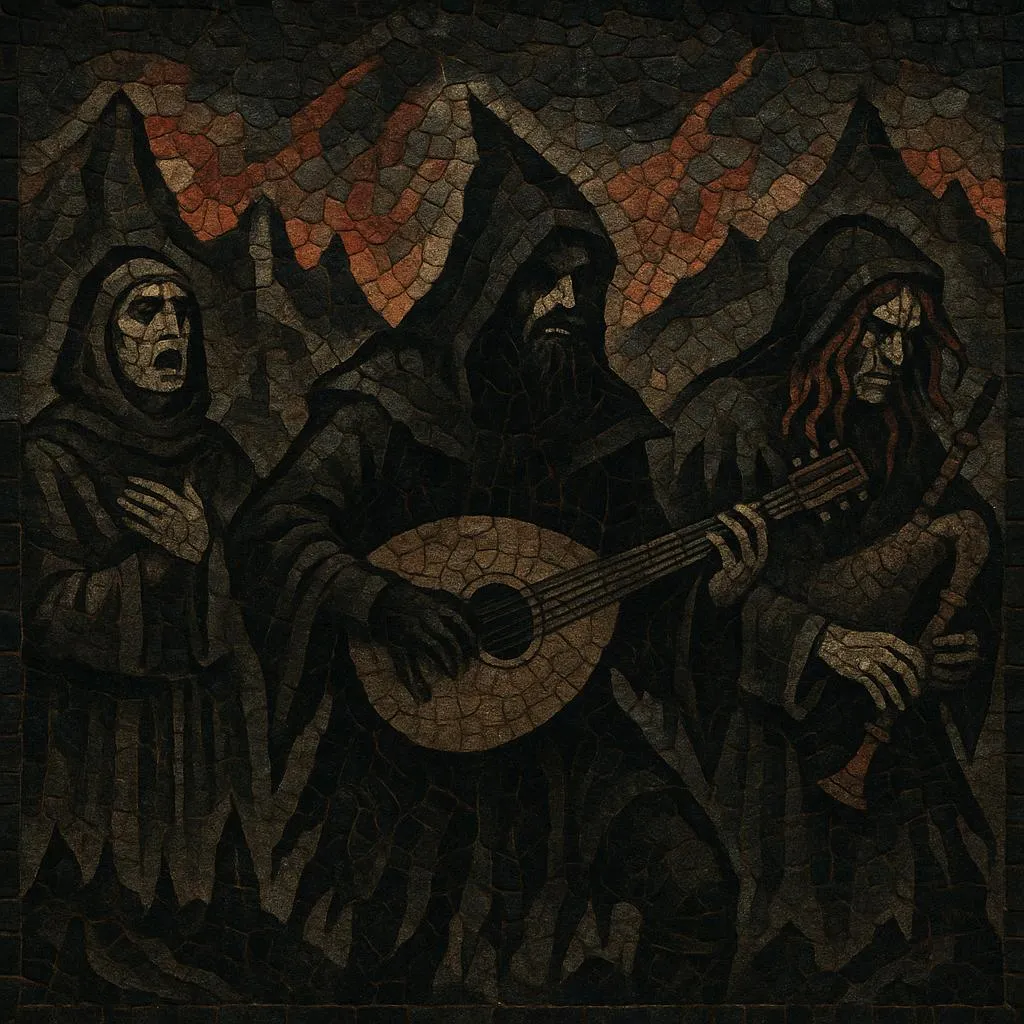
Medieval black metal is a fusion of second‑wave black metal with the melodic language, instruments, and atmospheres of medieval European music. It retains the raw tremolo‑picked riffing, blast beats, and harsh vocals of black metal, but frames them with modal melodies, droning fifths, and courtly or liturgical timbres.

Typical hallmarks include the use (or convincing emulation) of medieval instruments such as hurdy‑gurdy, harp, lute, recorder, bagpipe, and hand percussion, as well as choral textures inspired by Gregorian chant and organum. Harmonically it favors modal scales (Dorian, Aeolian, Phrygian, Mixolydian), open fifths, and cadences reminiscent of early music, often alternating with aggressive black‑metal sections. Lyrically and visually it draws on feudal lore, chivalric romance, plague and warfare, saints’ lives, troubadour poetry, and regional history, creating a distinctly archaic atmosphere within extreme metal.


Sources: Spotify, Wikipedia, Discogs, RYM, MB, user feedback and other online sources

History

Origins (1990s)

Medieval black metal emerged out of the second‑wave black metal milieu of the early–mid 1990s, when European bands began to color raw, tremolo‑driven riffing with explicitly pre‑modern tonalities and liturgical atmospheres. Key seeds included the integration of chant‑like lines, modal progressions, acoustic interludes, and dungeon‑synth intros—techniques that linked extreme metal’s bleakness to the austerity of medieval sacred and secular music.

Codification (2000s)

In the 2000s, artists—especially from France and adjacent Continental scenes—pushed the medieval component from ornament to core identity. They emphasized Dorian/Phrygian melodic motion, open‑fifth drones and parallelisms (evoking organum), and the use of period instruments or faithful timbral emulations. Albums increasingly paired black‑metal ferocity with courtly or monastic textures, forging a recognizable substyle distinct from broader folk or pagan black metal by its specifically medieval focus.

Flourishing and Diversification (2010s–2020s)

The 2010s saw a flourishing of the style worldwide. Bands refined the blend of authentic early‑music practice (harp, hurdy‑gurdy, recorder, frame drums) with modern production, and some incorporated medieval dance rhythms (estampie, saltarello) into otherwise blasting frameworks. Parallel to this, dungeon synth experienced a renaissance closely dialoguing with medieval black metal aesthetics. Today the subgenre ranges from raw, rehearsal‑room grit to hi‑fidelity, historically informed arrangements, while retaining black metal’s core intensity and a commitment to medieval thematic and modal language.


How to make a track in this genre

Tonality and Melody
•   Write primary riffs and vocal lines in medieval modes (Dorian, Aeolian, Phrygian, Mixolydian). Aim for stepwise motion with characteristic modal color (e.g., natural 6 in Dorian, flat 2 in Phrygian). •   Use drones and open fifths to evoke organum; avoid heavy reliance on thirds to preserve an archaic feel. •   Craft chant‑like vocal or lead motifs that can be doubled at the octave or fifth for a liturgical flavor.
Rhythm and Meter
•   Alternate black‑metal blasts (160–220 BPM) with sections in compound or dance‑related meters (e.g., 6/8 for saltarello feel, or steady 4/4 branle‑style pulses). •   Employ martial/snare‑tabor patterns in transitional parts; consider frame drum ostinati beneath acoustic passages.
Harmony and Texture
•   Favor parallel fourths/fifths and pedal drones; cadence to modal “finals” (e.g., D for Dorian) rather than tonal V–I. •   Layer textures: a distorted tremolo bed underpins recorders or a hurdy‑gurdy drone; insert harp/lute interludes as antiphonal relief between blast sections.
Instrumentation and Sound Design
•   Core: two electric guitars (one tremolo/lead, one rhythm), bass, and drums (with blasts, double‑kick, and ride/hi‑hat swells). •   Medieval colors: hurdy‑gurdy, Celtic/renaissance harp, lute or nylon‑string guitar, recorder/shawm/whistle, bagpipe/organ drones, hand percussion (tabor, frame drum). When hardware is unavailable, use high‑quality sample libraries or keyboard patches with minimal vibrato and natural reverb. •   Vocals: harsh black‑metal screams; consider layered male chant (unison or open fifths) and occasional female plainsong‑style lines.
Arrangement and Production
•   Structure songs as processions: Introit (drone/chant) → Ferocious Act (blasts/tremolo) → Courtly Interlude (acoustic/medieval dance) → Finalis (epic, modal cadence). •   Use natural, “stone room” reverbs to simulate chapels or halls; keep guitars biting but leave midrange space for acoustic instruments and chant layers.
Lyrics and Themes
•   Draw from medieval sources: chronicles, chansons de geste, courtly love poetry, hagiographies, and regional folklore. Write in English or mix with Latin/Old French/Occitan for color. •   Themes often include feudal conflict, plague, mysticism, pilgrimage, and nature—handled with vivid, archaic diction.
Practice Tips
•   Learn and adapt medieval dances (estampie, saltarello) and cadential gestures (e.g., double‑leading or “Landini‑like” motions) within metal riffs. •   Record a reference drone (hurdy‑gurdy/organ) first; compose guitar parts against it to maintain medieval identity even at high speed.

Top tracks

Locked
Share your favorite track to unlock other users’ top tracks

Upcoming concerts

in this genre
Influenced by

Download our mobile app

Get the Melodigging app and start digging for new genres on the go
© 2026 Melodigging
Melodding was created as a tribute to Every Noise at Once, which inspired us to help curious minds keep digging into music's ever-evolving genres.
Buy me a coffee for Melodigging