Your digging level
Description
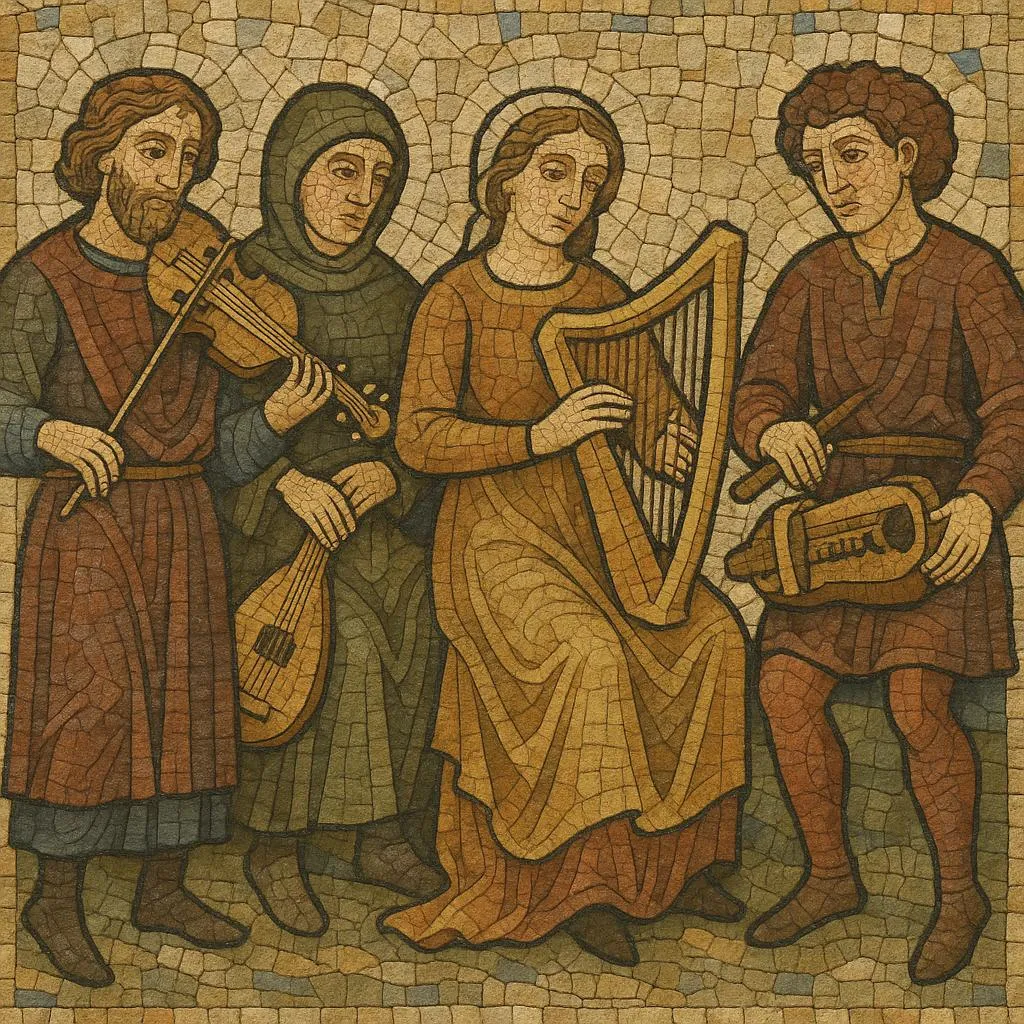
Medieval ensemble is a modern performance genre devoted to the historically informed presentation of European music from the Middle Ages (roughly the 9th–15th centuries). Ensembles typically employ reconstructed period instruments (vielle, rebec, lute, harp, psaltery, hurdy‑gurdy, organetto, recorders, shawms, bagpipes, frame drums) and historically grounded vocal techniques to render chant, monophonic song, and early polyphony.
Repertoire commonly spans sacred and secular traditions: Gregorian and other plainchants; Notre Dame organum and conductus; ars antiqua and ars nova motets; laude and cantigas; troubadour/trovière songs in Occitan and Old French; and instrumental dances such as estampies, ductias, saltarelli, and caroles. Performances prioritize modal pitch systems, medieval rhythmic practice (modal rhythms, isorhythm), open-fifth sonorities, and language authenticity (Latin, Occitan, Old French, Middle English, Galician‑Portuguese).
History
The roots lie in the broader early‑music revival. Early 20th‑century instrument makers and scholars (e.g., the Dolmetsch circle) and pioneering groups such as Safford Cape’s Pro Musica Antiqua in Belgium began reconstructing medieval repertoire and instruments, laying foundations for ensemble practice.
From the 1960s, medieval ensemble became an identifiable practice. Thomas Binkley’s Studio der Frühen Musik (Munich) and David Munrow’s Early Music Consort of London popularized medieval repertories on record and broadcast. Parallel growth in academic centers—Schola Cantorum Basiliensis, U.K. and U.S. universities—tightened links between scholarship and performance, refining approaches to rhythm, tuning, and pronunciation.
A new generation of ensembles broadened scope and color: all‑female vocal groups revitalized chant; mixed consorts explored instrumental dance and improvisation; and projects concentrated on specific manuscripts (e.g., Montpellier Codex, Llibre Vermell, Cantigas de Santa Maria). Festivals (Utrecht, Boston) and specialist labels amplified international reach.
Digitized facsimiles, online paleography resources, and improved organology fuel ever more nuanced realizations. Modern ensembles balance scholarship with performative vitality, experiment with acoustics (church reverberation, close‑miked detail), and continue to unveil lesser‑known regional traditions while sustaining core pillars such as chant and the Notre Dame repertory.