Your digging level
Description
American early music is the U.S. branch of the post‑war early‑music revival devoted to the historically informed performance of Medieval, Renaissance, and Baroque repertoires (roughly c. 1100–1750).
It centers on period instruments, historically appropriate tunings and temperaments, small ensemble forces, and style‑specific articulation, ornamentation, and rhetoric. Although the repertory largely originates in Europe, American early music also embraces colonial and mission‑era sources from North and Latin America, and it is shaped by U.S. institutions, festivals, ensembles, university programs, and instrument builders that took root from the mid‑20th century onward.
History
After World War II, the historically informed performance (HIP) movement that had been germinating in Europe found a vigorous foothold in the United States. In the 1950s, pioneering American ensembles and university collegia began exploring Medieval chant, Renaissance polyphony, and Baroque chamber and sacred works on period instruments. Instrument builders and restorers in cities such as Boston and New York helped supply recorders, viols, lutes, harpsichords, cornetti, sackbuts, and baroque strings, enabling performers to move beyond modern orchestral sonorities.
From the 1970s, professional period‑instrument orchestras and specialized vocal ensembles multiplied, while music departments launched historical performance programs. Festivals (notably large biennials) became incubators for opera revivals, scholarly editions, and cross‑Atlantic collaborations. American ensembles also broadened the canon by programming colonial New England psalmody, music from New Spain and French Canada, Moravian archives, and Afro‑Atlantic sacred repertories alongside European masterworks.
American early music was defined not only by repertoire but by method: gut strings and short bows; natural trumpets and horns; Renaissance wind bands; historical temperaments and flexible pitch standards (e.g., A≈415 for much Baroque music, A≈392 for some French, A≈466 in certain Venetian contexts); basso continuo realization on harpsichord, organ, or theorbo; style‑specific ornaments (Italian passaggi, French agréments, English divisions); rhetorical phrasing and dance‑derived rhythm.
Today, American early music is a mature ecosystem of orchestras, choirs, consorts, and opera projects, supported by festivals, nonprofit advocacy, and university programs. Recording and streaming have amplified its reach, and the field continues to diversify—recovering women composers, Jewish, Indigenous, and African‑diasporic sources in the early modern Atlantic, and commissioning new works that engage historical instruments and techniques.
Select works from Medieval, Renaissance, or Baroque sources (e.g., chant, motets, madrigals, consort music, dances, trio sonatas, cantatas, oratorios). Match ensemble size to historical context: solo voices and intimate continuo for chamber works; small chorus and period orchestra for larger sacred pieces.
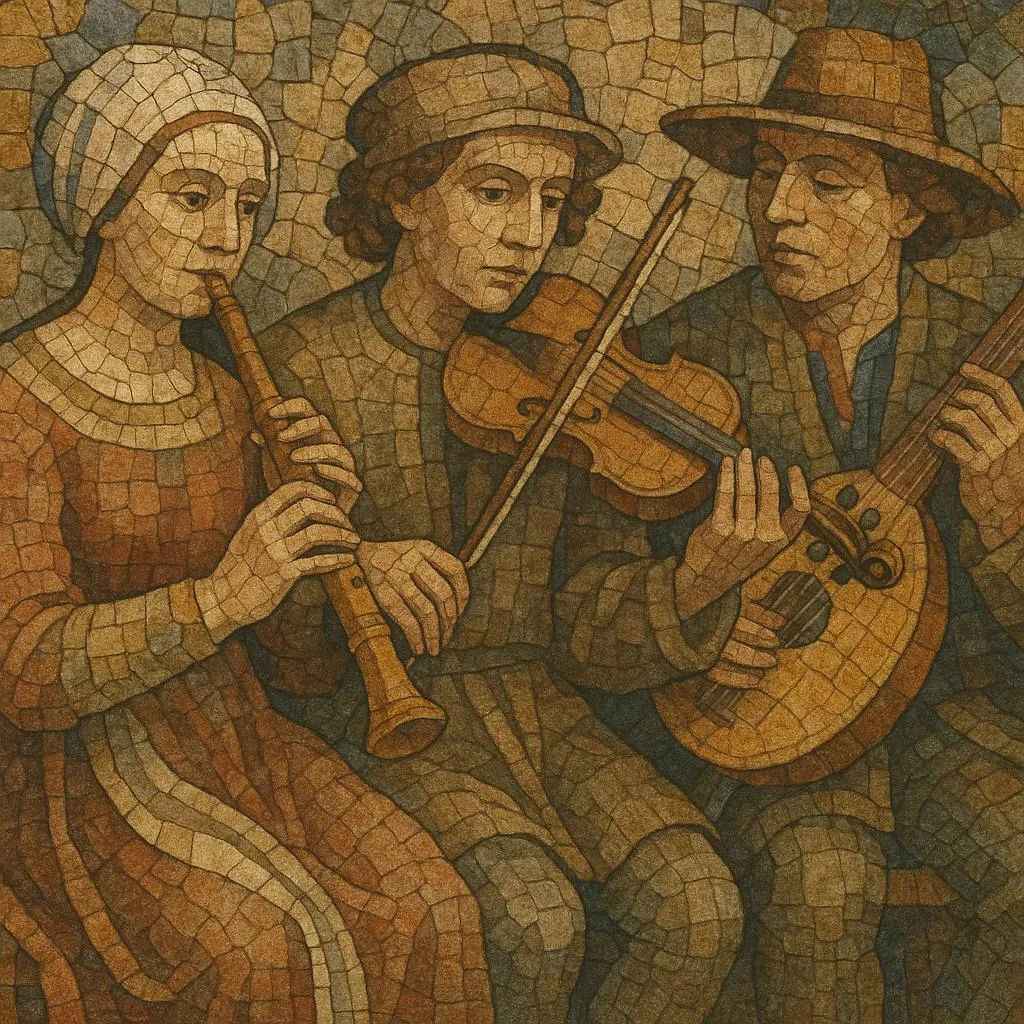
Use period instruments or historically informed replicas: gut‑strung violins/violas/cellos; viols; lute/theorbo/baroque guitar; harpsichord and chamber organ; recorder and baroque flute (traverso); oboe/oboe d’amore; cornett, sackbut, dulcian; natural trumpets/horns; medieval winds (shawm), vielle, hurdy‑gurdy as needed. Aim for transparent textures, light articulation, and a focused (often straight) vocal tone with clear diction.
Adopt historically plausible pitch and temperament: A≈415 for much German/Italian Baroque, A≈392 for French Baroque, and meantone/Valotti/temperaments documented for the repertoire. Tune chords by ear for beatless thirds/sixths in earlier music; allow unequal keys to color harmony.
Realize basso continuo idiomatically on harpsichord/organ/theorbo with improvisatory but style‑aware voicings. Add ornaments appropriate to national style and period: Italian passaggi/divisions, French agréments, cadential trills, appoggiaturas, and tasteful diminutions. In French Baroque dance movements, apply inégalité and notes inégales where indicated by practice.
Let dance types (allemande, courante, sarabande, gigue, chaconne, passacaglia) shape tempo, weight, and bowing. In vocal music, prioritize text underlay, prosody, and rhetoric; vary articulation to paint words and harmonies. Use terraced dynamics and affective contrasts rather than continuous Romantic crescendos.
Consult period treatises (e.g., Quantz, C.P.E. Bach, Praetorius, Agricola) and facsimiles/urtexts; cross‑check editorial markings against sources. Research local performance customs (liturgical function, venue scale, forces available) and adjust scoring, pitch, and continuo forces accordingly.