Your digging level
Description
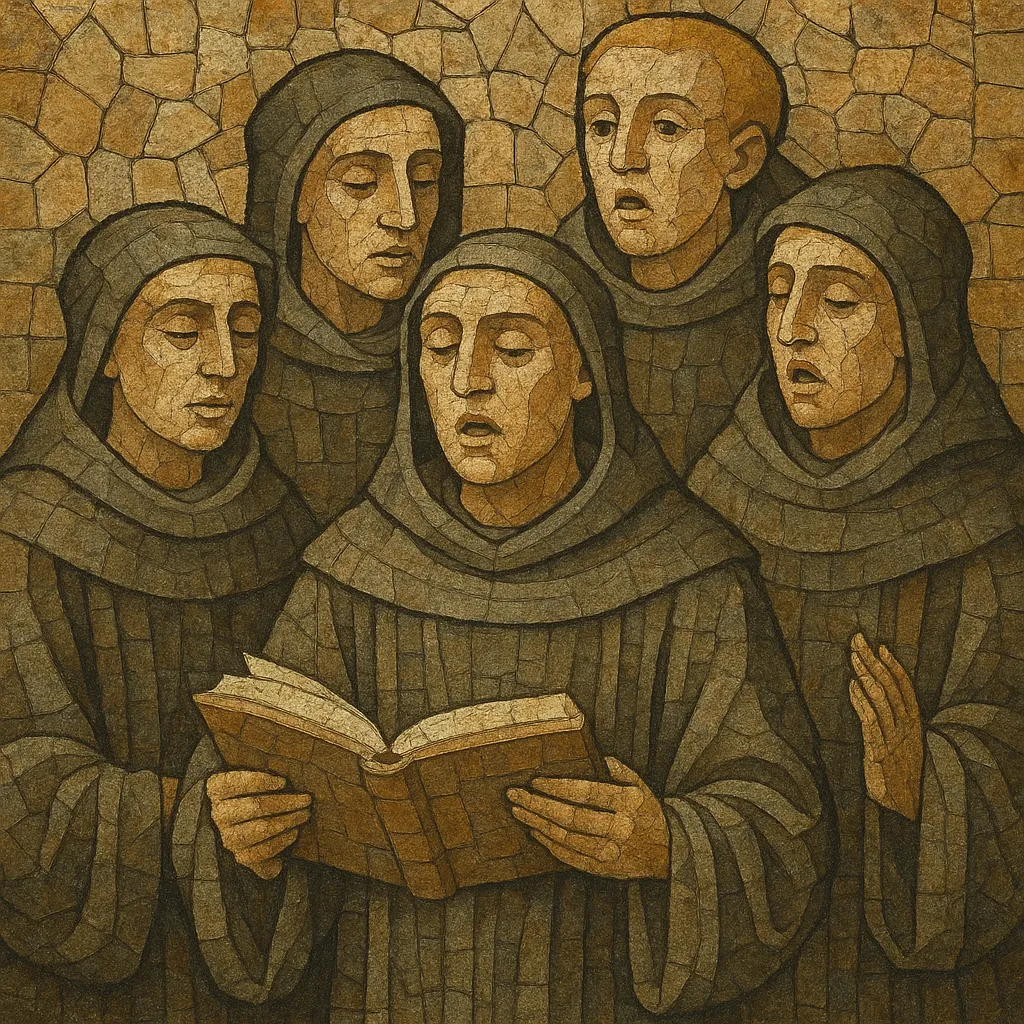
Gregorian chant is the central Western tradition of plainchant: a monophonic, unaccompanied sacred song in Latin (and occasionally Greek) used in the Roman Catholic liturgy. It employs free rhythm guided by the prosody of the text rather than by strict meter, and is sung in unison by clerics or scholas.
Its melodies are organized by the system of eight church modes, with characteristic finalis (final), tenor/reciting tones, and melodic formulas. Repertoires include the Proper and Ordinary of the Mass (e.g., Introit, Gradual, Alleluia, Offertory, Communion, Kyrie, Gloria, Credo, Sanctus, Agnus Dei) and the Divine Office (e.g., Antiphons, Responsories, Hymns, Psalms).
Although legend credits Pope Gregory I, modern scholarship sees Gregorian chant as a Carolingian synthesis of Old Roman and Gallican chants, standardized across Frankish realms and later the broader Latin West.
History
Gregorian chant crystallized under the Carolingian rulers in the 800s–900s as a unifying liturgical repertoire for the Latin West. Frankish cantors combined local Gallican practice with the Roman (Old Roman) tradition, producing a standardized body of chants disseminated via cathedral and monastic schools.
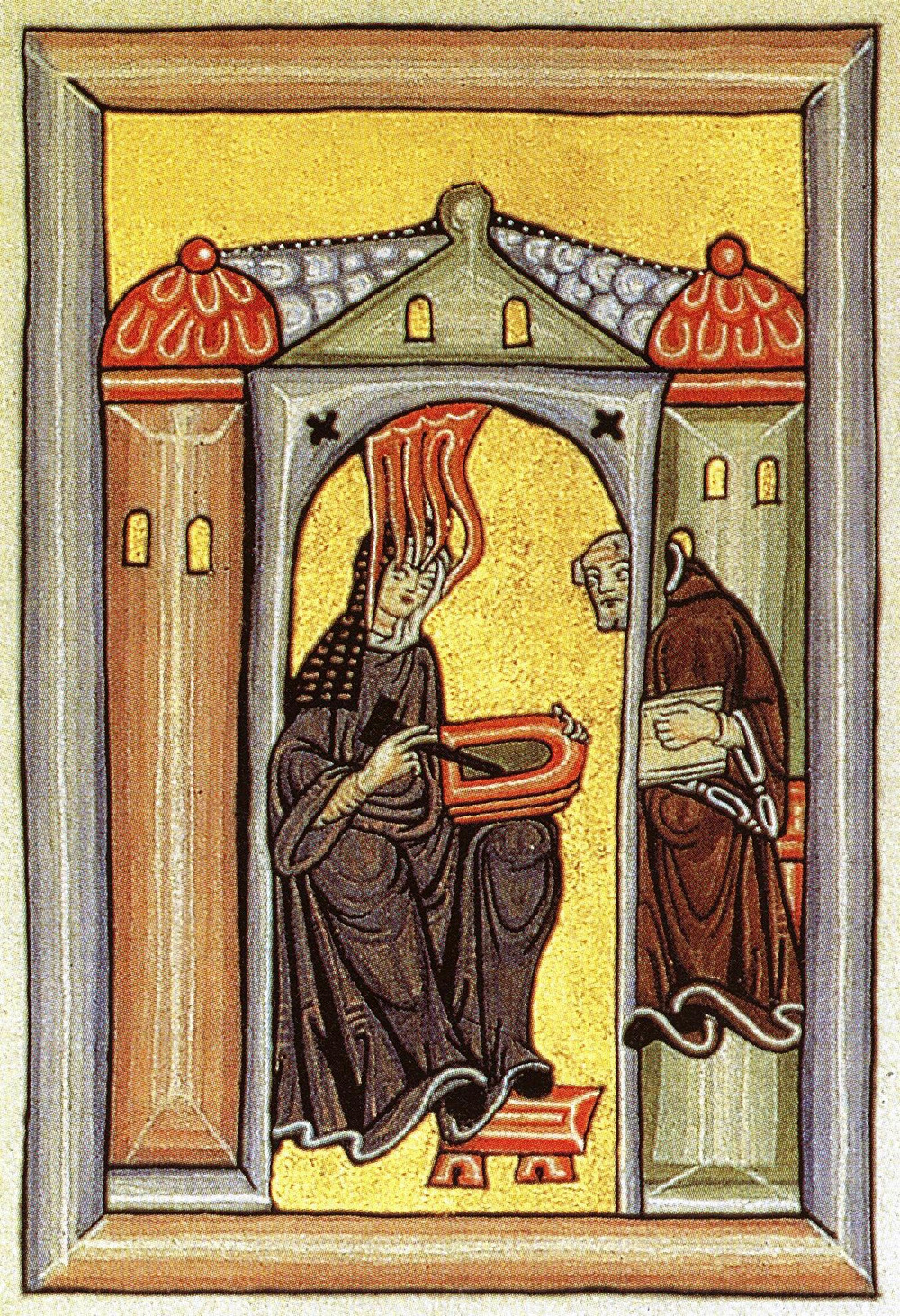
Early transmission was oral. From the late 9th century, neumatic notation (adiastematic, then staff-based from Guido of Arezzo’s 11th‑century reforms) enabled more precise pitch reading. The eight-mode (octoechos) system—likely adapted via earlier Mediterranean and Near Eastern chant traditions—organized melodic behavior around finals and reciting tones.
Chant permeated the Mass and the Divine Office. Genres ranged from simple syllabic psalm tones to ornate melismatic Graduals and Alleluias. Over centuries, local uses (e.g., Beneventan, Mozarabic, Ambrosian) persisted, but the Roman/Carolingian synthesis dominated manuscript sources.
From the 12th century, chant melodies became the foundation for polyphonic innovations (organum, conductus, motet) and cantus firmus masses. Later, the Council of Trent (16th century) encouraged textual clarity; editions continued to adjust melodic detail.
In the late 19th–20th centuries, the monks of Solesmes (France) produced critical editions (e.g., Liber Usualis) and revived semiological performance practice from early neumes. Today, chant remains central to Roman Catholic worship, early music scholarship, and historically informed performance, and continues to influence contemporary composers and ambient/sacred aesthetics.
Contour: Predominantly stepwise motion with judicious leaps; aim for smooth, speech‑like lines.
•Style levels:
•Syllabic (one note per syllable)—suited to hymns and psalm tones.
•Neumatic (a few notes per syllable)—common for antiphons.
•Melismatic (long runs on a single syllable)—for Graduals, Alleluias.
•Cadences: Use modal cadential figures that confirm the finalis or rest on the tenor for internal punctuation.
-
•
Select liturgical text and determine mode based on textual function.
•Sketch reciting tones and cadential points aligned to punctuation.
•Fill contours with primarily stepwise motion; adjust melismatic density to the genre (e.g., jubilus for Alleluia).
•Test sing for breath and clarity; refine cadences to confirm the finalis.
•Rehearse antiphonal/solo-chorus alternations and refine ensemble diction and phrasing.