Your digging level
Description
Old Roman chant is a Medieval Latin plainchant tradition associated with the papal liturgy in Rome before the universal adoption of Gregorian chant. Preserved in 11th–12th‑century manuscripts yet reflecting much earlier practice, it represents a distinct Roman repertory rather than a mere variant of the later Gregorian standard.
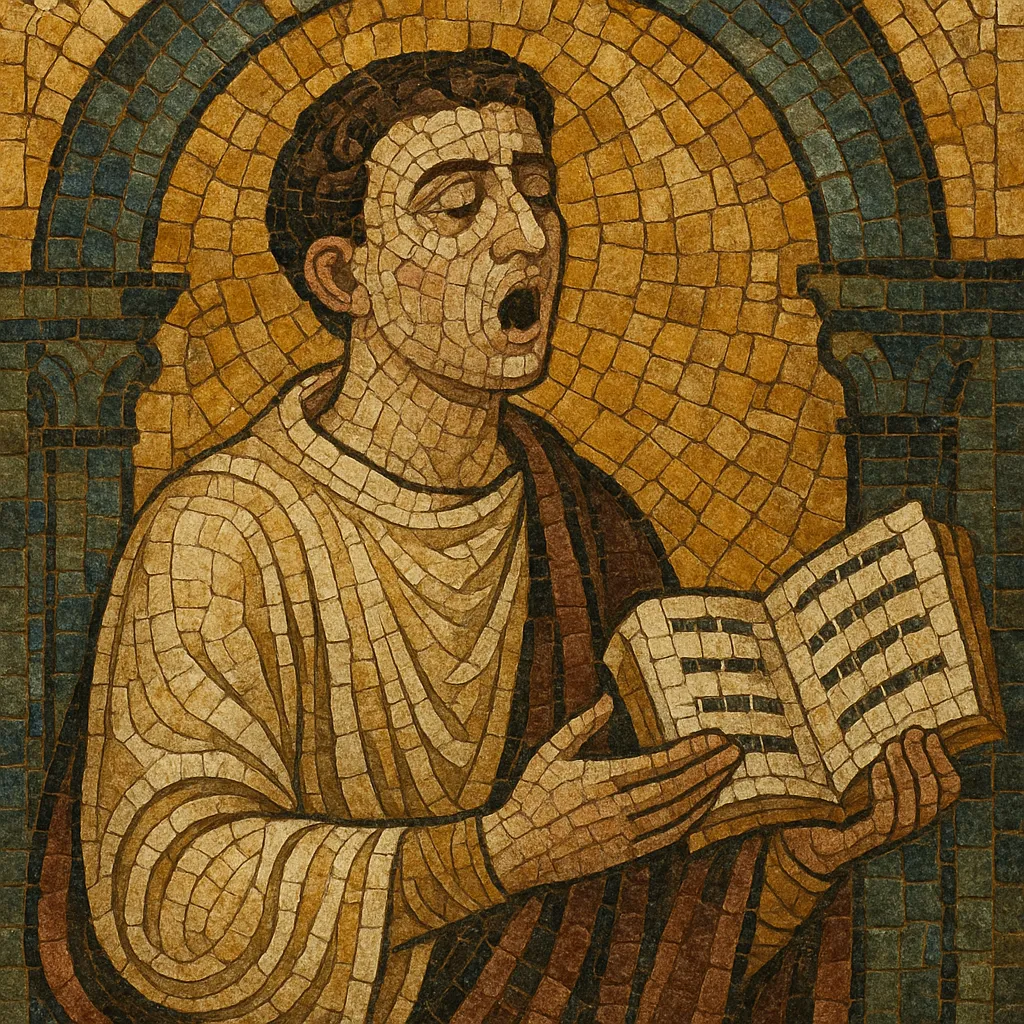
It is monophonic, a cappella, and modal, typically more melismatic and ornate than most Gregorian melodies. The chant follows the accent and syntax of sacred Latin texts with a flexible, speech‑like rhythm. It was performed by trained clerical choirs (scholae cantorum) within the Mass and Office, using formulaic melodic patterns (centonization) and the eight ecclesiastical modes.
History
Old Roman chant emerged from the Roman church’s liturgical practice, likely crystallizing by the 7th–8th centuries. Although the surviving sources are from the 11th–12th centuries, scholars regard them as a window onto an older living tradition at the papal court. Its musical language belongs to the broader family of Western plainchant but retains distinctive Roman melodic turns and extended melismas.
During the Carolingian period, Frankish rulers imported Roman liturgical chant to standardize worship. This process produced the Roman–Frankish synthesis we now call Gregorian chant. Old Roman chant, meanwhile, continued locally in Rome and diverged over time. The repertory also shows stylistic affinities with Byzantine chant due to long‑standing cultural and liturgical contacts between Rome and the Greek East.
Old Roman melodies survive mainly in Vatican manuscripts written with early neumatic notation. These notations, though less prescriptive rhythmically than modern scores, preserve elaborate melismas, typical modal cadences, and formulas used to articulate liturgical prose and poetry. Most sources preserve Mass Propers (e.g., Introits, Graduals, Offertories) and some Office chants.
From the High Middle Ages onward, Gregorian chant gradually displaced local chant traditions across the West, including in Rome. By the late Medieval period, Old Roman chant had largely fallen out of regular use. In the 19th–20th centuries, chant scholarship (palaeography, liturgical studies) identified and transcribed the Old Roman repertory. Since the late 20th century, early‑music ensembles and academic projects have revived and recorded the tradition, allowing modern listeners to hear the distinctive Roman soundscape preceding Gregorian standardization.

Top albums
%2C%20Cover%20art.webp)
%2C%20Cover%20art.webp)