
Your digging level
Description
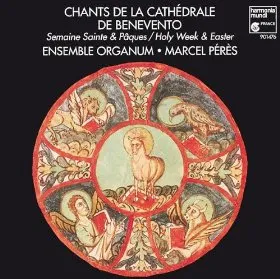
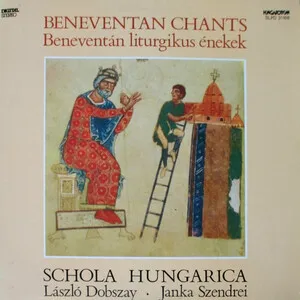
Beneventan chant is a regional liturgical plainchant repertory of the Roman Catholic Church cultivated in Southern Italy, especially around Benevento and the Benedictine abbey of Monte Cassino.
Distinct from, yet related to other Western plainchant families, it stands apart from Gregorian chant and shows affinities with Ambrosian and Old Roman traditions. Its melodies are noted for their length, extensive use of formulaic repetition, and a steady, undulating contour that serves the delivery of Latin liturgical texts.
Officially supplanted by standardized Gregorian chant in the 11th century, Beneventan chant survives through manuscripts and a small number of pieces that persisted locally. Today it is studied and performed chiefly within early music and liturgical music scholarship and reconstruction.
History
Beneventan chant arose in the Lombard south of the Italian peninsula, centered on the city of Benevento and the monastic powerhouse of Monte Cassino. In this milieu, a distinctive liturgical usage developed, with its own calendar emphases and a repertory of Mass and Office chants that paralleled—but did not duplicate—the emerging Roman (Gregorian) usage. Cultural contact with the Byzantine south and long-standing Italic traditions (including Old Roman practice) shaped its modal language and melodic style.
The repertory is characteristically monophonic, syllabic-to-neumatic, and notable for long melodic arcs that rely on recurring formulae and sequences. This creates an impression of steady, wave-like motion. Compared to many Gregorian counterparts, Beneventan pieces often incorporate more textual repetition and localized melodic patterns associated with their particular liturgical functions.
Beneventan chant is transmitted in manuscripts written in the distinctive Beneventan script, with regional neumatic notations that are predominantly adiastematic in the earlier sources. These neumes indicate melodic gesture and articulation rather than precise pitch, requiring comparative and modal analysis to reconstruct exact melodies. Later sources and concordances with neighboring traditions aid modern editors and performers.
As Roman liturgical centralization accelerated during the 11th century, the Gregorian repertory was promulgated to replace local usages. Beneventan chant was officially displaced, although some chants of strong local attachment survived in practice. In modern times, early music scholarship has recovered and edited portions of the repertory, and specialized ensembles have revived its sound world in historically informed performance contexts.

%2C%20Cover%20art.webp)