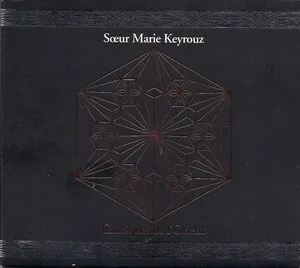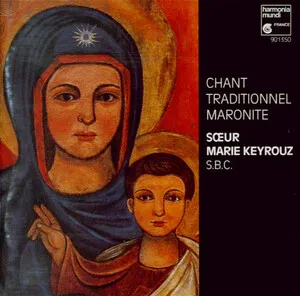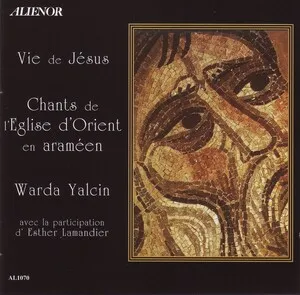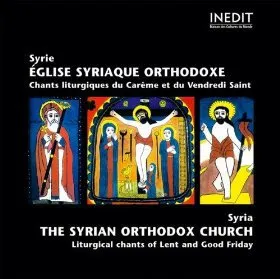
Your digging level
Description
Syriac chant is the liturgical chant tradition of Syriac Christianity, sung in Classical Syriac (a dialect of Aramaic) across the East Syriac and West Syriac rites. It is one of the oldest living Christian chant repertories and is transmitted largely through oral tradition.
Musically, Syriac chant is monophonic, highly text‑centered, and typically performed unaccompanied by a solo cantor (ḥazzā) and/or a small choir with congregational responses. Melodies follow modal formulae preserved in collections such as the Beth Gazo (“Treasury of Melodies”), favoring free, speech‑like rhythm, extensive ornamentation, and melismatic expansion on key liturgical words. Modern performances often exploit long reverberation in stone churches, using sustained tones and carefully paced phrases to let the text and ornaments bloom in the space.
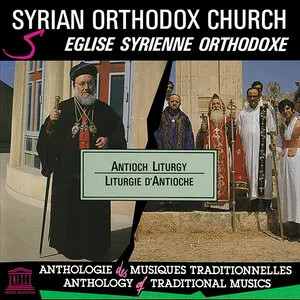
While the earliest manuscripts are scarce, the style that survives today reflects very ancient Near Eastern and early Christian practices, later colored by regional modal sensibilities. The repertory encompasses hymns (madrāshē), responses (ʿonyōtā), psalmody, and processional pieces integral to daily offices and the Eucharistic liturgy.
History
Syriac chant took shape in Late Antiquity within Syriac‑speaking Christian communities centered on Edessa (Urfa), Nisibis, and Antioch. Hymnographers such as Ephrem the Syrian, Bardaisan of Edessa, Narsai, and Jacob of Serugh created vast bodies of strophic poetry meant to be sung, establishing core melodic and poetic models (e.g., madrāshē, soghithā). Early sources were mostly textual; musical transmission remained oral, guided by master cantors.
Over time, two principal liturgical families coalesced:
• West Syriac (Syriac Orthodox, Maronite, and related communities) • East Syriac (Assyrian Church of the East, Chaldean Catholic)Both maintain monophonic chant, responsorial/antiphonal practice, and modal organization (preserved in the Beth Gazo and cognate collections). The chant aligns closely with the prosody of Classical Syriac, favoring flexible rhythm, climactic melismas, and extensive ornamentation.
Through the medieval period, Syriac chant coexisted and interacted with neighboring traditions. While distinct from Byzantine chant, there was bidirectional influence across the eastern Christian world, and long‑standing proximity to Near Eastern modal practices shaped local inflection and melodic turns without erasing Syriac identity.
Repeated episodes of displacement and persecution pushed communities into diaspora (Mesopotamia, Levant, Anatolia, later worldwide). The scarcity of early musical notation and the reliance on master‑apprentice lines made oral continuity crucial. Modern scholarship and recordings—often by church choirs and early‑music ensembles—document variants preserved in monasteries (e.g., Tur Abdin) and diaspora parishes.
From the 20th century onward, researchers and ensembles began recording Syriac chant in situ and in concert settings, highlighting its sparse texture, rich ornamentation, and architectural resonance. Today, Syriac chant remains a living liturgy in both East and West Syriac rites and a key window into the sound world of early Christianity.

Top albums