Your digging level
Description
Coptic hymn (often called Coptic chant) is the monophonic liturgical singing of the Coptic Orthodox Church of Egypt. It is performed primarily in the Coptic language (with some Greek texts) and transmitted for centuries by oral tradition rather than notation.
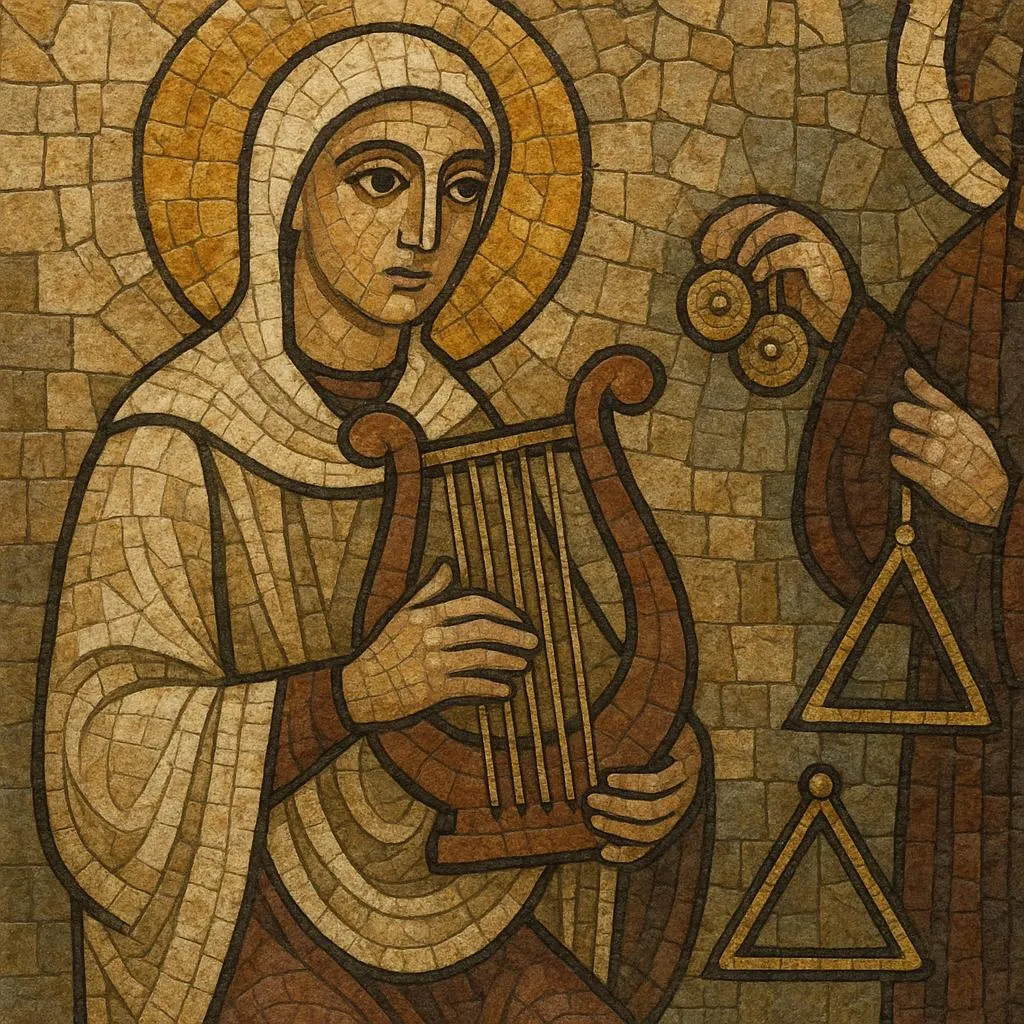
As heard today, the repertory is built from melodic types or formulas that cantors elaborate in performance. Prompters traditionally cue the next formula, and the singing may alternate between soloist and congregation or choir. Simple percussion—especially hand cymbals and triangle—marks pulse on many festal responses.
Scholars note layers of influence from early Jerusalem-Syrian Christian ritual and later Arabic culture, while some traits (e.g., certain percussion) appear to preserve ancient Egyptian practice. Overall, the result is a highly melismatic, solemn, and contemplative chant tradition distinctive to Egyptian Christianity.
History
Coptic hymnody emerged with Egyptian Christianity and is often dated to the first centuries of the Church; one of the earliest Marian hymns known to Christian liturgy (Sub tuum praesidium) has a Coptic-liturgical provenance and appears in very early sources, situating organized hymn practice by the 3rd–5th centuries.
For most of its history the tradition was preserved orally. Modern descriptions emphasize that present-day performances rely on formulaic melodies developed and varied by cantors; prompters cue entries; and percussion akin to ancient Egyptian instruments is used in church ritual, reinforcing the sense of continuity with older Egyptian practice.
Beginning in 1927, the Egyptian musicologist Ragheb Moftah collaborated with the English composer Ernest Newlandsmith to notate the hymns and later to record them, chiefly in the voice of Master Cantor Mikhail Girgis El‑Batanouny. These efforts produced extensive transcriptions (1927–1936) and archival recordings now housed at the Library of Congress, forming a canonical reference for the tradition. Additional contributors included ethnomusicologist Martha Roy and scholar Margit Tóth.
Diocesan and institutional projects continue to teach, record, and disseminate hymns, often retaining the characteristic instruments (cymbals and triangle) and the chant’s melismatic, contemplative style in parish life and in the Coptic diaspora.