

Your digging level
Description
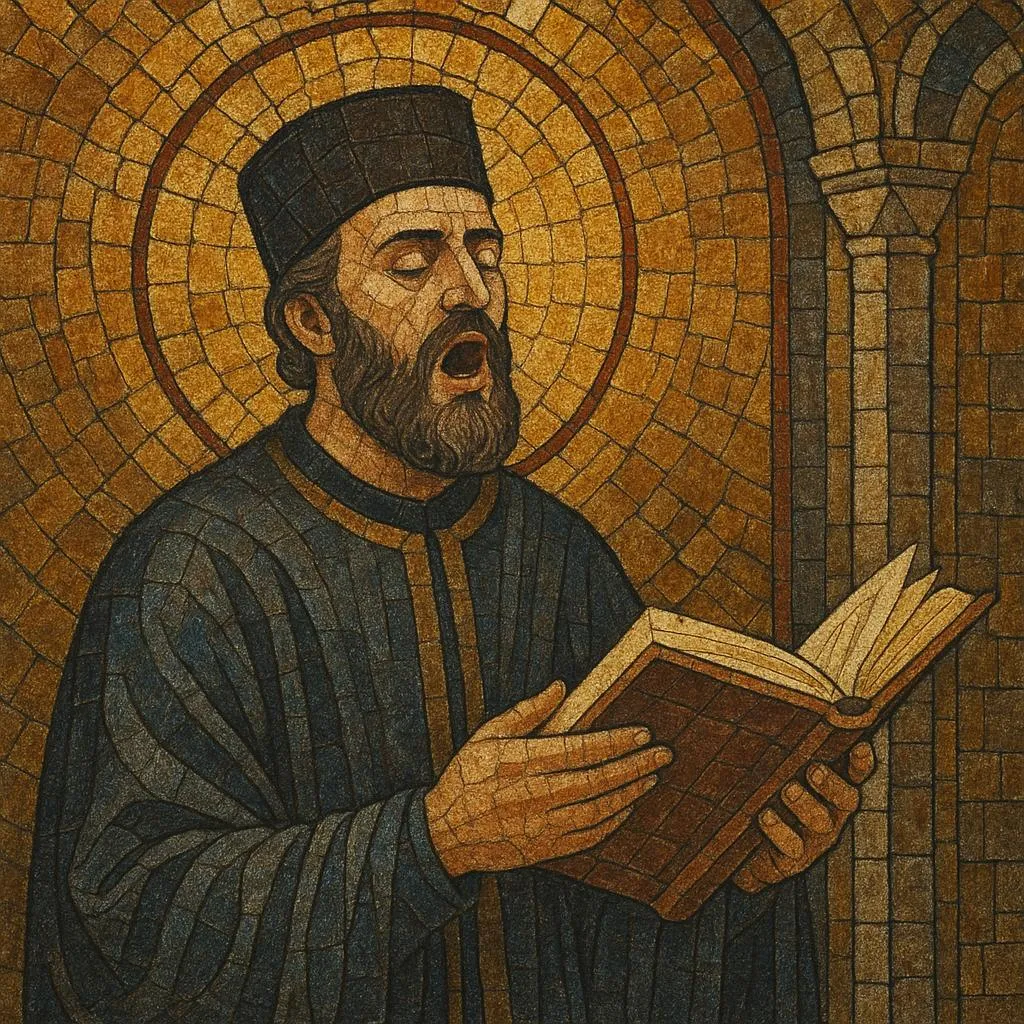
Orthodox chant is the monophonic sacred singing tradition of the Eastern Orthodox Church and its related Eastern Christian rites. Rooted in the liturgy and theology of the Byzantine world, it emphasizes the primacy of text, sung in unaccompanied human voice, to convey prayer and scripture.
Musically, Orthodox chant is modal, drawing on the Octoechos (a system of eight echoi/modes) that govern melodic formulas, cadences, and melodic range. Rhythmic flow follows the accent and syntax of the liturgical text rather than fixed meter; the music breathes with speech. In Greek practice since the post‑Byzantine period, an ison (a sustained drone) supports the principal melody; in many Slavic traditions, chant proceeds in unison without drone, while Georgian practice is uniquely polyphonic.
Stylistically, Orthodox chant is at once austere and ornate: syllabic psalmody and hymn tones sit alongside highly melismatic psaltic art for festal moments. It is sung a cappella by choirs or solo chanters (psaltai/cantors) in Greek, Church Slavonic, Arabic, Georgian, and numerous local languages.



