Your digging level
Description
Kalanta (κάλαντα) are Greek carols traditionally sung on the eves of Christmas, New Year, and Epiphany. The repertoire comprises distinct songs for each feast: Nativity kalanta celebrate Christ’s birth, New Year’s kalanta invoke St. Basil, and Epiphany kalanta recount the Baptism of Christ.
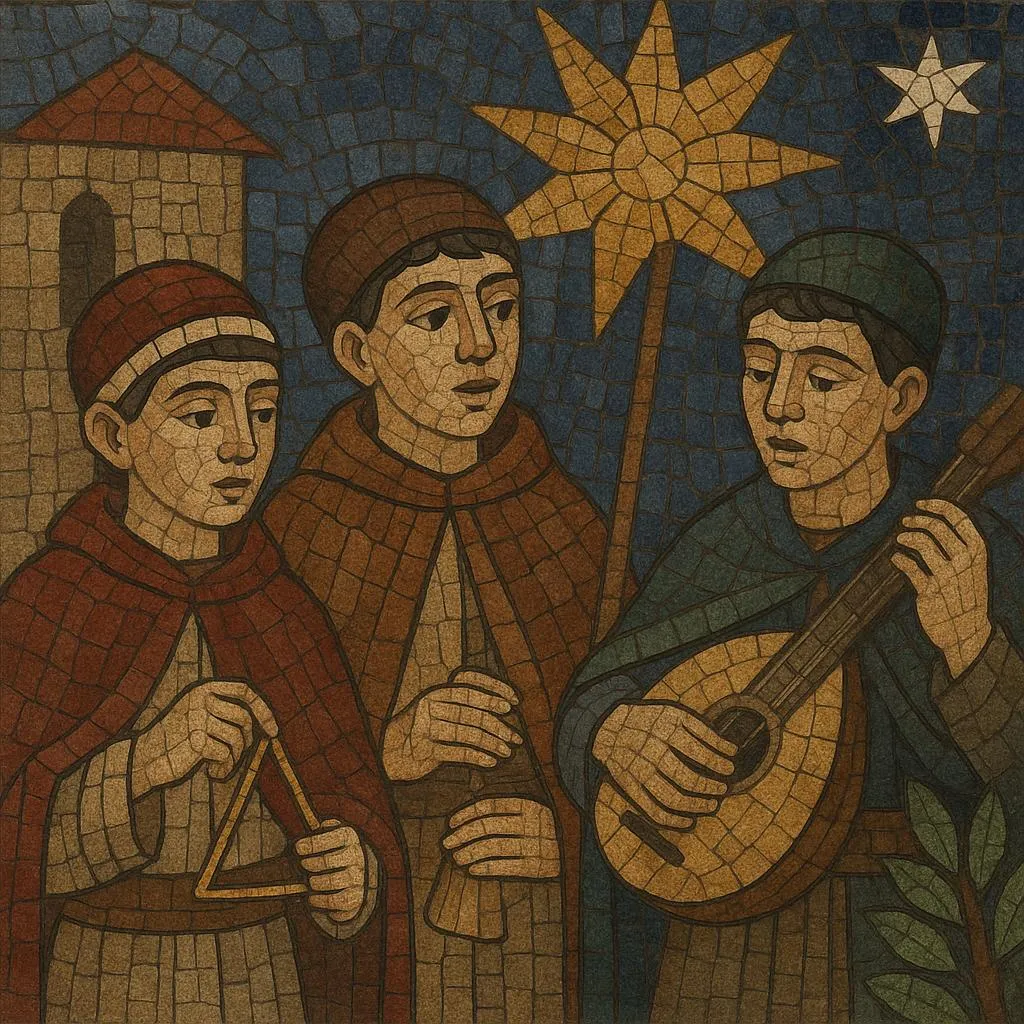
Etymologically, the term derives from the Latin calendae (first day of the month), reflecting pre‑Christian calendrical customs that were later absorbed and reshaped during the Byzantine period. In practice, children (and sometimes youth choirs) go door‑to‑door, asking “να τα πούμε;” (“shall we sing them?”) and perform with light percussion—most famously a small metal triangle—sometimes joined by santouri, laouto, or regional folk instruments. Householders respond with treats or coins, a custom that has shifted from sweets to monetary gifts in recent decades.
Kalanta exhibit rich regional variation (islands, mainland, and diaspora communities), but share a simple, processional melodic profile, memorable refrains, and lyrics offering blessings and prosperity to the household. Signature pieces include the Christmas "Καλήν εσπέραν, άρχοντες" and the New Year’s "Αρχιμηνιά κι Αρχιχρονιά."
History
Scale/mode: Use simple diatonic melodies with folk inflections; in sacred-leaning settings, borrow cadential turns and drones reminiscent of Byzantine chant. Keep the ambitus modest so children’s/communal voices sit comfortably.
•Rhythm: Favor steady, march‑like pulses suitable for walking from house to house (2/4 or 4/4). Regional sets may use Greek folk meters (e.g., 7/8, 9/8) for local color. Keep phrasing short with refrain‑style endings.