Your digging level
Description
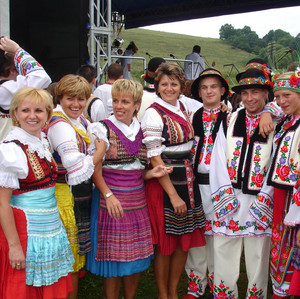
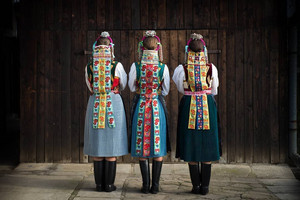
Rusyn folk music is the traditional music of the Rusyn (Ruthenian) people of the Carpathian region, stretching across today’s western Ukraine (Transcarpathia/Zakarpattia), eastern Slovakia, southeastern Poland (Lemko region), northeastern Hungary, northern Romania, and parts of Vojvodina (Serbia).
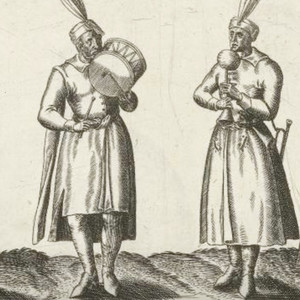
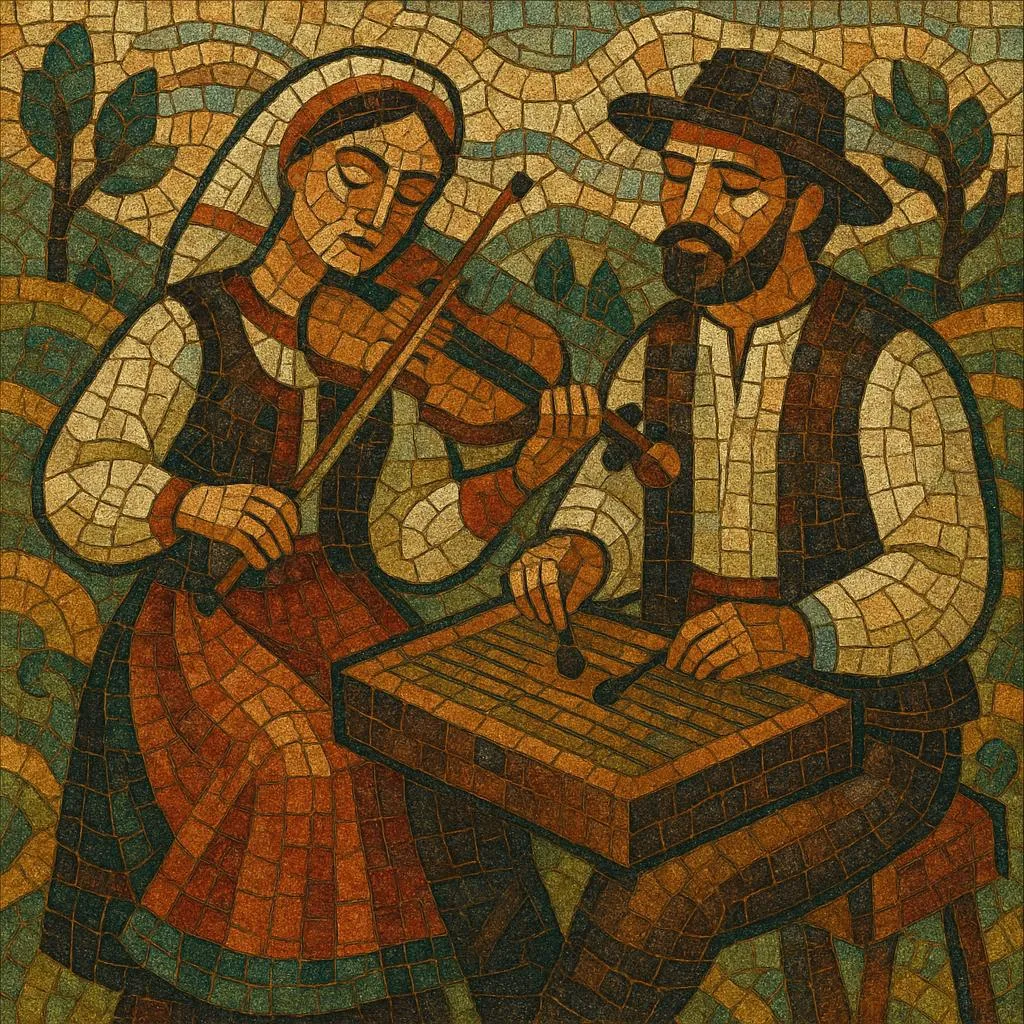
It is characterized by modal melodies (often Aeolian, Dorian, or Mixolydian), heterophonic village-choral textures, and flexible, speech-like phrasing in solo song. Typical instruments include fiddles (husle/skrypka), cimbalom (tsymbaly), clarinet, accordion, shepherd flutes (sopilka), Carpathian bagpipes (dudy), frame drum (bubon), and, in some mountain areas shared with Hutsul and Lemko traditions, the alpine horn (trembita). Dance rhythms draw on local polka and waltz meters as well as Hungarian-style czardas (slow–fast) and lively two-step tunes, while ritual genres (carols/kolyady, spring songs, wedding laments) feature responsorial singing and drone-like pedals.
Lyrically, songs favor pastoral life, courtship, bittersweet migration themes, seasonal ritual cycles, and communal identity, delivered in Rusyn and Lemko dialects with distinct local ornamentation and micro-regional variants.
History
Although Rusyn folk song and dance practices are much older, the 19th century saw the first systematic collecting and documentation under the Habsburg/Austro‑Hungarian realms. Clergy, teachers, and early ethnographers wrote down ritual carols, shepherd songs, and village dance tunes, helping articulate a distinct Rusyn/Ruthenian musical identity within the broader Carpathian soundscape.
Between World War I and World War II, Rusyn communities found themselves split among new states (Czechoslovakia, Poland, Hungary, Romania). Local radio, festivals, and amateur ensembles strengthened transmission, especially in Subcarpathian Rus’ and eastern Slovakia. In Poland, the Lemko subset maintained a vibrant repertoire until the trauma of postwar forced resettlements (notably Operation Vistula, 1947), which dispersed musicians and challenged continuity while also seeding diaspora ensembles.
In Soviet Ukraine (Zakarpattia), state folk ensembles professionalized performance: choral arrangements, cimbalom orchestras, and choreographed dance suites brought Rusyn materials to concert stages, sometimes smoothing village heterophony into harmonized settings. Parallel processes occurred in socialist Czechoslovakia and in Vojvodina (Serbia), where Rusyn cultural societies preserved language and song.
Following the fall of communism, a grassroots revival fostered fieldwork, festivals, and recordings. Young artists reclaimed dialect texts and village vocal styles, mixing them with acoustic folk, folk-rock, and world-fusion aesthetics. Cross-border collaboration among Ukraine, Slovakia, Poland, Hungary, and Serbian Vojvodina reconnected scattered Rusyn communities and amplified the visibility of Lemko and other micro-regional repertoires.