Your digging level
Description
Hungarian folk is the traditional music of the Hungarian-speaking peoples, shaped by village dance and song repertories and performed by fiddle-led bands and vocal ensembles. It is marked by distinctive modal melodies (pentatonic, Dorian, Mixolydian, and the so‑called "Hungarian minor"/"Gypsy minor" scale: 1–2–b3–#4–5–b6–7), flexible phrasing, and a vivid alternation of free and strict rhythm.
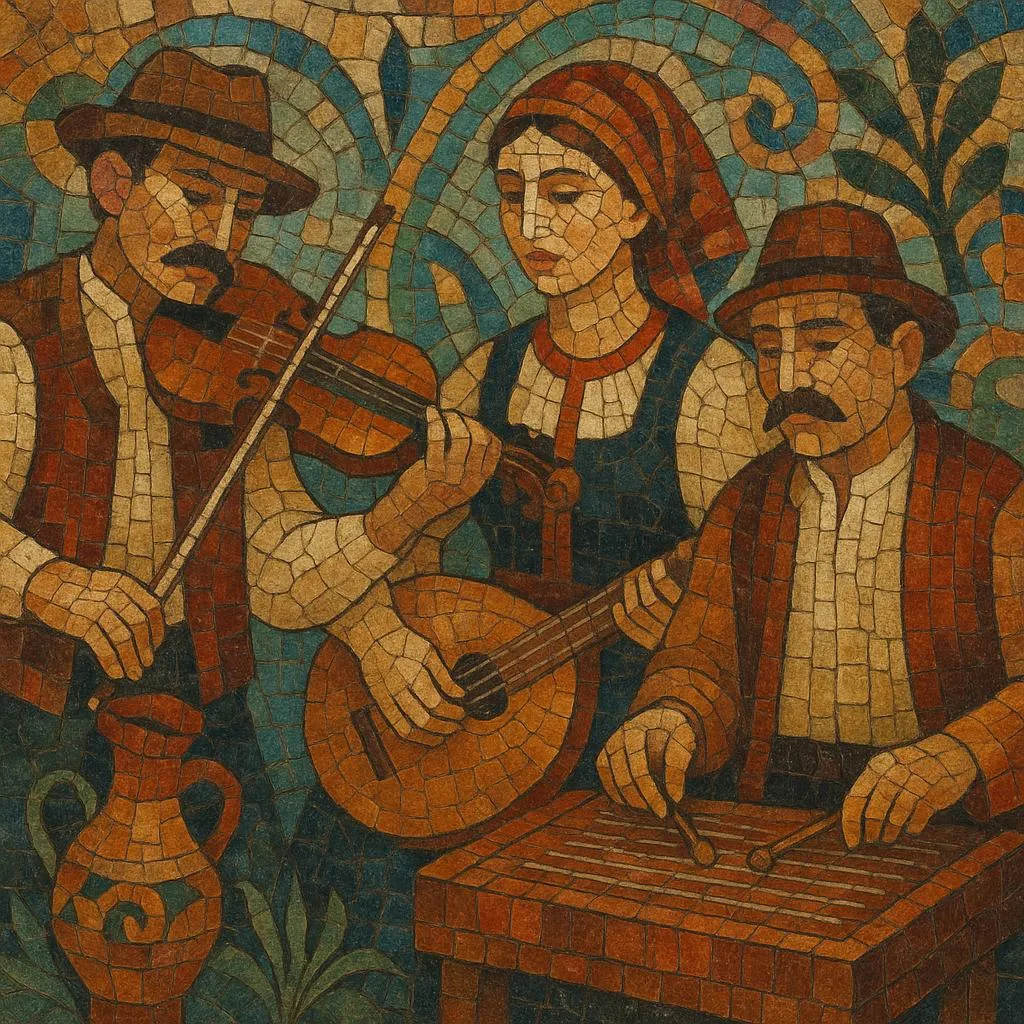
Typical instruments include the prímás (lead violin), the three‑string kontra (viola tuned ADA) supplying percussive double-stop harmony, double bass or the Transylvanian ütőgardon (beat cello), cimbalom (hammered dulcimer), tárogató (conical-bore woodwind), furulya (end-blown flute), duda (bagpipe), koboz (lute), and citera (zither). Singing styles range from parlando‑rubato laments (sirató) to dance songs in tempo giusto. Core dance types include csárdás (often in lassú–friss pairs), verbunkos (recruiting dance with dotted rhythms), ugrós, and regional Transylvanian cycles (e.g., legényes, kalotaszegi).
Regionally, styles differ across the Great Plain (Alföld), Transdanubia, the Palóc area, and especially Transylvania (Kalotaszeg, Mezőség, Szék), including Csángó repertories. Roma (Gypsy) band traditions profoundly inform performance practice and ornamentation.
History
Hungarian folk developed over centuries of rural life, with song and dance repertoires tied to work, ritual, and social gatherings. Modal melodies, heterophonic ensemble textures, and a strong dance focus reflect Central and Eastern European exchange. Village bands—often involving Roma musicians—codified the prímás–kontra–bass setup and cultivated a highly ornamented violin style.
The national awakening and scholarly interest in the 1800s set the stage for systematic collection. In the early 1900s, Béla Bartók and Zoltán Kodály recorded, transcribed, and classified thousands of songs across Hungary and Transylvania, distinguishing parlando‑rubato laments from tempo giusto dance songs and mapping regional variants. Their work fed directly into art music and music education, preserving styles that were at risk of urbanization and industrial change.
Beginning in the 1970s, the táncház movement in Budapest and beyond revitalized village styles through participatory dance-houses, learning directly from rural masters (especially Transylvanian bands). Urban folk ensembles adopted authentic instrumentation, bowings, tunings (e.g., ADA kontra), and dance-suite programming (lassú → friss). This created a sustainable scene linking performance, pedagogy, and social dance.
From the 1990s onward, Hungarian folk has interacted with folk rock, world fusion, and jazz, while historically informed groups continue to model village aesthetics. International tours, folk festivals, and a strong institutional ecosystem (folk dance ensembles, archives, and conservatories) have made the style globally recognized, even as community táncház events remain central to transmission.