Your digging level
Description
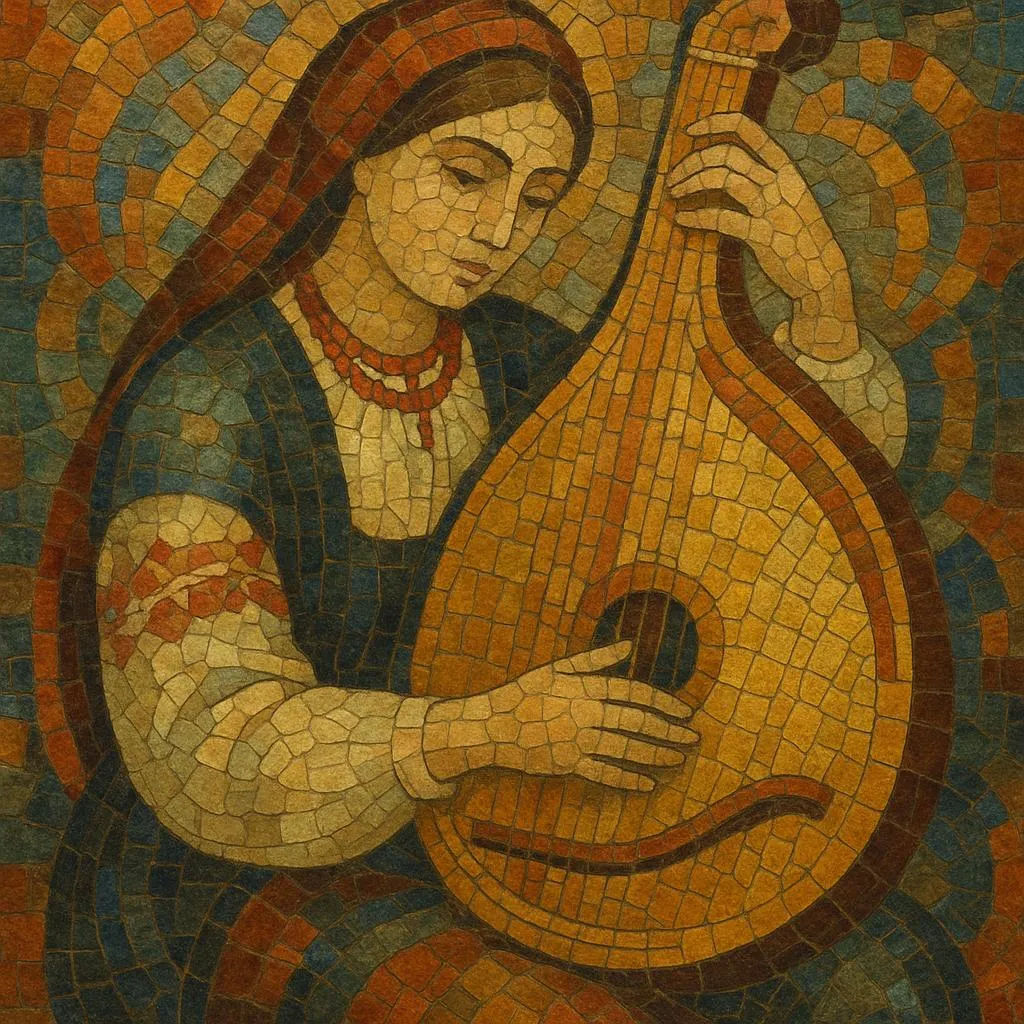
Bandura is a Ukrainian musical genre centered on the performance of the bandura, a distinctive multi-string plucked lute that merges features of the kobza and harp. Its repertoire spans epic narratives (dumy), historical and Cossack songs, lyrical romances, sacred and paraliturgical items, and instrumental preludes and dances.
The genre is closely tied to the kobzar tradition—blind itinerant singers who accompanied themselves on bandura—and later to conservatory-trained soloists and large bandura choirs. Sonically it blends ringing arpeggios, drone basses, modal melodies, and shimmering tremolos into textures that can feel both intimate and orchestral.
Modern practice ranges from historically informed solo performance to large mixed ensembles, as well as contemporary classical and folk-fusion settings that place the instrument in new harmonic and rhythmic contexts.
History
The bandura emerged in early modern Ukraine from the kobza/torban family, becoming the preferred instrument of kobzari—itinerant singer-poets who preserved oral history. Their repertoire included dumy (epic laments), Cossack songs, and spiritual pieces. By the 17th–18th centuries, the bandura’s growing string count enabled idiomatic arpeggiation and drone-bass textures suited to narrative performance in courts, fairs, and religious contexts.
Romantic nationalism spurred renewed interest in Ukrainian vernacular arts. Collectors and composers (e.g., Mykola Lysenko) documented and arranged kobzar materials, while virtuosi standardized technique and instrument workshops refined builds (Kyiv and Kharkiv types). Ostap Veresai became emblematic of the authentic kobzar style.
Cultural modernization led to conservatory instruction, the formation of large bandura ensembles and the Ukrainian Bandurist Chorus, and new concert repertory. Hnat Khotkevych advocated for concert bandura technique, expanding solo literature and elevating the instrument to the recital stage.
Soviet cultural policy marginalized independent kobzar practice, and many practitioners suffered persecution. In parallel, émigré communities in Europe and North America sustained the tradition through choirs, touring ensembles, and pedagogical hubs, ensuring continuity of repertoire and technique.
Instrument makers developed chromatic mechanisms and concert banduras with extended range, supporting complex harmonies and contemporary classical writing. Conservatories in Kyiv and Kharkiv institutionalized training; soloists and composers introduced the bandura to chamber, orchestral, and crossover contexts. Today, the genre thrives in Ukraine and the diaspora, spanning historically informed performance, large choral ensembles, and genre-fusions with folk-rock and modern classical idioms.