Your digging level

For this genre
0/8
🏆
Sign in, then listen to this genre to level up

Description

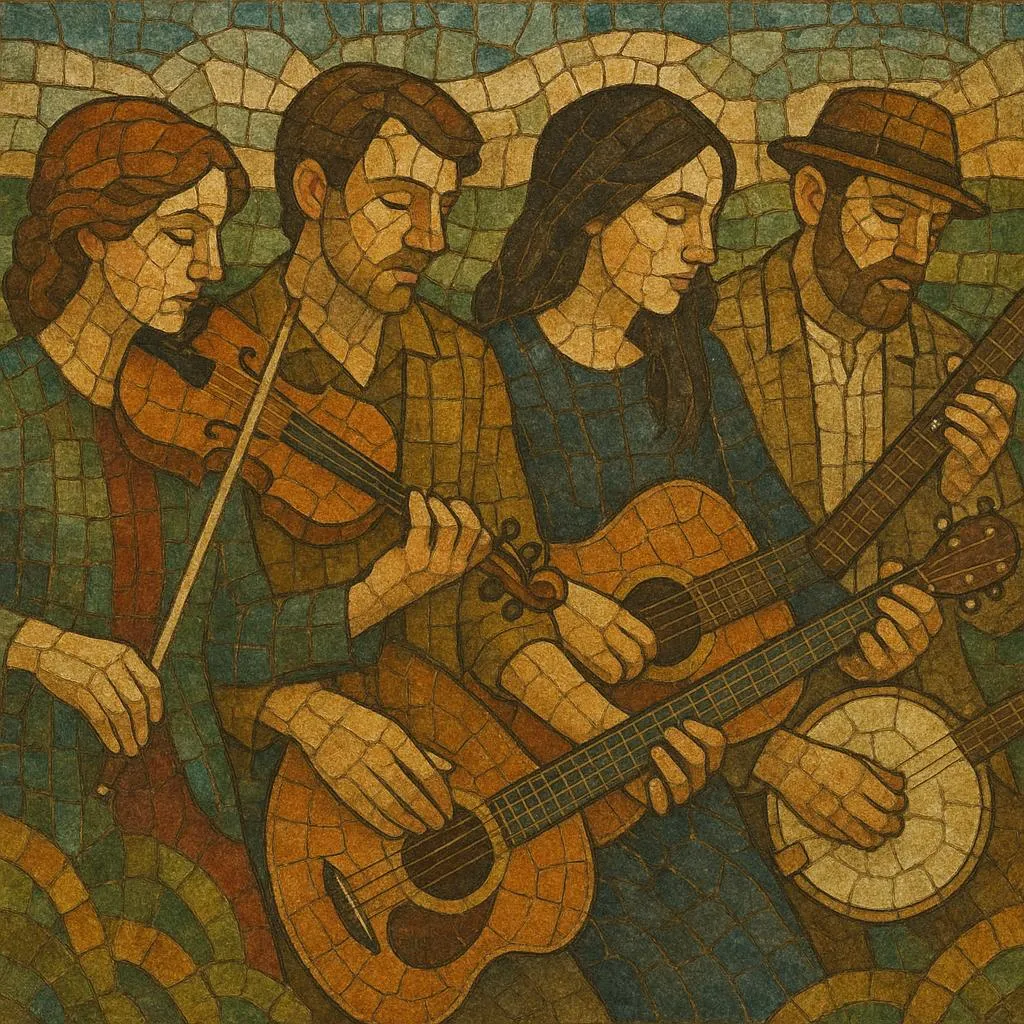
String folk is a contemporary folk style that foregrounds acoustic string instruments—especially violin/fiddle, viola, cello, double bass, mandolin, banjo, and guitar—arranged with the intimacy and counterpoint of small classical ensembles.

It blends the songcraft and storytelling of folk with the textures and techniques of chamber music, favoring organic timbres, close miking, and detailed arrangement. You will often hear drones, pizzicato figures, interlocking ostinatos, and lyrical fiddle/cello lines supporting gentle vocals and fingerpicked guitar.

Across the 2000s and 2010s, string folk took shape within indie-folk and chamber-pop circles, with artists and ensembles collaborating across the classical and folk worlds to create pastoral, cinematic, and emotionally resonant recordings.


Sources: Spotify, Wikipedia, Discogs, RYM, MB, user feedback and other online sources

History

Origins

String folk coalesced in the 2000s as artists in the indie-folk revival began arranging songs with classical string techniques and chamber ensemble sensibilities. While fiddle- and banjo-driven folk traditions long predate it, the defining hallmark here is the consciously composed, small-ensemble string writing (pads, counterpoint, and textures) borrowed from chamber music and applied to modern folk songs.

2000s: Indie-folk meets chamber writing

Early touchstones came from the US indie-folk scene: singers and songwriters commissioned string parts that went beyond simple sweetening. Violin, viola, and cello gained equal footing with guitar and voice, weaving canons, drones, and pizzicato grooves. Recordings prized room acoustics and close detail, nodding to classical mic techniques while retaining folk intimacy.

2010s: Cross-genre collaborations

The 2010s saw greater collaboration between conservatory-trained players and folk artists. Ensembles with flexible lineups (string quartets plus rhythm instruments) toured with songwriters, and labels/collectives nurtured chamber folk aesthetics. The sound broadened internationally, with UK and Nordic folk traditions intersecting with American string writing.

Today

String folk sits alongside chamber folk and indie classical, influencing soundtrack-leaning folk, post-classical playlists, and live sets that feature portable, acoustic ensembles. The genre remains defined less by geography than by its arranging approach: strings as the harmonic, rhythmic, and textural engine of modern folk.

How to make a track in this genre

Core instrumentation
•   Voice and acoustic guitar form the song’s spine. •   Add a string trio or quartet (violin, viola, cello, optional double bass) as primary color and motion. •   Mandolin and banjo can supply percussive articulation and countermelodies.
Arrangement approach
•   Treat strings as equal partners, not mere pads. Write lines in counterpoint: sustained cello drones under arpeggiated viola figures and lyrical violin leads. •   Use a mix of techniques: arco for warmth, pizzicato for pulse, occasional tremolo for lift, and simple harmonics for shimmer. •   Layer ostinatos and drones to create motion without a drum kit; let the bass (cello or double bass) outline roots and stepwise motion.
Harmony and melody
•   Favor diatonic folk harmony (I–IV–V, ii–V–I colors) with modal shades (Dorian, Mixolydian, Aeolian) to evoke pastoral or ancient feels. •   Build melodies around singable, speech-like contours; let strings echo or answer vocal phrases.
Rhythm and form
•   Common meters: 4/4 ballad, 3/4 and 6/8 lilt; subtle rubato is welcome. •   Use pizzicato or mandolin chop for groove; reserve percussion for light touches (shaker, brushed snare) if needed.
Lyrics and production
•   Themes: nature, memory, small towns, personal reflection—poetic but concrete imagery. •   Capture performances in natural rooms with minimal processing; prioritize stereo image of the ensemble and breathy, intimate vocals.
Practical tips
•   Arrange at the instrument: sing while bowing simple drones to locate vocal range and key. •   Orchestrate dynamically—thin textures in verses, fuller string counterpoint in choruses/bridges. •   Leave space; let silence and decay contribute to the arrangement.

Top tracks

Locked
Share your favorite track to unlock other users’ top tracks

Upcoming concerts

in this genre
Influenced by
Has influenced

Download our mobile app

Get the Melodigging app and start digging for new genres on the go
© 2026 Melodigging
Melodding was created as a tribute to Every Noise at Once, which inspired us to help curious minds keep digging into music's ever-evolving genres.
Buy me a coffee for Melodigging