Your digging level
Description
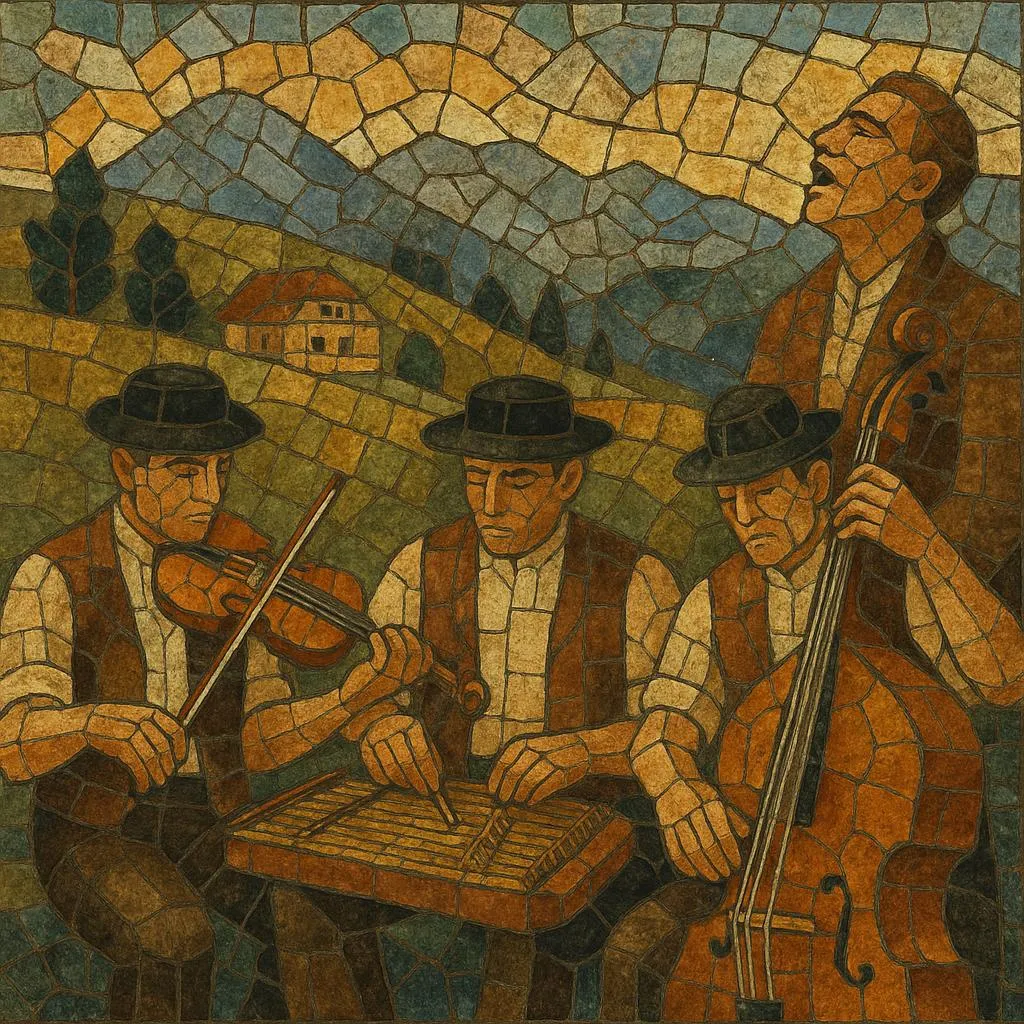
Appenzeller folk is the traditional music of the Appenzell region in northeastern Switzerland. It is best known for two complementary pillars: the refined string‑band dance music tradition called Streichmusik (typically two fiddles, hammered dulcimer, and bass/cello), and the untexted, natural yodel known as Zäuerli.
The dance repertoire draws on central European couple‑dance forms—Ländler and waltz in compound meters, polka and schottisch in duple time—played with a distinctive timbre created by the hammered dulcimer (Hackbrett) shimmering above tight fiddle leads and a droning low string voice. Zäuerli, by contrast, is usually free‑flowing and textless, built on open fifths, sustained drones, and parallel harmonies that echo across alpine valleys. Together, these strands express the social and pastoral life of Appenzell: music for the inn and for the pasture, for dancing feet and for long mountain calls.
History
Appenzeller folk coalesced in the 1800s from older rural practices in the Appenzell Alps. Two streams met: inn‑based string dance bands (Streichmusik) that adapted pan‑Alpine couple dances, and mountain vocal practices (herdsmen’s calls and multi‑voice natural yodels) that evolved into the Zäuerli tradition. The hammered dulcimer, long present in Swiss and southern German regions, became a hallmark timbre in Appenzell ensembles.
By the late 19th and early 20th centuries, Appenzeller string bands had stabilized their quartet core (two fiddles, Hackbrett, bass/cello) and a canonical set of local pieces—Ländler, waltzes, polkas, schottisches, and marches—often named for places, families, or occasions. Parallel to this, Zäuerli singing developed local style variants, typically performed in small groups with sustained drones and characteristic parallel third and sixth harmonies.
With the spread of regional festivals, radio, and recording, Appenzeller music reached Swiss audiences beyond the canton. Folklore societies helped document Zäuerli styles and dance‑band repertoires. Mid‑century modernization saw occasional additions (e.g., clarinet or accordion), yet Appenzell ensembles kept the dulcimer‑string core. The post‑1970s folk revival renewed interest in historically informed playing and regional vocal aesthetics.
Appenzeller folk remains an emblem of Swiss regional identity. Professional and community ensembles perform at local fêtes, national festivals, and on international stages. Young musicians continue the twin lineages—Streichmusik for dance and celebration, and Zäuerli for contemplative, resonant vocal art—maintaining a living tradition while composing new tunes in the classic idiom.
Compose in traditional forms:
•Ländler (3/4, lilting swing and gentle rubato at phrase ends),
•Waltz (3/4, steadier pulse than Ländler),
•Polka (2/4, buoyant and articulate),
•Schottisch (4/4, with a stride‑like accent pattern and occasional off‑beat lift).
•Keep tempos danceable; favor clear 8‑ or 16‑bar phrases with cadences suited to turns and figure changes.