Your digging level for this genre

0/8
🏆
Sign in, then listen to this genre to level up

Description

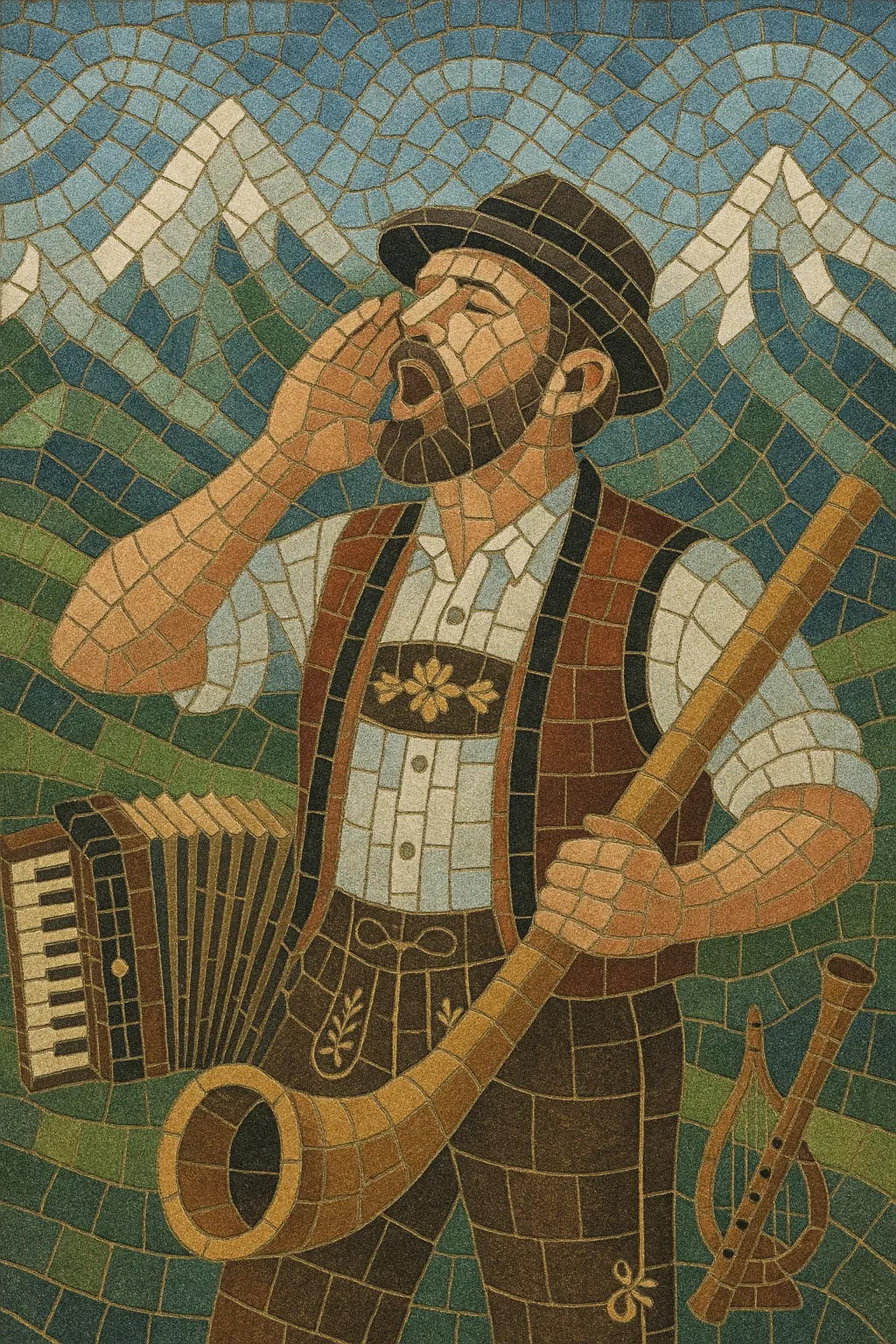
Alpine yodeling is a vocal folk tradition from the Swiss, Austrian, and Bavarian Alps in which singers rapidly alternate between chest voice and head voice/falsetto to produce wide interval leaps and echo-like calls.

Rooted in herders’ long-distance communication, it later became a stylized musical practice with wordless refrains (Juchzer; Zäuerli/Rugguusseli) and strophic songs (Jodellied) whose verses alternate with yodeled refrains. Performances range from solo calls to duos and large choirs (Jodlerklub), and are often sung in Swiss German or related Alpine dialects.

Accompaniment commonly features Schwyzerörgeli (Swiss diatonic accordion), zither, guitar, upright bass, alphorn, and hammered dulcimer (Hackbrett). Rhythms frequently reflect Ländler dance meters (notably 3/4) alongside 2/4 marches; harmonies favor major modes, drones, and open fifths to project across open valleys.

History

Origins

Yodel-like calls in the Alps date back centuries as functional signals among herders and mountain communities. By the 16th–18th centuries, pastoral call repertoires such as the Swiss “Kuhreihen” and the famed “Ranz des Vaches” were documented, establishing the Alpine ideal of long-tone calls, drones, and natural harmonic color.

19th‑Century Popularization

In the early 1800s, yodeling moved from pastures to stages. Tyrolean and Swiss troupes toured Europe and North America, sparking a vogue for so‑called “Tyrolese” songs. At the same time, village dances like the Ländler (3/4) and local strophic song forms shaped the modern Jodellied: verses with text alternating with wordless yodel refrains. Printing, salons, and urban folk clubs helped codify styles across Switzerland, Austria, and Bavaria.

Institutions and Media (20th Century)

Formal associations and festivals consolidated the tradition, notably the Swiss national yodel federation and the recurring Eidgenössisches Jodlerfest. Radio, shellac discs, and postwar TV amplified both traditional choirs and star soloists. Bavarian virtuoso Franzl Lang popularized spectacular, agile yodel technique, while Swiss artists and choirs maintained regional idioms like the free‑flowing, textless Zäuerli of Appenzell and Toggenburg.

Global Influence

Touring Alpine ensembles inspired American performers in the late 19th century, and yodeling decisively entered U.S. roots music when Jimmie Rodgers’ “Blue Yodel” series (from 1927) fused yodel with country and blues. From there it spread into western, bluegrass, and popular entertainment, while the Alpine core maintained its choral, folk-dance, and festival traditions.

Today

Alpine yodeling thrives through local clubs, regional styles, and contemporary crossovers. Ensembles blend traditional timbres (Schwyzerörgeli, alphorn) with modern production, and artists such as Oesch’s die Dritten have carried the idiom to international audiences without losing its pastoral, communal spirit.

How to make a track in this genre

Vocal Technique
•   Center the style on rapid, clean alternation between chest voice and head voice/falsetto to create wide intervallic leaps (often 4ths, 5ths, and octaves). •   Use bright, forward resonance and precise onset/offset to keep leaps percussive yet ringing. Aim for a steady vibrato in sustained notes and a straight tone for calls. •   Incorporate idiomatic motifs: short, whooping "Juchzer" interjections; flowing, textless Zäuerli/Rugguusseli lines for free, pastoral sections; and yodeled refrains in Jodellied.
Form, Melody, and Harmony
•   Common structure: strophic verses with lyrics, alternating with a wordless yodel refrain. •   Melodies favor major modes; harmony often highlights open fifths, drones, and simple triads to project outdoors and evoke natural overtones. •   For Zäuerli, consider flexible, rubato phrasing with long tones and stepwise contours; for showy yodel, write agile arpeggios that outline tonic–dominant relationships and leap cleanly between registers.
Rhythm and Meter
•   Draw on Ländler and related Alpine dances: 3/4 is characteristic, alongside 2/4 marches and brisk polkas. Maintain clear, buoyant pulse for danceable numbers; allow freer tempo for unaccompanied calls.
Instrumentation and Texture
•   Core: voice(s). Typical accompaniments include Schwyzerörgeli (Swiss diatonic accordion), zither, guitar, upright bass, alphorn, and Hackbrett (hammered dulcimer). •   Arrange for duos or small choirs with parallel thirds/sixths and pedal drones. In larger choirs (Jodlerklub), stack parts SATB-style, reserving the yodel motif for upper voices while lower parts sustain drones.
Language, Lyrics, and Delivery
•   Verses often use Swiss German or regional dialects and pastoral themes (mountains, seasons, herding, communal life). •   Keep texts simple and image-rich; let the yodel refrain carry the emotional peak. Enunciate clearly; dynamic swells help mimic valley echoes.
Production and Performance Tips
•   Record in rooms with natural reverberation or add short, early reflections to suggest mountain spaces. •   Prioritize ensemble blend and intonation; tune drones carefully so register shifts lock into overtones. •   For stage arrangements, alternate unaccompanied yodel passages with full-ensemble refrains to showcase contrast.

Top tracks

Locked
Share your favorite track to unlock other users’ top tracks
Influenced by
Has influenced
Challenges
Digger Battle
Let's see who can find the best track in this genre
© 2025 Melodigging
Melodding was created as a tribute to Every Noise at Once, which inspired us to help curious minds keep digging into music's ever-evolving genres.
Buy me a coffee for Melodigging