Your digging level
Description
Mezmur is a modern Ethiopian and Eritrean Christian devotional song tradition.
It blends ancient Ethiopian Orthodox chant practice and local folk-modal systems (qenet) with contemporary popular instrumentation and studio production.
Sung predominantly in Amharic, Tigrinya, and other Ethiopian languages, mezmur ranges from solemn, liturgical pieces to rhythmic, congregational praise songs.
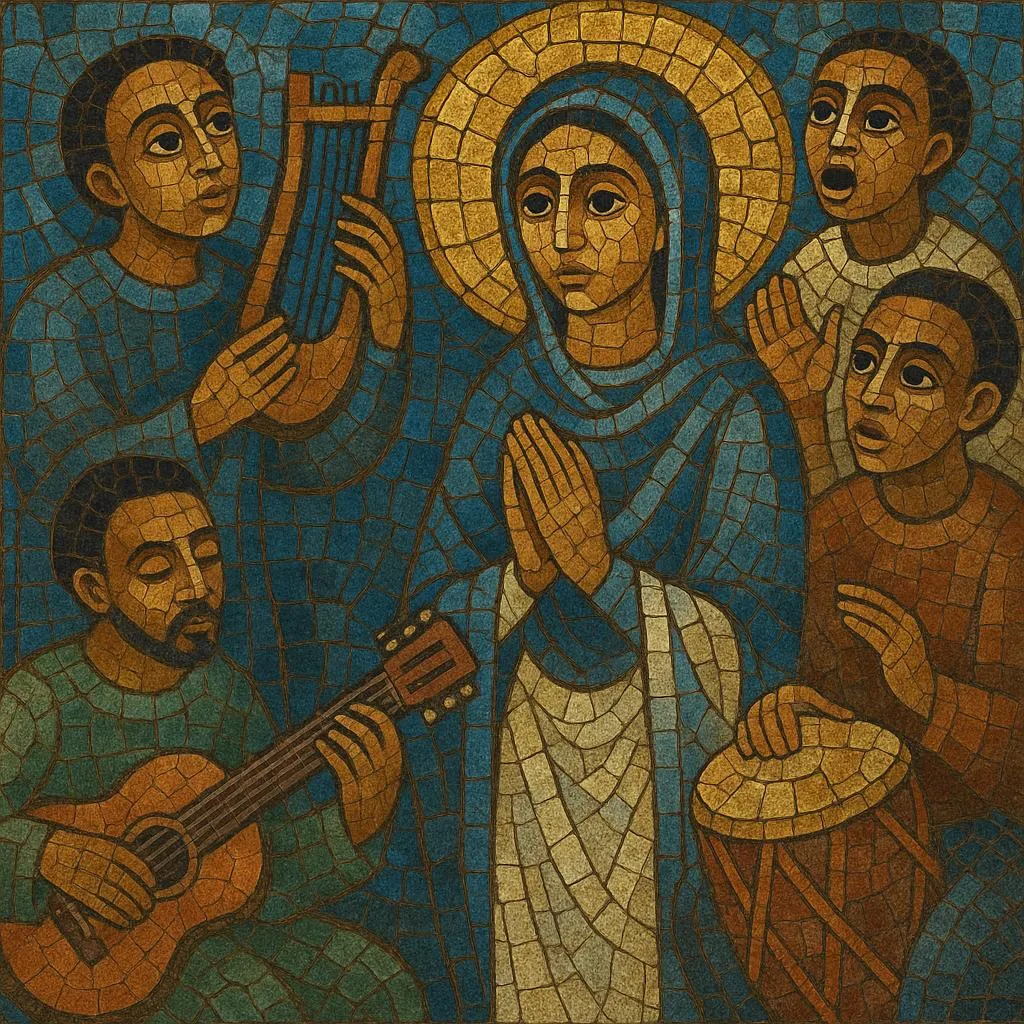
Characteristic elements include call-and-response choirs, scripture-centered lyrics, pentatonic modal melodies (e.g., tizita, bati, anchihoye, ambassel), handclaps, kebero drum patterns in compound meters, and a mix of krar, masenqo, and modern keyboards and guitars.
History
Mezmur emerged as a distinct modern devotional style in Ethiopia (and among Eritrean Christians) during the 1970s, when cassette culture and church youth choirs helped carry sacred texts outside strictly liturgical settings. While its performance format is contemporary, its conceptual roots lie in Ethiopian Orthodox chant (zema) and centuries of sung prayer and congregational hymnody.
As church choirs, Sunday School departments, and evangelical congregations expanded, mezmur consolidated a recognizable sound: modal melodies rooted in local qenet, kebero-driven compound meters (6/8, 12/8), and rich choral textures. Affordable keyboards, drum machines, and multitrack cassette recording enabled homegrown production and wide circulation at church events, weddings, and markets.
With CDs, VCDs, satellite TV, and later streaming, mezmur diversified: intimate acoustic ballads, danceable praise tracks, and large choirs with orchestrated arrangements. While many ensembles remain parish-based, professional soloists and producers have raised recording standards. The core identity—scripture-centered lyrics, communal participation, and Ethiopian modal aesthetics—remains constant even as new production techniques and crossover influences appear.


Best playlists