Your digging level
Description
Eritrean pop is the modern popular music of Eritrea that blends local Tigrinya and Tigre melodic traditions with contemporary African and Middle Eastern pop aesthetics.
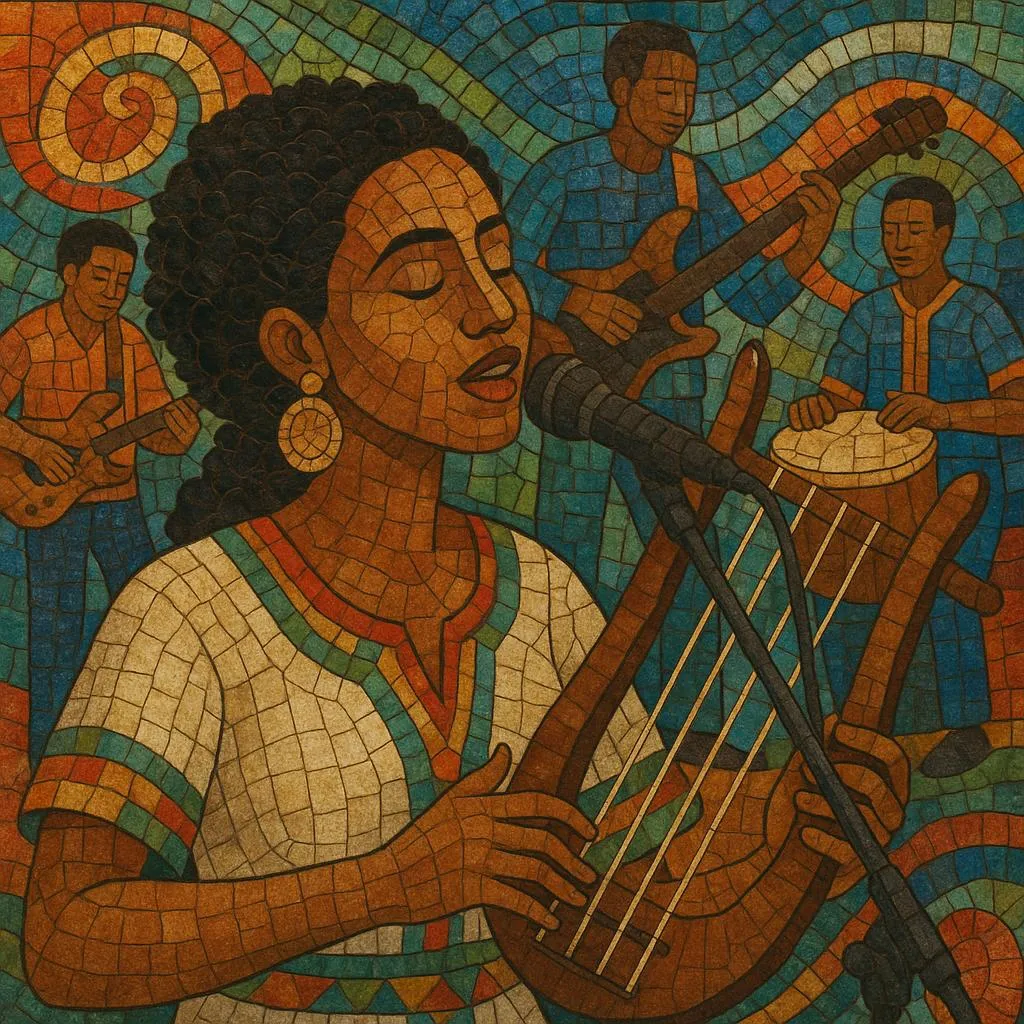
It is characterized by pentatonic melodies, lively dance grooves associated with the celebratory guayla beat, and a mix of traditional instruments (krar/lyre, kebero/drums) with electric guitar, bass, keyboards, drum machines, and occasional horns. Vocals often feature ornamentation, tight unison lines, and call-and-response hooks.
Songs are commonly sung in Tigrinya and Tigre, with Arabic and other Eritrean languages appearing in some repertoire. Lyrically, themes span love, family, weddings, diaspora longing, and national pride, often delivered with infectious refrains designed for communal dancing.
History
Eritrean popular music grew from urban dance-band cultures in Asmara and Massawa and from long-standing Tigrinya and Tigre song traditions. As electric guitars, saxophones, and keyboards spread through the Horn of Africa, musicians adapted local pentatonic tunes and the guayla dance feel to band formats and cassette-friendly arrangements. During the independence struggle, cultural troupes and cassette circulation helped standardize a modern style that kept traditional rhythms while embracing amplified instrumentation.
After independence in 1993, studios and ensembles in Asmara and diaspora hubs professionalized the sound. Drum machines and synths joined kebero and krar, and verse–chorus songwriting became the norm. Artists released albums and ubiquitous video-clips that cemented the genre’s dance-forward identity at weddings and community events.
Satellite TV, VCDs/DVDs, and later streaming widened the audience across the Eritrean diaspora. Producers blended local grooves with pan-African afropop polish, reggae lilt, and Arabic pop color. Despite technological change, core traits—pentatonic melody, guayla-derived rhythms, and participatory hooks—remain central, keeping Eritrean pop both contemporary and recognizably Eritrean.

Best playlists