Your digging level
Description
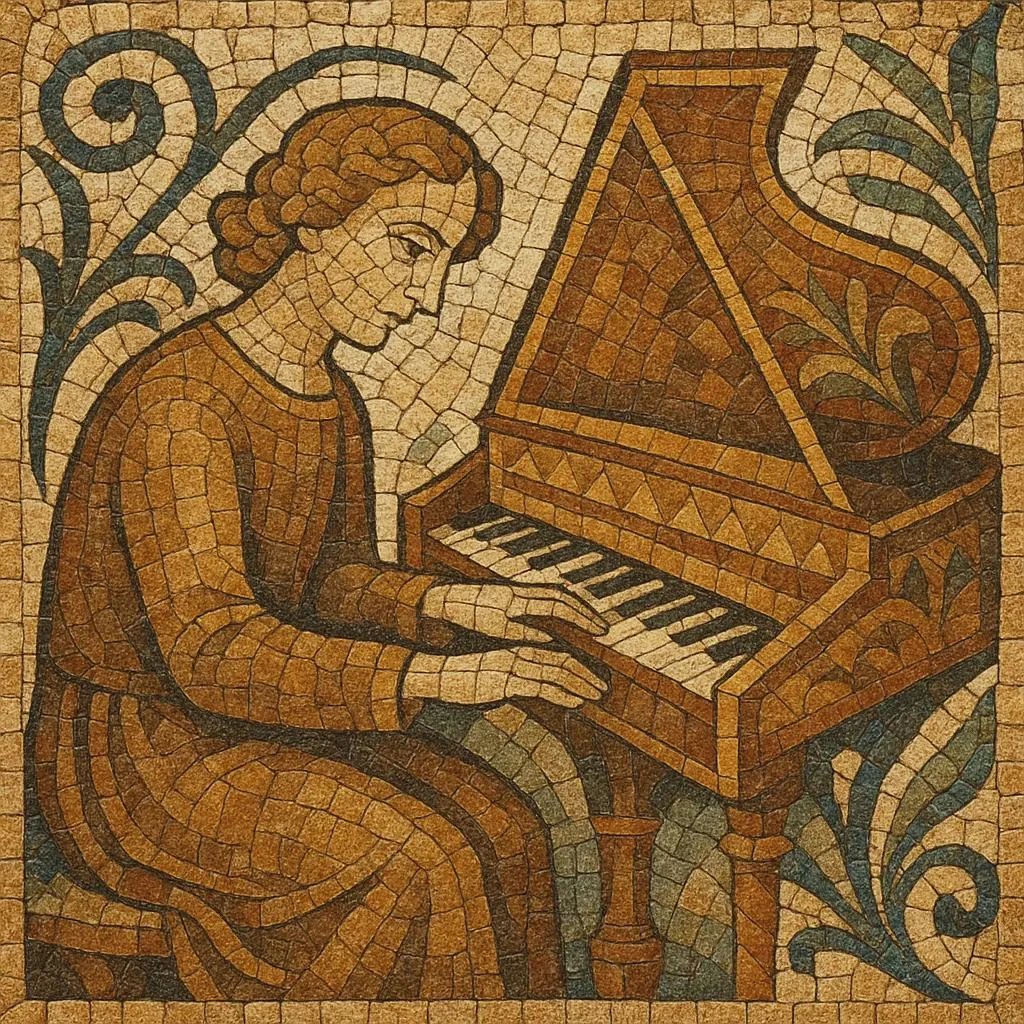
Harpsichord refers to a repertoire and performance tradition centered on the plucked‑string keyboard instruments of the Renaissance and Baroque eras. Its sound is produced by quills (or plectra) that pluck the strings, giving a clear attack, rapid decay, and a bright, silvery timbre distinct from the later piano.
As a genre tag it encompasses solo keyboard works (suites, ordres, toccatas, preludes and fugues, character pieces), concertos, chamber sonatas with continuo, and continuo playing in vocal and instrumental music. Stylistically it spans Italian brilliance, English virginalist craft, French elegance with agréments and notes inégales, German contrapuntal rigor, and Iberian color and rhythm.
Modern harpsichord performance is closely tied to historically informed practice: period instruments or replicas, historical temperaments, A=415 (or period-appropriate) pitch, and articulation and ornamentation derived from primary sources.
History
The harpsichord family developed in Renaissance Italy, with early references and surviving instruments appearing by the 1400s–1500s. Keyboard technique and repertoire grew alongside dance forms (allemande, courante, sarabande, gigue) and contrapuntal traditions shared with organ and lute. Early centers included Italy and the Low Countries, where Flemish builders (notably the Ruckers family) refined the instrument’s sonority and layout.
In the 1600s and early 1700s the harpsichord became a primary solo and continuo instrument across Europe. Italy emphasized virtuosic toccatas and concertos; England’s virginalists cultivated ornate variations; France produced characterful “pièces de clavecin” rich in agréments and notes inégales; Germany synthesized styles into rigorous counterpoint and dance‑suite craft. The instrument was pivotal in chamber music and in opera/oratorio pits as the continuo backbone.
By the later 1700s, the fortepiano’s capacity for dynamic nuance began to supplant the harpsichord in mainstream taste and composition. The harpsichord persisted in certain courts and theaters, but the piano became the default for new keyboard music of the Classical era.
A 20th‑century revival—sparked by performers like Wanda Landowska and advanced by instrument makers and scholars—reclaimed the harpsichord’s repertoire and techniques. From mid‑century onward, figures such as Gustav Leonhardt, Scott Ross, and later generations helped establish historically informed performance, expanding both canonical and rediscovered works. Today, the harpsichord thrives in solo recitals, chamber and orchestral baroque programs, and newly commissioned contemporary pieces.