Your digging level
Description
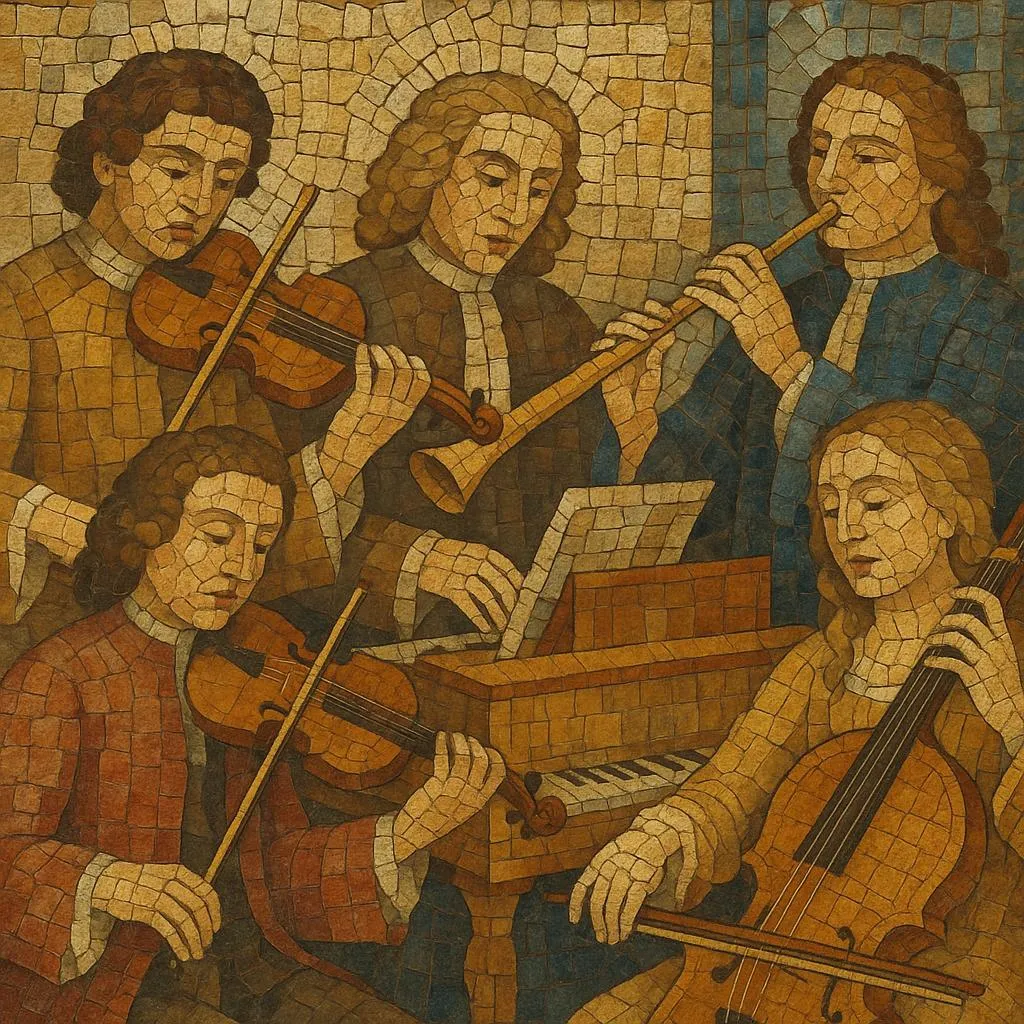
Baroque ensemble refers to groups performing instrumental and vocal music from the Baroque era using the ensemble formats of the time—string bands with continuo, mixed winds and brass, and, at larger scale, early orchestras. It foregrounds basso continuo (harpsichord, organ, theorbo, cello/violone) supporting melody instruments (violins, violas, oboes, recorders, trumpets, flutes) in forms such as trio sonatas, dance suites, concerti grossi, overtures, and early symphonies.
In contemporary usage, the term often implies historically informed approaches: period or replica instruments with gut strings, natural trumpets and horns, Baroque bows, and performance practices like ornamentation, notes inégales, overdotting, and rhetorical phrasing. The sound is clear, articulate, and texturally transparent, with terraced dynamics and continuo-driven harmony that emphasizes affect and musical rhetoric.
History
The Baroque ensemble arose in early‑17th‑century Italy as composers and courts embraced basso continuo and concerted textures. Small groups built around continuo (harpsichord/organ, theorbo, cello/violone) supported one or more melody instruments, producing trio sonatas, sonate da chiesa/da camera, and dance suites. Italian innovators such as Monteverdi and Corelli influenced a Europe‑wide shift from Renaissance consort textures to dramatic, bass‑driven ensembles.
By the late Baroque, ensemble writing blossomed into the concerto grosso (Corelli, Handel), orchestral suites and French overtures (Lully, Rameau), mixed wind–string bands (Telemann), and contrapuntal orchestral concerti (J. S. Bach). National idioms developed: France favored dance‑based suites and agréments; Italy refined violin‑led textures and virtuosity; Germany synthesized Italian brilliance with contrapuntal depth; England cultivated masque and orchestral traditions following Purcell.
After 1750, Classical orchestral norms displaced many Baroque ensemble practices. Repertoires survived in larger Romantic orchestras, often with modernized sonorities. The 20th century’s early‑music revival re‑centered Baroque ensemble ideals: period instruments, historical tunings, and treatise‑based technique. Pioneering groups and directors re‑established the Baroque ensemble as a distinct sound world, leading to today’s rich ecosystem of specialist chamber groups and period orchestras.
Modern Baroque ensembles range from intimate continuo‑plus‑solo settings to full period orchestras. They record extensively, collaborate with choirs and opera companies, and bring repertories from well‑known concerti grossi to newly edited symphonies and overtures, all under the umbrella of historically informed performance.
Plan a continuo core (harpsichord or chamber organ plus cello/violone; add theorbo for color). Build the melody group from gut‑string violins/violas, with optional winds (recorders, traverso, oboe, bassoon) and natural trumpet/horn for festive works.
Adopt period pitch (commonly A=415 for German/Italian repertory; A=392 for French). Use a historical temperament (e.g., quarter‑comma meantone or a circulating system like Werkmeister/Kirnberger) to color harmonies and keys.
Compose or select Baroque forms: trio sonata (two treble lines + continuo), dance suite (allemande, courante, sarabande, gigue, etc.), concerto grosso (concertino vs. ripieno), French overture (dotted slow + fugal fast), and early symphony/sinfonia. Exploit terraced dynamics and clear sectional contrasts.
Write a firm bass line with figures; let the continuo realize harmonies idiomatically with broken chords, passing dissonances, and cadential formulas. Keep harmonic rhythm steady, and cadence clearly at formal boundaries.
Shape phrases as musical rhetoric (affect). Use Baroque bowings and light, speech‑like articulation. Apply style‑specific conventions: notes inégales and overdotting in French overtures; lively swing in gigues; measured stomping in gavottes and bourrées.
Encourage tasteful extempore ornaments: trills (on the beat), appoggiaturas, passing diminutions, cadential turns, and agréments in French music. Soloists should vary repeats, and continuo players may add fills that support—never obscure—the melody.
Favor chamber leadership (from the first violin/keyboard) over heavy conducting. Balance textures so the bass and harmony speak clearly, and align rhetorical gestures, cadences, and articulations across the ensemble.