Your digging level

For this genre
0/8
🏆
Sign in, then listen to this genre to level up

Description

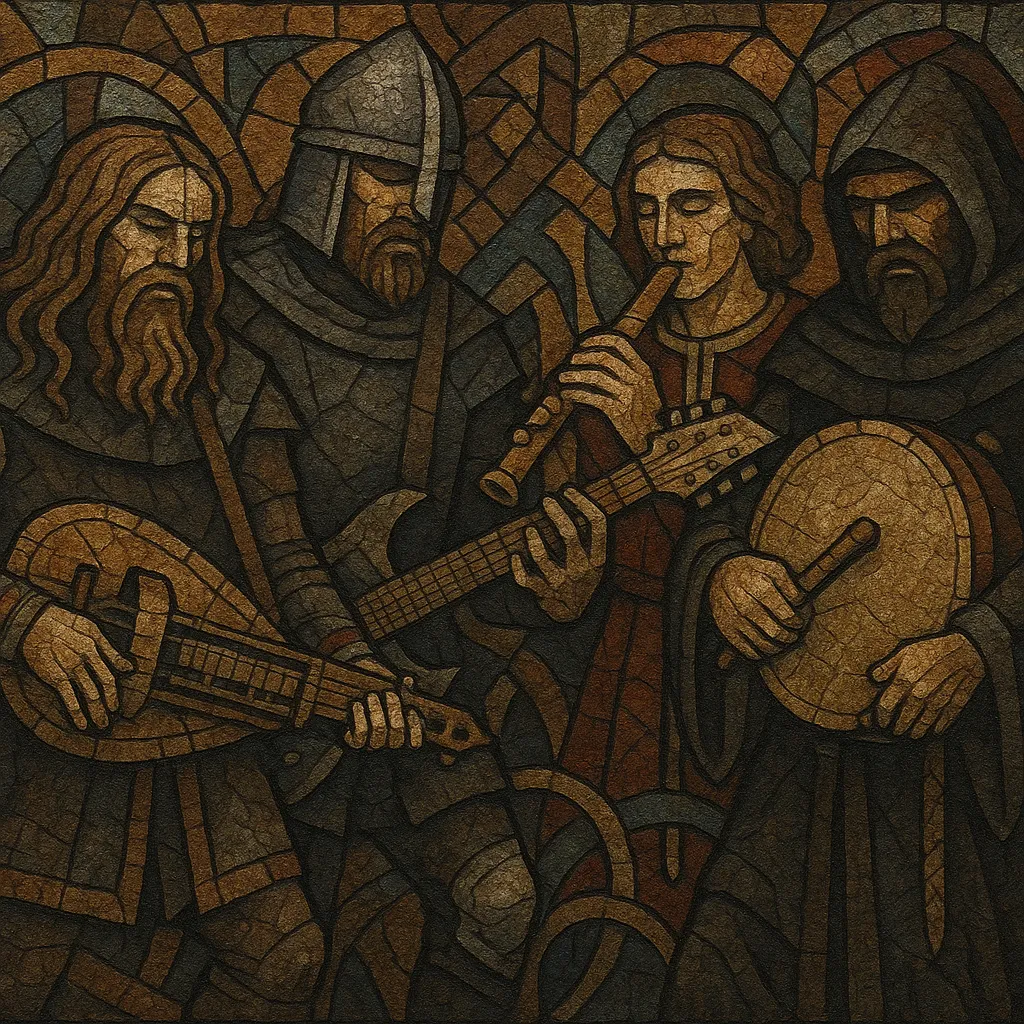
Medieval metal is a subgenre of folk metal that fuses the power and riff-driven weight of heavy metal with melodies, modes, and instruments associated with medieval and early modern European music.

Centered largely in Germany—where it is known as Mittelalter-Metal or Mittelalter-Rock—the style features prominent use of hurdy-gurdy, bagpipes (Dudelsack), shawms/bombards, recorders, cittern/lute, nyckelharpa, and frame drums alongside distorted electric guitars, bass, and modern drum kits. Songs often draw on medieval dance rhythms (saltarello- or estampie-like pulses), modal melodies (Dorian, Aeolian, Mixolydian), and lyrics referencing legends, minstrelsy, battles, folk tales, and historical themes.

Pioneered in the mid-to-late 1990s by bands such as Subway to Sally, In Extremo, and Schandmaul, the genre grew out of Germany’s Neo-Medieval movement and quickly established a vibrant live culture at medieval markets and major festivals.

Sources: Spotify, Wikipedia, Discogs, RYM, MB, user feedback and other online sources

History

Origins (mid–late 1990s)

Medieval metal emerged in Germany from the broader Neo-Medieval movement, where artists revived historical instruments and repertoires and began combining them with contemporary rock and metal. Early leaders included Subway to Sally (who shifted from folk-rock toward a heavier sound by the late 1990s), In Extremo (transitioning from a medieval street/market ensemble into a fully amplified metal act), and Schandmaul (blending folk storytelling with robust rock instrumentation).

Consolidation and Scene Identity (2000s)

By the early 2000s the style’s identity was well established under the banner Mittelalter-Metal/Mittelalter-Rock. Groups like Saltatio Mortis, Tanzwut (a metal offshoot of medieval ensemble Corvus Corax), and later Feuerschwanz expanded the palette—some leaning more into power/gothic metal polish, others incorporating industrial-tinged percussion and electronics. The scene developed a strong live footprint at German medieval fairs and large festivals (e.g., Wacken, M’era Luna, Wave-Gotik-Treffen), where bagpipes, shawms, and hurdy-gurdy became visual and sonic calling cards.

Musical Aesthetics

Hallmarks include modal melodies (especially Dorian/Aeolian) voiced by traditional instruments in unison or in parallel intervals over heavy guitar riffs. Dance-derived meters (3/4, 6/8, sometimes brisk 4/4 with jig-like subdivision) echo medieval dances. Lyrically, bands often write in German (sometimes drawing on Middle High German vocabulary or folkloric turns of phrase), focusing on minstrels, chivalric tales, and historical or mythic narratives.

Legacy and Influence

Medieval metal helped normalize the use of historical/folk instruments in heavy genres and influenced adjacent styles that merge ancient soundworlds with modern heaviness (e.g., medieval black metal) and historically themed crossover scenes (pirate/market folk rock and metal). It remains a uniquely German-centered but internationally recognized branch of folk metal.

How to make a track in this genre

Instrumentation and Ensemble
•   Combine a standard metal lineup (distorted electric guitars, electric bass, drum kit) with medieval/folk instruments: German bagpipes (Dudelsack), hurdy-gurdy, shawm/bombard, recorders, flutes, cittern/lute/mandola, nyckelharpa, and frame drums. •   Treat folk instruments as lead melody voices: double the vocal melody, answer the guitar riff, or carry instrumental refrains.
Rhythm and Meter
•   Borrow from medieval dance feels: saltarello-like 6/8 at brisk tempos; estampie or bourrée-like pulses; strong downbeats that support festival-style, danceable grooves. •   For heavier songs, use galloping 4/4 at 140–180 BPM; interleave jig-like subdivisions (triplets) on flutes/shawms over straight drum backbeats.
Harmony and Melody
•   Favor modal writing: Dorian (e.g., D–E–F–G–A–B–C), Aeolian (natural minor), and Mixolydian. Drone pedals (e.g., D or A) under modal riffs sound authentic with bagpipes or hurdy-gurdy. •   Example Dorian riff bed: Dm – C – Bb – C, with hurdy-gurdy doubling a D drone and a shawm outlining D–E–F motifs. •   Use parallel fifths/octaves sparingly for color; emphasize unison lines between folk instruments and guitar for impact.
Form and Arrangement
•   Common layout: Intro (folk lead riff) → Verse (riff + vocal) → Pre-chorus (lift) → Chorus (anthemic, instruments in unison) → Dance-break (instrumental jig/reel) → Solo (shawm/recorder or guitar) → Final chorus. •   Orchestrate in layers: start with acoustic/folk timbre, add rhythm guitars and full kit at chorus hits, and drop to drone + percussion for folk interludes.
Lyrics and Themes
•   Write in German (or native language) with archaic turns of phrase; topics include minstrelsy, legends, medieval battles, tavern life, and folk wisdom. •   Use call-and-response and big, chantable refrains to encourage audience participation at festivals.
Production Tips
•   Close-mic folk instruments but preserve air: blend a main close mic with a room/overhead to keep them present over distorted guitars. •   Carve frequency space: notch 2–4 kHz on guitars to make room for shawm/recorder; control low-mid build-up around drones (200–400 Hz). •   Pan doubled folk lines (e.g., recorder left, shawm right) while centering vocals and bagpipe/hurdy-gurdy drones for a regal, anthemic image.

Main artists

Top tracks

Locked
Share your favorite track to unlock other users’ top tracks

Upcoming concerts

in this genre
Influenced by
Has influenced

Download our mobile app

Get the Melodigging app and start digging for new genres on the go
© 2026 Melodigging
Melodding was created as a tribute to Every Noise at Once, which inspired us to help curious minds keep digging into music's ever-evolving genres.
Buy me a coffee for Melodigging