Your digging level
Description
Detskie rasskazy (детские рассказы) is a Russian-language children’s storytelling genre centered on narrated tales, fairy stories, and literary adaptations recorded for home listening and radio.
Typical releases feature professional stage and screen actors reciting prose with clear diction, supported by orchestral or chamber underscoring, character leitmotifs, sound effects, and gentle songs. The aesthetic is didactic yet imaginative: moral lessons, humor, and wonder are conveyed through intimate narration and cinematic sound design.
The genre flourished across the Soviet era on vinyl and tape, and today survives via reissues, digital archives, and new productions that keep the narrated, music-enhanced format alive for contemporary families.
History
Radio’s rapid expansion in the USSR created a receptive space for narrated children’s programming. Trained actors brought folk tales and literary classics to life, while state ensembles provided short symphonic cues and interludes. Early shellac records foreshadowed a domestic listening culture in which children could hear stories at home, not only in the classroom or theater.
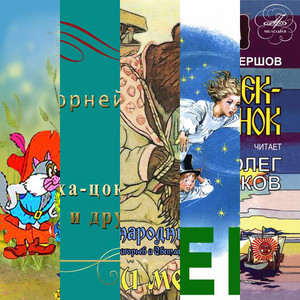
From the mid‑1950s, children’s story records became a staple of the Soviet home. Major state recording and broadcasting organizations commissioned celebrated actors and orchestras, combining expressive narration with leitmotif-based scoring, foley-like sound effects, and simple songs. Releases ranged from folk-tale retellings to literary adaptations and seasonal stories. The style emphasized clarity of speech, moral themes, and a warm, cinematic sound, making these recordings both educational and deeply evocative.
Cassette editions and school-library copies broadened access in the 1980s. After the dissolution of the USSR, production diversified: smaller studios and theaters issued new narrations, sometimes with lighter, synth-assisted scoring. Meanwhile, families preserved legacy LPs and tapes, contributing to a strong nostalgia culture around these titles.
Digitization brought archival storytelling records to online platforms, where they continue to reach new audiences. Contemporary producers draw on the classic format—clear narration, character themes, and modest orchestral colors—while adopting modern mixing practices and, at times, integrating folk instruments or softer ambient textures. Detskie rasskazy thus persists as a living tradition linking classic narrated recordings to today’s family listening and podcast culture.