

Your digging level

For this genre
0/8
🏆
Sign in, then listen to this genre to level up

Description

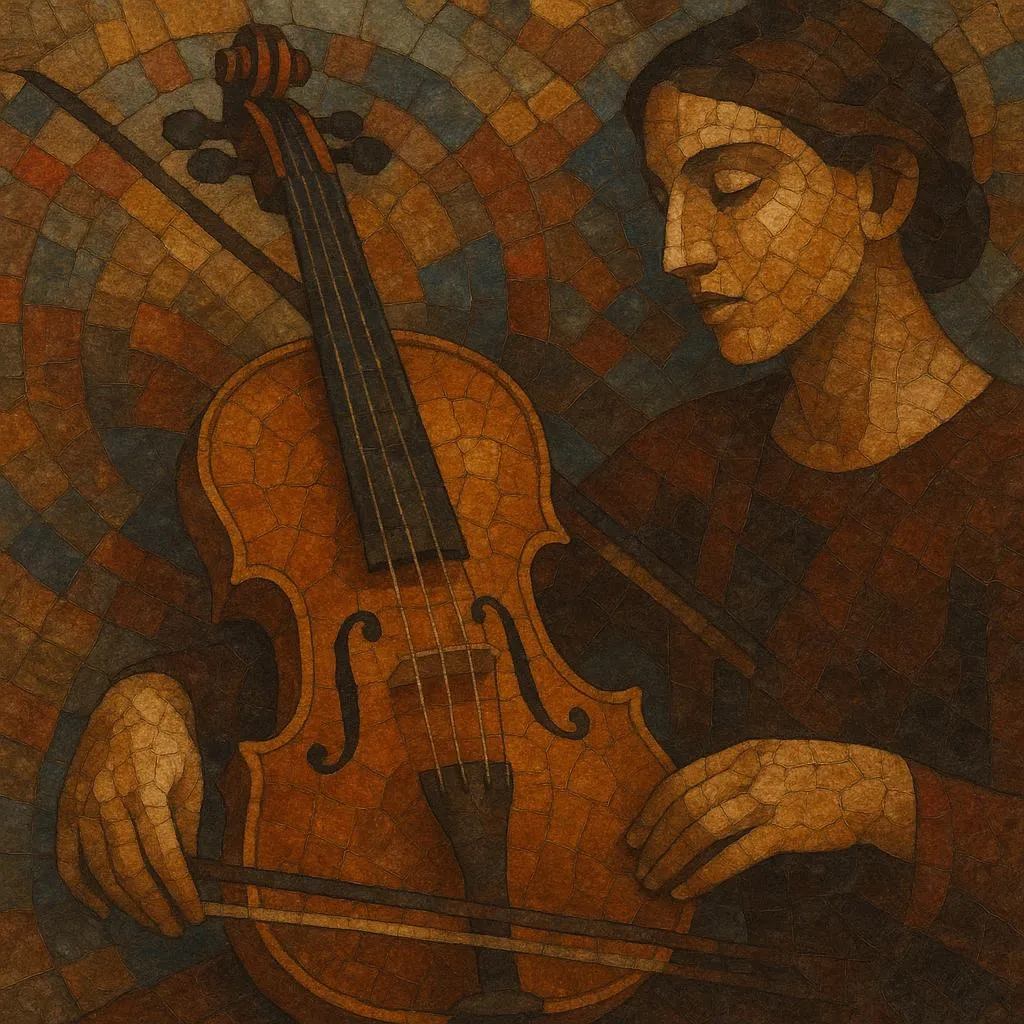
Viola music refers to the solo, chamber, and orchestral repertoire centered on the viola—the alto-voiced member of the violin family tuned C–G–D–A. Sitting between the violin and cello in range and color, the viola is prized for its dark, burnished timbre and lyrical, inward expressivity.

Historically, the viola functioned as an inner voice that glued textures together in consort and orchestral writing. From the 18th century onward it gradually emerged as a solo instrument in its own right, inspiring concertos (Telemann, Stamitz, Walton, Bartók), sonatas (Hindemith, Brahms arrangements, Clarke), and modern showpieces (Berio’s Sequenza VI, Ligeti’s Sonata). In chamber music—especially string quartets and quintets—the viola often provides harmonic ballast, counter-melody, and subtle coloristic shading.

The style embraces everything from the viola’s mellow cantabile lines and rich double-stops to modern extended techniques (sul ponticello, harmonics, microtonal inflections), making it one of the most versatile voices in Western classical sound worlds.


Sources: Spotify, Wikipedia, Discogs, RYM, MB, user feedback and other online sources

History

Origins (16th–17th centuries)

The viola arose in northern Italy in the 1500s alongside the violin and cello, refined by Brescian and Cremonese luthiers such as Gasparo da Salò and Andrea Amati. In the Renaissance and early Baroque, violas were primarily inner voices in consorts and early orchestras. Notable early spotlights include J.S. Bach’s Brandenburg Concerto No. 6 (for two violas) and Telemann’s Viola Concerto in G major, one of the earliest dedicated concertos for the instrument.

Classical era (late 18th century)

The viola remained largely supportive but gained concertante moments. Carl and Anton Stamitz wrote viola concertos, and Mozart elevated the instrument’s lyrical and conversational role in the Sinfonia Concertante in E-flat major, K. 364, and in his viola-rich string quintets. Haydn and Beethoven deepened the instrument’s harmonic and motivic importance within the string quartet tradition.

Romantic era (19th century)

Though fewer star-vehicle concertos were written, composers used the viola’s dusky color for poetic expression. Berlioz’s Harold in Italy (1834) is a landmark symphonic work with a prominent solo viola. Brahms sanctioned viola versions of his Clarinet Sonatas, Op. 120, and composers such as Bruch and Reger provided lyrical and virtuosic repertoire (e.g., Reger’s solo viola suites).

20th century: the viola’s emancipation

Champion performers Lionel Tertis and William Primrose catalyzed a flood of major works: Walton’s Viola Concerto (1929), Bartók’s final concerto (1945, completed by Serly), Hindemith’s many sonatas and concertos, and chamber works by Clarke and Bloch. Later decades brought Berio’s Sequenza VI, Ligeti’s Sonata for Viola Solo, Schnittke’s Viola Concerto, and Gubaidulina’s Viola Concerto—expanding technique and expressive range.

Contemporary developments

Today’s viola repertoire thrives across concertos (Penderecki; Brett Dean), solo cycles (Garth Knox’s Viola Spaces), and versatile cross-genre work. Performers like Tabea Zimmermann, Kim Kashkashian, Antoine Tamestit, and Lawrence Power continue to inspire new commissions, while historically informed and modern approaches coexist, securing the viola’s identity as a distinctive solo and ensemble voice.

How to make a track in this genre

Instrument and range
•   Tuning: C–G–D–A (lowest to highest); characteristic open strings enrich resonance. •   Practical range: C3 to about E6 (higher possible for experts). Sustain prolonged passages in the high register sparingly; the viola blossoms in the low–middle range where its warmth speaks naturally. •   Notation: Alto clef is standard; use treble clef for extended passages above roughly B4/C5.
Idiomatic keys and harmony
•   Keys aligned with open strings (C, G, D, A major/minor; F/B♭ major) are most comfortable and resonant. •   Exploit double-stops in thirds, sixths, and open-string drones; roll 3–4 note chords instead of fully blocked attacks. •   The viola excels at inner-voice counterpoint, pedal tones, and rich suspensions; write lines that dovetail with harmony rather than always leading it.
Melody, rhythm, and articulation
•   Write broad, vocal phrases to showcase the viola’s cantabile; aim for stepwise motion with occasional expressive leaps. •   Use varied bowings—legato, portato, articulated spiccato—and coloristic contrasts (sul tasto for veiled tone, sul ponticello for glassy tension, con sordino for intimacy). •   Employ expressive devices: tasteful glissandi, natural/artificial harmonics (especially on D/A strings), and carefully placed tremolos for intensity.
Technique and textures
•   Chordal writing should favor lower strings and rolled voicings; avoid excessive string-crossing at extreme tempos. •   Bariolage (rapid alternation across adjacent strings) is effective near open strings; pizzicato (including left-hand pizz.) adds contrast. •   Consider occasional scordatura for special resonances but keep fingerings practical.
Ensemble roles and forms
•   In string quartets/quintets, let the viola trade motives with second violin/cello, provide inner counter-lines, or carry a warm secondary theme. •   In concertos, balance lyrical movements (long arcs, open-string luminosity) with rhythmic finales using articulate spiccato and folk/dance figures. •   In sonatas, ensure piano textures leave midrange space; double the viola line at the octave sparingly and avoid masking its core frequencies.
Production and contemporary practice
•   Modern works may use rhythmic ostinati, extended techniques (col legno, snap pizzicato, microtones), and timbre layering with electronics. •   Record with mic placement favoring warmth (near f-holes) and clarity (bridge area), blending to retain the instrument’s characteristic depth.

Top tracks

Locked
Share your favorite track to unlock other users’ top tracks

Upcoming concerts

in this genre
Influenced by
Has influenced

Download our mobile app

Get the Melodigging app and start digging for new genres on the go
© 2026 Melodigging
Melodding was created as a tribute to Every Noise at Once, which inspired us to help curious minds keep digging into music's ever-evolving genres.
Buy me a coffee for Melodigging
