Your digging level

For this genre
0/8
🏆
Sign in, then listen to this genre to level up

Description

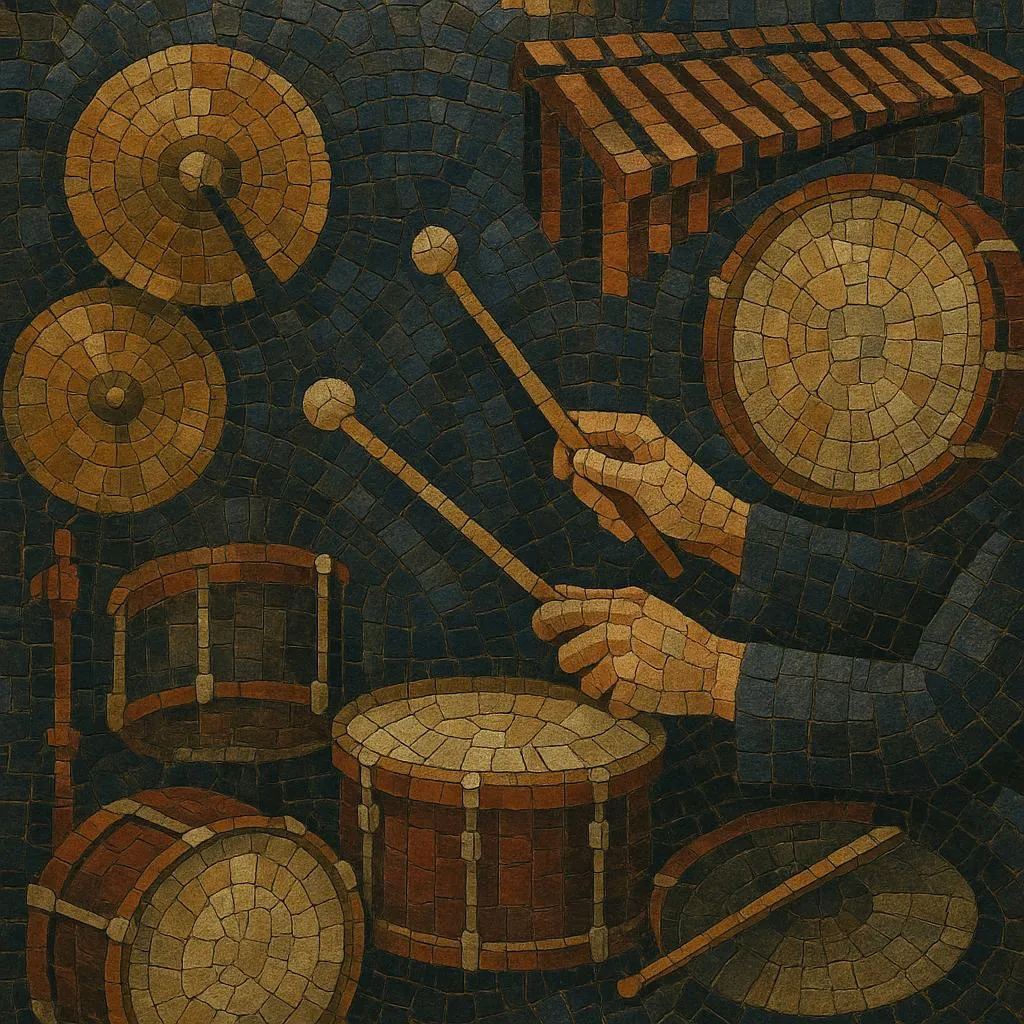
Classical percussion is the branch of Western art music centered on percussion instruments—both pitched (marimba, vibraphone, glockenspiel, timpani) and unpitched (snare drum, bass drum, cymbals, gongs, tom-toms, accessories, and found objects).

It encompasses solo, chamber, and orchestral writing in which rhythm, timbre, and color are treated with the same structural importance traditionally given to melody and harmony. The genre ranges from austere, modernist soundscapes and stochastic textures to tightly interlocked minimalist grooves and lyrical marimba writing.

Typical features include complex polyrhythms, timbral layering across wood/skin/metal families, extended techniques (bowed vibraphone or crotales, friction mallets, water gongs), spatialized setups, and virtuosic multi-mallet marimba technique.


Sources: Spotify, Wikipedia, Discogs, RYM, MB, user feedback and other online sources

History

Overview

Classical percussion crystallized in the early 20th century when composers began writing works that foregrounded percussion as a primary vehicle for musical form and expression. The genre quickly expanded from orchestral color to independent solo and chamber literatures, ultimately producing a global network of percussion ensembles and soloists.

Early Pioneers (1930s–1940s)
•   The 1930s marked a turning point as trailblazing composers created stand‑alone works for percussion ensemble and reimagined the instrumentarium with metal, wood, skin, and found objects. •   In parallel, university programs in the United States established dedicated percussion ensembles and curricula, professionalizing technique (multi-mallet marimba, battery setups) and repertoire.
Mid‑Century Expansion (1950s–1960s)
•   Postwar modernism and experimental music broadened the palette: graphic notation, chance procedures, and unconventional sound sources joined traditional instruments. •   At the same time, composers and performers embraced idiophones (marimba, vibraphone) for sustained harmony and counterpoint, catalyzing a robust solo and chamber repertoire.
Minimalism and Global Influences (1970s–1990s)
•   Minimalist and post‑minimalist composers made mallet percussion central to processes like phasing, additive rhythm, and cycling ostinati, helping to popularize tightly interlocked ensemble textures. •   Collaborations with instrument makers (e.g., development of the 5‑octave marimba) and curiosity about non‑Western traditions (gamelan, Afro‑Caribbean, Latin American percussion) enriched timbres and techniques in concert settings.
Contemporary Scene (2000s–present)
•   International percussion ensembles and star soloists commission new works annually, while conservatories train specialists in marimba, multi‑percussion, and timpani. •   Today’s repertoire spans modernist sound‑masses, lyrical marimba writing, electroacoustic hybrids, and film/mediatized concert music—often with immersive staging and spatialized performer layouts.

How to make a track in this genre

Instrumentation and Setup
•   Combine families (wood/skin/metal) for timbral counterpoint. Core instruments include marimba, vibraphone (with motor/pedal), xylophone, glockenspiel, timpani, snare, bass drum, toms, cymbals, gongs, tam-tam, and small accessories (triangle, tambourine, claves, woodblocks, shakers). •   Exploit extended techniques: bowed vibraphone or crotales, superball (friction) on gongs/drums, coin or stick-on-cymbal scrapes, water gong, prepared drum with dampening, and mallet changes for color. •   Plan logistics: specify player numbers, instrument changes, stickings, and clear stage plots; consider spatial placement or antiphony for call-and-response or surround effects.
Rhythm and Texture
•   Use layered ostinati and polyrhythms (e.g., 3:2, 4:3, additive meters) for propulsion; try phasing or hocketing between parts to create composite grooves. •   Alternate grooves with resonant color fields (rolled chords on marimba, vibraphone pedal harmonies) to articulate form. •   Employ metric modulation or tempo pivots for formal contrast; align complex passages with cues or conductor patterns.
Harmony and Timbre
•   Treat pitched percussion as harmonic voices: marimba for warm, sustained harmony (via rolls) and counterpoint; vibraphone for sustained chords, pedaling, and dampening patterns. •   Orchestrate by timbre: metals for brilliance/sheen, woods for warmth/clarity, skins for weight/impact. Balance attack and decay across families to shape phrases.
Notation and Performance Practice
•   Notate unpitched parts on 1–3 line staves with clear instrument labels; use tremolo slashes for rolls and explicit dampening/let-ring marks (especially for vibes). •   Indicate mallet hardness and changes; mark pedaling for vibraphone and muting for gongs/cymbals. Provide cues for complex entrances, electronics, or click-track when needed. •   Consider theatricality and silence: physical choreography (shared setups, stick changes) and rests can become formal elements.
Compositional Forms
•   Effective forms include process pieces (gradual additive/subtractive layers), variation sets on a groove or timbre, and arch forms contrasting dry, articulate textures with resonant, rolled sonorities. Concerti and multi‑percussion solos highlight virtuosity in mallet and battery techniques.

Top tracks

Locked
Share your favorite track to unlock other users’ top tracks

Upcoming concerts

in this genre
Influenced by
Has influenced

Download our mobile app

Get the Melodigging app and start digging for new genres on the go
© 2026 Melodigging
Melodding was created as a tribute to Every Noise at Once, which inspired us to help curious minds keep digging into music's ever-evolving genres.
Buy me a coffee for Melodigging