Your digging level
Description
Philippine classical music refers to art music cultivated in the Philippines that draws on European concert traditions while engaging with local materials, languages, and instruments.
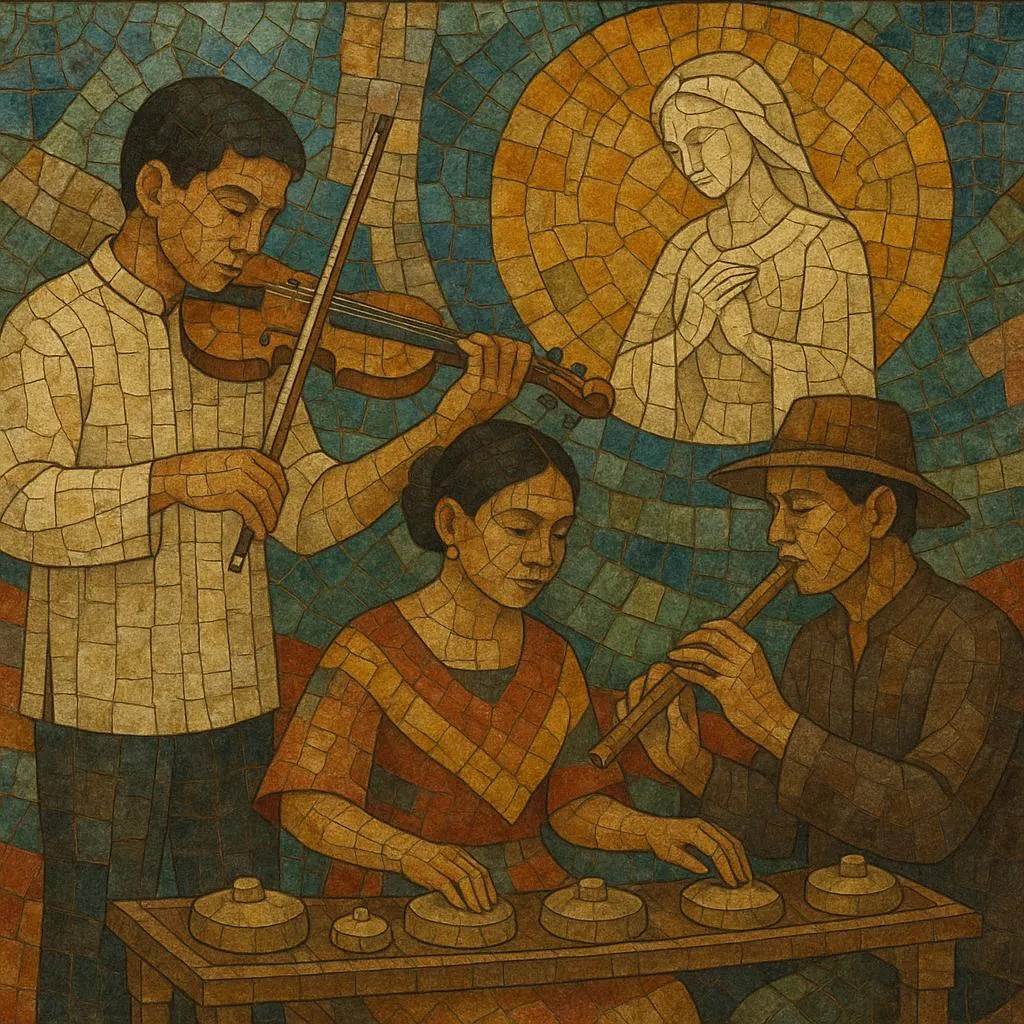
It encompasses sacred and secular works from the Spanish colonial period (polyphony, baroque/galant church music), through late‑Romantic and early modern concert idioms in the American period, to post‑war nationalist, indigenist, and contemporary experimental currents. Alongside orchestral, chamber, operatic, and choral music, it often incorporates Philippine folk melodies, dance rhythms, and, in later decades, indigenous instruments (e.g., kulintang, gangsa) within Western forms.
History
Spanish evangelization brought European sacred repertories—plainchant, polyphony, and later baroque/galant church music—into Philippine missions and cathedrals. Indigenous and lowland folk practices persisted alongside, but colonial institutions (convents, seminaries, cabildos) trained local singers, organists, and chapelmasters, establishing a notated art‑music tradition.
As public theatres and civic bands expanded, salon music, marches, and early operatic activity grew in Manila and regional centers. Under the American period, conservatories (e.g., University of the Philippines College of Music in 1916; later the UST Conservatory) formalized training. Composers such as Francisco Santiago and Nicanor Abelardo cultivated the kundiman art song within late‑Romantic idioms, articulating early musical nationalism.
Post‑war figures (Antonio J. Molina, Lucio San Pedro, Felipe P. de León Sr.) wrote symphonic and choral works that wove folk tunes, dance rhythms, and Tagalog texts into Western forms. From the 1960s, Lucrecia Kasilag, José Maceda, Ramon P. Santos, and peers advanced indigenism and experimentalism—juxtaposing kulintang, gangsa, bamboo, and ritual musics with modernist, avant‑garde, and electroacoustic techniques. Institutions like the Cultural Center of the Philippines (1969), the Philippine Philharmonic Orchestra (1973), and the UP Madrigal Singers (1963) professionalized performance standards.
Composers expanded into spectral, post‑tonal, and intercultural practices, film/television scoring, and choral innovation, often in Philippine languages. Internationally decorated choirs and soloists amplified visibility, while festivals, new‑music ensembles, and archives fostered scholarship and commissioning. Contemporary work balances heritage (folk/ritual sources, kundiman lineage) with global aesthetics, technology, and community engagement.