Your digging level
Description
Pagan folk is a contemporary folk style that draws on pre‑Christian European traditions, mythologies, and seasonal rites. It emphasizes acoustic, hand‑crafted instruments, trance‑like percussion, and communal chanting to evoke a ritual, nature‑centric atmosphere.
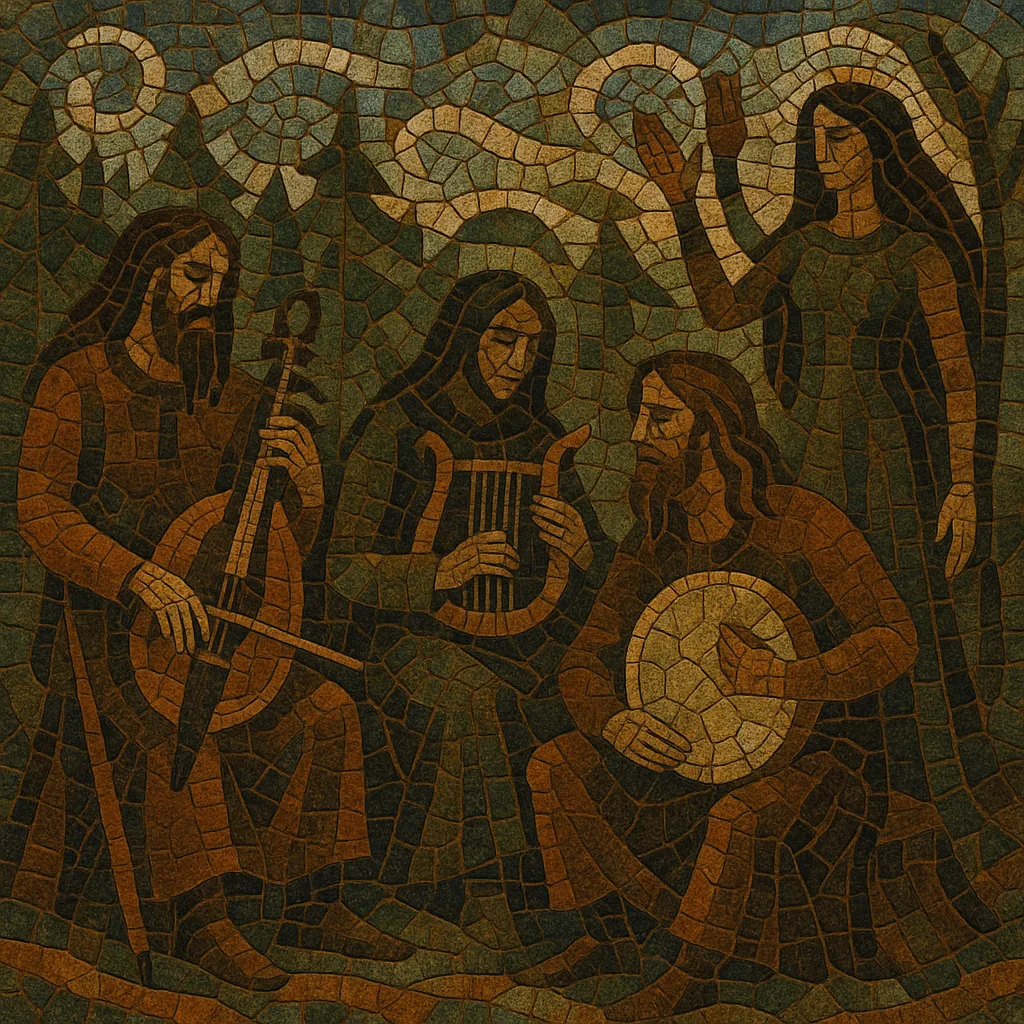
Musically it is modal (often Aeolian, Dorian, and pentatonic), drone‑friendly, and rhythmically driven by frame drums, stomps, and simple ostinatos. Timbres from hurdy‑gurdy, lyres, tagelharpa, nyckelharpa, flutes, and bagpipes are common, with layered vocals ranging from intimate laments to massed, call‑and‑response chants.
Aesthetically it sits between neo‑medieval revivalism, dark/ritual folk, and world/ethereal traditions, but unlike folk metal it avoids heavy guitars and drum kits, favoring earthy, organic production and a strong sense of ceremony.

History
The term and aesthetics of pagan folk coalesced in the 1990s amid Europe’s renewed interest in pre‑Christian heritage and the parallel rise of neo‑pagan spirituality. Scandinavian and German scenes were especially formative, where bands explored traditional repertoire, reconstructed instruments, and modal songcraft inspired by medieval and ancient sources. Early touchpoints include Scandinavian groups like Hedningarna and Garmarna, who foregrounded traditional timbres and trance‑like grooves.
By the early 2000s, acts explicitly branding their music as “pagan folk” appeared, notably Faun (Germany) and Omnia (Netherlands). They popularized the style’s core palette—hurdy‑gurdy drones, frame drums, flutes, bagpipes, and multi‑lingual lyrics referencing myths, runes, and folk rites. Festivals such as Castlefest in the Netherlands became hubs for the scene, while crossover with medieval fairs and darkwave/neofolk gatherings broadened its audience.
The 2010s saw international expansion. Wardruna’s Old Norse‑inspired works and Heilung’s theatrical, ritual performances (using bones, antlers, and massed chants) brought the genre to major stages and soundtracks, further blurring lines between concert, ceremony, and historical reenactment. Streaming platforms amplified artists from Eastern and Northern Europe (e.g., Nytt Land), and projects like SKÁLD popularized Old Norse texts for wider audiences.
Pagan folk is distinguished from folk metal by its absence of distorted guitars and rock drum kits, prioritizing acoustic textures and ritual ambience. Compared with neofolk, it tends to be less martial or industrial, and more animist, celebratory, and dance‑oriented, with strong ties to seasonal festivals and living folk practices.