Your digging level for this genre

0/8
🏆
Sign in, then listen to this genre to level up

Description

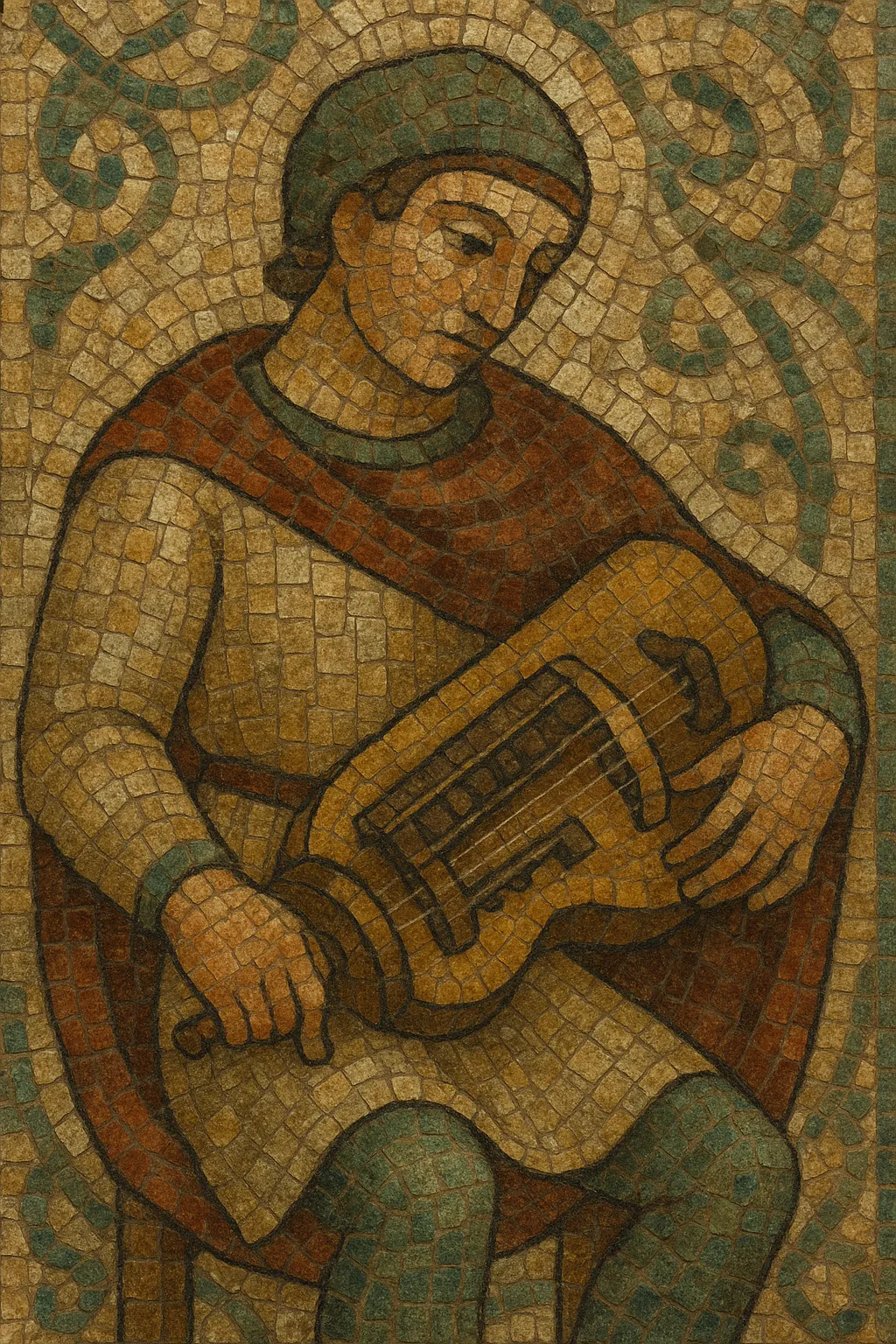
Hurdy-gurdy is a drone‑based musical style centered on the hurdy-gurdy (vielle à roue), a string instrument sounded by a rosined wheel turned with a crank. Melodies are played on keyed chanterelle strings while one or more bourdon (drone) strings provide a continuous tonal bed. A distinctive "buzzing" bridge (the trompette or chien) can be engaged rhythmically by subtle wrist accents on the crank, turning the instrument into its own rhythm section.

The genre draws on medieval, Renaissance, and rural European folk dance traditions (especially from central France, Iberia, and Central/Eastern Europe), but it also thrives in contemporary folk revival and experimental settings. Typical repertoire includes bourrées, waltzes, marches, and modal airs in Dorian, Mixolydian, and Aeolian modes, performed solo or with companions such as bagpipes, diatonic accordion, fiddle, and frame drums.

History

Origins (12th–14th centuries)

Early forms of the hurdy-gurdy, such as the large two-player organistrum, appear in Romanesque sculpture (notably at Santiago de Compostela). Initially associated with sacred and courtly contexts, the instrument soon evolved into smaller, single-player vielles à roue suitable for itinerant and secular performance.

Courtly vogue and rural life (17th–18th centuries)

By the Baroque era, the hurdy-gurdy experienced a fashionable wave in France, entering salons alongside the musette (bagpipe). Composers and aristocratic amateurs embraced pastoral aesthetics while the instrument remained deeply rooted in village dance music—especially bourrées and marches—in regions like Berry, Bourbonnais, and Auvergne.

19th-century decline and survival

Industrialization and changing tastes pushed the instrument to the margins, where it survived in regional folk traditions and as a street instrument. Local luthiers preserved techniques, tunings, and repertories, ensuring continuity into the 20th century.

20th-century revival

Postwar folk revivals in France, Spain, and Central/Eastern Europe sparked renewed interest. Musicians standardized modern setups (e.g., G/C or D/G systems), revived dance repertoires, and documented regional styles. Innovative players began extending technique and harmony, treating the instrument as both melodic and percussive.

21st century and crossovers

Contemporary artists fuse the hurdy-gurdy with rock, metal, ambient, and experimental music, exploiting drones, modal loops, and the trompette’s groove. Workshops, festivals, and new lutherie have globalized the instrument, making hurdy-gurdy a vibrant bridge between early music, folk dance, and modern sound design.

How to make a track in this genre

Instrumentation and setup
•   Use a modern hurdy-gurdy (vielle à roue) with 1–2 melody strings (chanterelles), 1–2 drones (bourdons), and at least one trompette (buzzing bridge). Common systems are G/C or D/G, aligning with diatonic folk repertoires. •   Pair with diatonic accordion, bagpipes, fiddle, and frame drum for traditional dance sets, or with electric bass, kit drums, and effects for contemporary fusions.
Rhythm and groove
•   Establish a steady crank speed for the drone bed. Accentuate beats by applying subtle wrist pulses (coup de poignet) to activate the trompette, creating backbeats or dance pulses. •   Typical dances include bourrée in 2 (binary) or in 3 (ternary), waltz (3/4), scottish (2/4), and mazurka (3/4 with lifted second beat). Keep tempi danceable and consistent.
Melody, mode, and ornamentation
•   Compose in modal scales (Dorian, Mixolydian, Aeolian) to exploit the drone resonance. Write pentatonic or heptatonic lines that avoid excessive chromaticism. •   Use idiomatic ornaments (cuts, slides, mordents) executed via rapid key taps and wheel articulation. Phrase melodies around open-string resonance to maximize sustain and blend with drones.
Harmony and arrangement
•   Harmonies are implied by drones and parallel motion; favor modal cadences (e.g., mixolydian b7) and pedal tones. When adding chords (guitar/accordion), keep voicings open (5ths, sus chords) to avoid clashing with drones. •   Structure tunes AABB with 8-bar strains suited to sets/medleys. Vary second passes with trompette patterns, octave doubling, or counterlines from accompanying instruments.
Recording and performance tips
•   Mic the wheel/keys for articulation and the body/soundboard for warmth; blend a contact pickup for stage volume. Use light compression to tame trompette transients. •   In amplified contexts, high-pass drones to reduce low-end buildup and notch resonant squeaks around the wheel noise while preserving the characteristic buzz.

Top tracks

Locked
Share your favorite track to unlock other users’ top tracks
Influenced by
Has influenced
Challenges
Digger Battle
Let's see who can find the best track in this genre
© 2025 Melodigging
Melodding was created as a tribute to Every Noise at Once, which inspired us to help curious minds keep digging into music's ever-evolving genres.
Buy me a coffee for Melodigging