Your digging level
Description
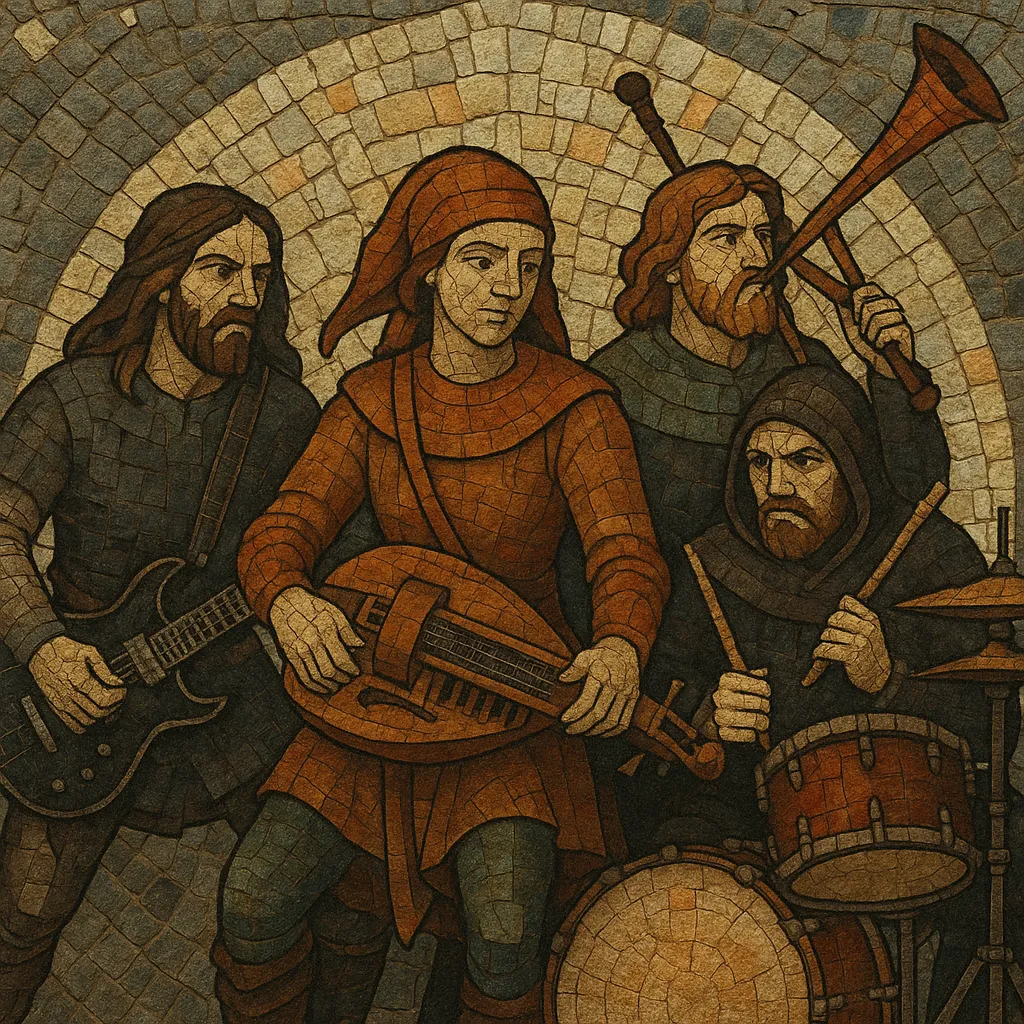
Medieval rock is a fusion of contemporary rock with melodies, modes, instruments, and themes drawn from European medieval and early Renaissance music.
It typically combines a rock rhythm section (drums, electric bass, guitars) with historical instruments such as bagpipes, hurdy-gurdy, shawms, citterns, recorders, harp, and lute. Musical materials often use modal scales (especially Dorian, Aeolian, and Mixolydian), drones, bordun-style accompaniments, and dance rhythms reminiscent of estampies, saltarellos, and bourrées.
The lyrics and imagery frequently reference chivalric tales, minstrelsy, courtly love, folklore, and Middle High German or other archaic languages. In performance, many bands adopt a festive, theatrical medieval pageant aesthetic while delivering high-energy rock arrangements.

History
Early seeds of medieval rock can be traced to progressive and folk rock bands that experimented with early music timbres and modal writing. Groups in the UK such as Gryphon and Amazing Blondel blended recorders, crumhorns, and madrigal-like polyphony with rock forms, showing that historically inspired instrumentation could coexist with modern rhythm sections.
The genre coalesced as a recognizable movement in Germany in the 1990s, where it came to be known as "Mittelalter-Rock." Bands like Subway to Sally and In Extremo forged a signature sound by pairing driving rock/metal backlines with loud medieval woodwinds (shawms, bombards), bagpipes, and hurdy-gurdy. The scene overlapped with gothic and folk circuits and developed a strong festival culture around medieval markets and open-air events.
Through the 2000s, a constellation of acts—Schandmaul, Saltatio Mortis, Tanzwut, and others—broadened the palette from hard-rocking anthems to balladry and storytelling. Parallel projects (e.g., Corvus Corax and their rock offshoot Tanzwut) helped formalize a continuum from historically leaning ensembles to fully amplified stage shows. The style also cross-pollinated with folk metal and pagan folk, and some acts incorporated electronic textures while keeping the medieval core.
Medieval rock remains popular across Central Europe, with strong live circuits and themed festivals. Its influence can be heard in medieval metal, neo-medieval folk, and related subcultures, while the core aesthetic—modal melodies on historical instruments over rock grooves—continues to define the genre’s identity.
Combine a standard rock rhythm section (drum kit, electric bass, electric/acoustic guitars) with medieval/early music instruments: hurdy-gurdy (for drones and riffs), bagpipes (melodic hooks and fanfares), shawms/bombards (piercing countermelodies), recorders, lute/cittern, and percussion like tabor or frame drum. Use amplification on historical instruments where needed to match rock dynamics.
Favor modal writing—Dorian, Aeolian, and Mixolydian are common. Employ drones or pedal points to evoke a bordun texture beneath melodies. Craft singable, fanfare-like hooks on bagpipes or hurdy-gurdy, and use parallel fifths sparingly for color while keeping modern harmonic clarity. Countermelodies on recorder or shawm add call-and-response energy.
Base grooves on solid rock backbeats, then layer in medieval dance feels (estampie-like driving patterns, saltarello bounce, or bourrée accents). Alternate between riff-driven verses and expansive, chant-like or choral refrains. Consider breakdowns that spotlight historical instruments, then return to full-band climaxes.
Write narratives inspired by folklore, courtly love, revelry, and chivalric adventures. Archaize diction or incorporate lines in Middle High German, Latin, or Old French for flavor. Choruses should be memorable and communal, suitable for festival sing-alongs.
Pan historical instruments to leave space for vocals and guitars; carve frequencies so bagpipes/shawms sit above guitars without harshness. Blend natural room ambience (for a hall-like feel) with modern rock punch. Layer gang vocals or simple harmonies for celebratory refrains, and use dynamic swells to shift between intimate acoustic passages and full-throttle rock sections.



Top albums